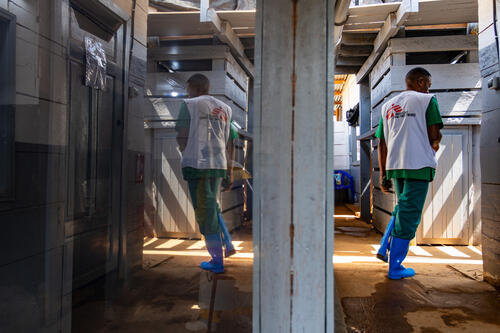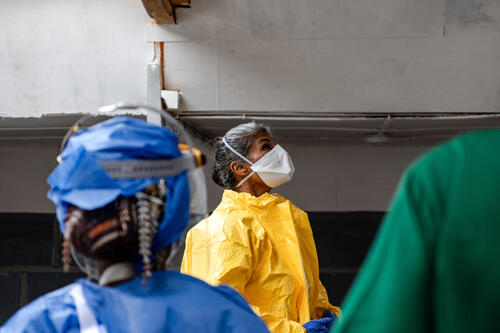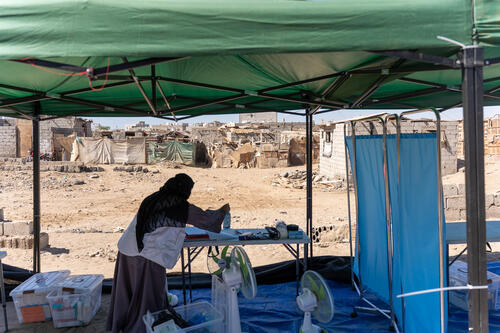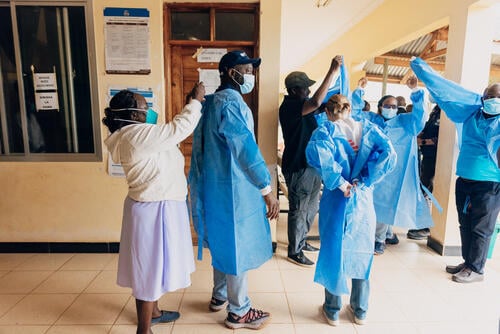
As the epidemic emerged in Kagera, MSF mission officially offered our services and expertise to the MoH on three main pillars of the response:
1.	Health Response Capacity: Deployment of medical teams and logistical resources to support case management, contact tracing, and health facility strengthening. 
2.	Training and Capacity Building: Collaborating with healthcare professionals on infection prevention and control (IPC) measures, as well as the management of patients in critical care. 
3.	Medical Supply :  Providing Personal Protection Equipment (PPE) and other useful medical and non-medical devices. 

Following this, an experienced team in Oubtreak management was invited by the MoH to take part in the assessment of local response capacities that took place in January in Kagera, together with the WHO and other partners.
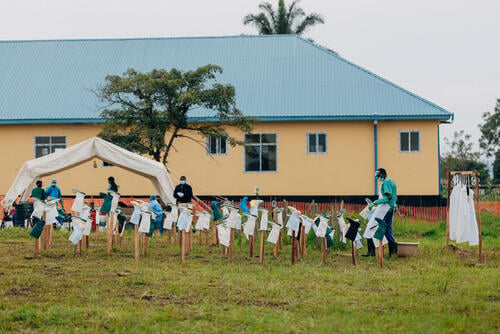
An MSF team experienced in outbreak management was invited by the Ministry of Health to take part in the assessment of local response capacities that took place in January in Kagera, together with the WHO and other partners. Tanzania, 25 January 2025.
© Clemence/WHO

MSF team supports response to outbreak of Marburg virus in Tanzania

An MSF team experienced in outbreak management was invited by the Ministry of Health to take part in the assessment of local response capacities that took place in January in Kagera, together with the WHO and other partners. Tanzania, 25 January 2025.
© Clemence/WHO
Ebola disease in DRC: find out how we're responding
Learn more

Médecins Sans Frontières (MSF) is actively supporting the response to an outbreak of Marburg virus in Tanzania’s Kagera region, which is being led by the Ministry of Health. The outbreak was declared by Tanzanian authorities on 20 January 2025.

Working alongside the Ministry of Health and other partners, including the World Health Organization (WHO), an MSF team with experience responding to epidemics is in Kagera region to strengthen the local response capacity. We are providing trainings and essential protective and medical equipment to frontline healthcare staff.
As the epidemic emerged in Kagera, MSF mission officially offered our services and expertise to the MoH on three main pillars of the response:
1.	Health Response Capacity: Deployment of medical teams and logistical resources to support case management, contact tracing, and health facility strengthening. 
2.	Training and Capacity Building: Collaborating with healthcare professionals on infection prevention and control (IPC) measures, as well as the management of patients in critical care. 
3.	Medical Supply :  Providing Personal Protection Equipment (PPE) and other useful medical and non-medical devices. 

Following this, an experienced team in Oubtreak management was invited by the MoH to take part in the assessment of local response capacities that took place in January in Kagera, together with the WHO and other partners.
An MSF team experienced in outbreak management was invited by the Ministry of Health to take part in the assessment of local response capacities in January in Kagera, together with the WHO and other partners. Tanzania, January 2025.
Clemence/WHO

“The Tanzanian authorities have made significant efforts to contain the epidemic and promote collaboration between various health agencies,” says Tommaso Santo, MSF’s head of mission. “For the time being, our response is focussed on technical aspects, such as reinforcing case management capacities and implementing infection prevention and control measures.”

MSF will ensure that its response contributes effectively to limiting the impact of the outbreak on affected communities and preventing the disease from spreading further.

As of 28 January, the Ministry of Health has reported two confirmed cases, two deaths among confirmed cases and eight additional probable deaths, with 64 suspected cases and 281 contacts being monitored for symptoms of the disease.