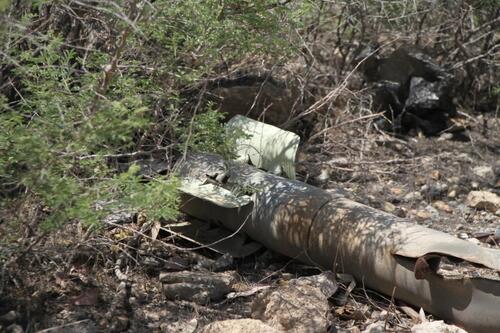
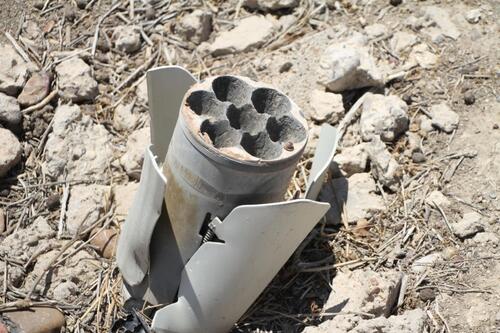
- MSF’s latest report shares data from Deir ez-Zor, Syria, where people continue to be injured by landmines, unexploded ordnance, and abandoned explosives.
- Over a one-year period, more than 215 injured people were treated at Deir ez-Zor National hospital.
- Urgent action is needed to accelerate the clearance of land contaminated by explosive ordnance and landmines, and to address gaps in specialised care.
Deir ez-Zor, Syria — One year after Médecins Sans Frontières (MSF) began supporting emergency services at Deir ez-Zor National hospital, in Syria, hundreds of people injured by explosive ordnance have been treated at the hospital. This highlights the devastating and ongoing impact of contamination left behind by years of conflict.
Today we published a report, Explosive Remnants of War – Lasting Harm in Deir ez-Zor, Syria, on the human and health impact of explosive ordnance contamination in Deir ez-Zor governorate. It highlights the key barriers to accessing timely, comprehensive, and specialised care, as well as the critical role of mine action actors in the governorate. The report draws on MSF and the Directorate of Health medical data, covering the period from April 2025 to April 2026, as well as operational observations and interviews with patients, caregivers, and medical professionals involved in the provision of care.
Between April 2025 and April 2026, MSF and Directorate of Health teams in the emergency room of Deir ez-Zor National hospital treated more than 215 people injured by landmines, unexploded ordnance, and abandoned explosives. Nearly half of the patients were children. During this period, 24 people died from their injuries, and 58 patients underwent traumatic amputations.
Deir ez-Zor remains one of the areas most heavily contaminated by explosive ordnance in Syria. Civilians are often injured while carrying out daily activities such as farming, herding livestock, collecting truffles, or returning to damaged homes and buildings. Children are particularly at risk while playing outdoors or exploring abandoned buildings. Many survivors travel long and dangerous distances from remote areas to reach emergency care, often without access to ambulances.
“For the year that we’ve been working here, we’ve seen over 215 patients suffering from blast injuries, including children and farmers working their land,” says Rebecca Kerr, MSF project coordinator in Deir ez-Zor. “Unfortunately, even today, we’re still seeing civilians being impacted by these explosives. Without improved trauma care, rehabilitation services, and clearance of contaminated land, these injuries will continue.”
Without improved trauma care, rehabilitation services, and clearance of contaminated land, these injuries will continue.Rebecca Kerr, MSF project coordinator in Deir ez-Zor
Despite the high number of trauma survivors and amputees, access to rehabilitation, prosthetics and orthotics, specialised mental health care, and socio-economic support remains severely limited, leaving many patients unable to recover or regain their independence.
Mohammad, a young man from Deir ez-Zor who lost both legs above the knee after stepping on a landmine while working his land, describes how his life has changed: “Before, I worked every day and supported myself. Now I spend most of my time at home, and I depend on my family for almost everything. If I had access to artificial limbs, maybe I could regain part of my life.”
Medical staff at Deir ez-Zor National hospital also highlight the economic pressures driving risk-taking behaviour.
“Some people knowingly enter mined areas to graze their flocks or gather truffles,” says Dr Waseem Awak, resident doctor in the emergency and orthopaedic departments. “In some cases, we treat multiple members of the same family.”
Access to emergency trauma care remains a major challenge across the governorate. Shortages of specialised medical staff, limited equipment, and weak post-discharge services increase the risk of complications and death.
“The number of injuries often exceeds the hospital’s capacity,” says Dr Ammar Al Rajab, head of the Deir ez-Zor National hospital's orthopaedic department. “Post-discharge care is particularly weak, with a critical lack of prosthetics specialists and rehabilitation services.”
The number of injuries often exceeds the hospital’s capacity.Dr Ammar Al Rajab, head of the Deir ez-Zor National hospital's orthopaedic department
MSF calls for an urgent acceleration of mine clearance and explosive ordnance disposal across Deir ez-Zor as a first and critical step to prevent further civilian harm. This must be accompanied by sustained investment in emergency trauma care – particularly in remote and underserved areas – and comprehensive victim assistance services, including rehabilitation and mental health care.
Without a significant scale-up of clearance efforts that matches the extent of contamination, civilians will continue to be injured and killed while carrying out daily activities.
MSF has also witnessed how contamination continues to affect humanitarian operations and access to essential services. Some healthcare facilities, water infrastructure, and residential areas remain contaminated, limiting safe access for communities and humanitarian organisations alike. Mine action activities, including survey, clearance, and risk education, remain essential to reducing civilian harm and enabling humanitarian response and recovery efforts.
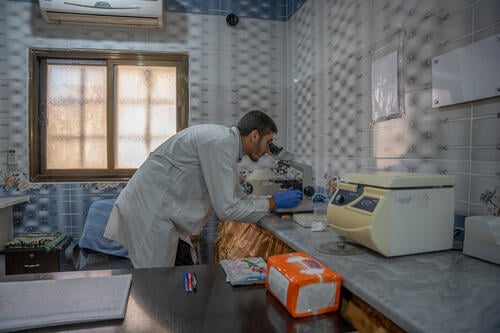
Since April 2025, MSF has been supporting the emergency room at Deir ez-Zor National hospital in collaboration with the Directorate of Health, providing emergency care, laboratory services, infection prevention and control, sterilisation, and water and sanitation support. MSF has also supported staff training, established a triage system, improved patient flow, rehabilitated the hospital’s waste management area, and installed new incinerators and an x-ray machine.
MSF reiterates that without urgent action to accelerate the clearance of land contaminated by explosive ordnance and landmines, alongside efforts to address critical gaps in specialised care –including rehabilitation, prosthetics, and mental health services – civilians in Deir ez-Zor will continue to suffer preventable deaths and life-altering injuries long after the conflict has ended.
Syria
Syria: MSF concludes three years of support to Darat Izza healthcare centre
Project Update
6 May 2026