



Ebola disease in DRC: find out how we're responding
Learn more
8003 Results
 
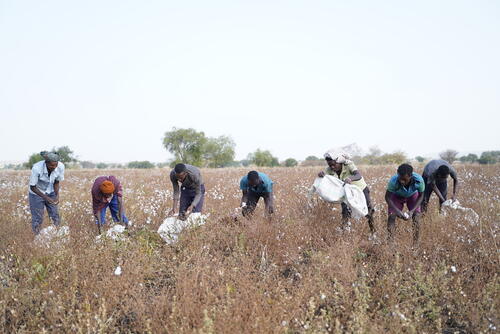
Farmers pick cotton on a farm land near Abdurafi. Workers who often work at night and will sleep in the fields are more exposed to the risks of kala-azar and snakebite. This young mostly male population is affected by a relatively high prevalence of HIV infection. The combination is a further challenge for effectively treating patients, and is almost impossible to cure. While a patient with a healthy immune system treated for kala azar will develop an immunity against the disease that will last for many years, HIV co-infected patients cannot generate this immunity so they will keep relapsing and eventually become unresponsive to treatment and die.
Ethiopia

Two decades of combatting the world’s most neglected diseases

In Ethiopia, our teams have been responding to two of the world's deadliest and most neglected diseases for 20 years. Here are nine quick facts about our lifesaving work in the region. Project Update - 26 Sep 2023
 
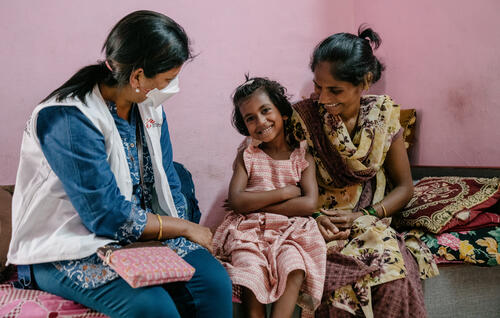
Vaishnavi, a 7-year-old DRTB (Drug Resistant​ Tuberculosis) patient interacts with Prachi, an MSF nurse as her mother Vishaka holds her.​

​
TACTiC – Test, Avoid, Cure Tuberculosis in Children

Commitments made in today's UN TB Declaration to scale up TB testing and treatment, and improve TB care for children, require immediate, concrete action

MSF welcomes the second-ever UN Political Declaration on tuberculosis in which world leaders committed to ramp up TB testing, treatment and prevention, and to close the deadly gaps in all these areas for adults and children. msfaccess.org - 22 Sep 2023
 
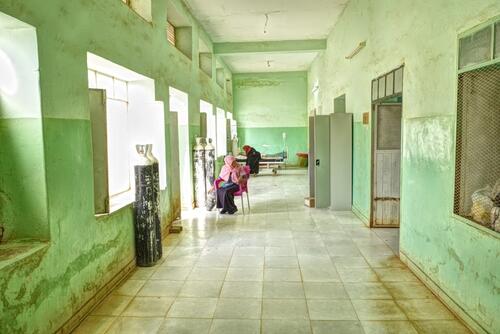
In June, in collaboration with the Ministry of Health, MSF team has started supporting Umdawanban hospital in Khartoum State, to improve healthcare services for the communities. Our teams are working to enhance essential paediatric, nutrition, and maternity services. Additionally, we provide vital support in energy, water, sanitation, and hygiene, in the hospital. MSF bought a generator for the hospital and is working on the water supply lines. In the first two weeks of the intervention, we've reported: approximately 250 admissions in maternity, 107 normal deliveries, and more than 80 admissions for paediatrics with 20% newborns.
Sudan

Catastrophic health crisis in Sudan demands more action

A written statement from MSF for the high-level ministerial event on Sudan at the United Nations General Assembly on 20 September. Statement - 21 Sep 2023
 
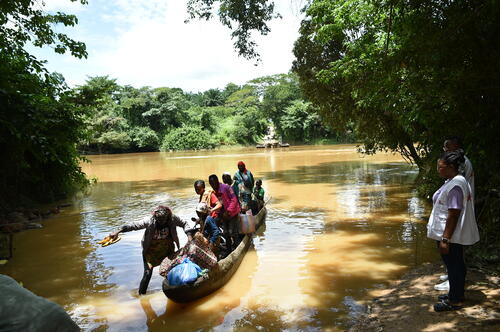
People getting out of a canoe after crossing the Rokel river, at Komrabai, Tonkolili District, Northern province of Sierra Leone. People from the communities on the other side of the river often have to cross it to access MSF-supported Integrated Community Case Management (ICCM) site in at Robis village, as well as the local market. 
MSF provides testing kits, medication and training to the Community Health Workers (CHWs) at Integrated Community Case Management (ICCM) in Robis village, as well as in 6 other villages in Tonkolili District, Sierra Leone. Patients with mild symptoms are treated at the ICCM sites while patients with severe symptoms are referred to the Magburaka Government Hospital supported by MSF.
Sierra Leone

Helping pregnant women access timely and quality maternity services

To address high maternal mortality rates in Sierra Leone, our teams are helping pregnant women access timely and quality maternity services by facilitating transportation and referrals. Project Update - 20 Sep 2023
 
Commune of Ranobe, Amboasary District.

People in the south-east of Madagascar are facing the most acute nutritional and food crisis the region has seen in recent years. MSF began setting up mobile clinics in Amboasary district in late March to screen and treat acute malnutrition in remote villages like those of Ranobe commune, providing ready-to-use therapeutic food and medical care.
Libya

MSF begins medical activities in Derna after Storm Daniel

After Storm Daniel rocked the cities of Derna and Susah in Libya, our teams are set to begin medical activities in the region. Here are four things to know. Interview - 20 Sep 2023
 
Diphtheria, Kano project
Nigeria

Urgent response needed to curb Nigeria’s worsening diphtheria outbreak

As a diphtheria outbreak surges through Nigeria and neighbouring countries, an urgent increase in access to medicines and vaccination is vital to avoid further deaths. Press Release - 19 Sep 2023
 
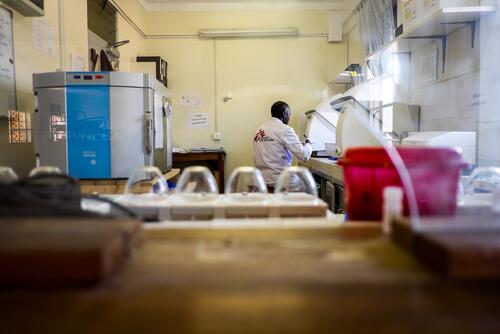
Harry is doing tests of the blood samples at the lab of Arua Regional hospital-Uganda.  the process takes 2 hours.
Uganda

MSF ends support to HIV programme in Arua after more than 20 years

After more than 20 years of providing treatment to people living with HIV in Arua, Uganda, we have handed activities over to the Ugandan health authorities and their partners.  Project Update - 18 Sep 2023
 
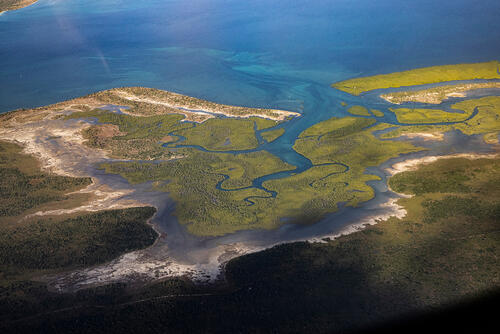
Images of the coast from Pemba to Mocimboa da Praia, the area most affected by the insurgents and also the area where the insurgents are hiding.
Mozambique

Six things to know about the destruction of Mocímboa da Praia

Over half a million people previously displaced by horrific conflict in Cabo Delgado, Mozambique, have returned to their areas of origin only to find destitution and destruction. Project Update - 14 Sep 2023
 
Amaka Joseph, 35, tends to her recovering child at an ITFC facility at Specialist Hospital Sokoto, Nigeria on Friday 22 July 2022.
 
“When we began treatment, I started seeing improvement. Now they can eat well and play and this makes me happy” she said. 
 
She would leave her children in the care of her mother when she goes to her shop, so she suspects that maybe the hygiene of the children has not been up to par. 
 
“Now, I will take care of everything that has to do with these children, their food, their water and environment, I will make sure that everywhere is clean” says Amaka.
Access to Healthcare

Urgent measures needed to address gaps in Universal Health Coverage targets

Ahead of the UN High Level meeting on Universal Health Coverage on 21 September, this report highlights why access to healthcare continues to be challenging for people in vulnerable circumstances. Report - 13 Sep 2023
 
Atija walks through Eduardo Mondlane camp for displaced people to counsel pregnant and lactating women. She is 66 years old and lives there too. She is originally from Mocímboa da Praia, a town heavily hit by attacks due to the ongoing conflict in the northern province. She now works with MSF as a traditional birth attendant (TBA) and assists more than 100 women in the camp. Like many of them, she lived through traumatic experiences, witnessing her husband’s and son’s murder. Now, she says she loves doing her job since she can help women in their time of need – “When I arrived here, this place was a forest. Some good people helped me to get settled. Now I can also help pregnant women. I know they need my support.”
Access to Healthcare

Universal Health Coverage targets leave behind the most vulnerable

Ahead of the UN High Level meeting on Universal Health Coverage on 21 September, we examine why access to healthcare continues to be challenging for people in vulnerable circumstances. Interview - 13 Sep 2023
Four mothers posing in a corridor of the Hospital in Bili. All four of them are staying in the hospital with their child, that's suffering from a severe case of malaria. Since the beginning of the project in 2016, the pediatric ward already treated more than 4.000 cases of complicated/severe form of malaria.
Médecins Sans Frontières (MSF)

Independent medical humanitarian assistance

We provide medical assistance to people affected by conflict, epidemics, disasters, or exclusion from healthcare. Our teams are made up of tens of thousands of health professionals, logistic and administrative staff - most of them hired locally. Our actions are guided by medical ethics and the principles of independence and impartiality. We are a non-profit, self-governed, member-based organisation.

Learn more