



Ebola disease in DRC: find out how we're responding
Learn more
8009 Results
 
msf-placeholder
Indonesia

MSF continues medical consultations and provides body bags in Aceh

Despite advances, corpses still remain in the streets of Banda Aceh. MSF has provided 217 body bags (with another 230 to follow today) to the Indonesian soldiers and civilian volunteers who have been dealing with this particular task for almost a week. Project Update - 3 Jan 2005
 
msf-placeholder
Somalia

Serious rise in numbers at MSF feeding centre in Galcayo

People are coming from cities as far away as Bosasso, some 600 kilometres to the north, as well as neighbouring Ethiopia. Project Update - 3 Jan 2005
 
msf-placeholder
Indonesia

MSF increases relief efforts on west coast of Banda Aceh

MSF is increasing aid efforts along the coastline of Banda Aceh in the north Sumatra region, closest to the earthquake epicentre. Project Update - 2 Jan 2005
 
Exode.
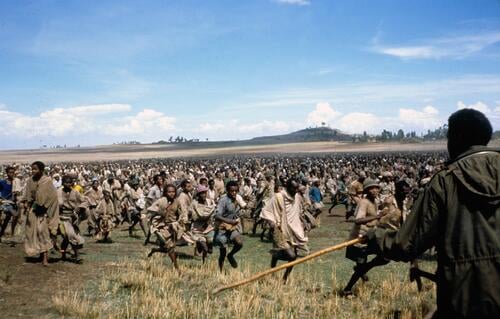
Au printemps 1984, la pluie ne tombe pas dans le nord du pays, la famine guette. Les équipes MSF tirent la sonnette d'alarme: il faut absolument apporter de la nourriture à Korem. Il faudra plusieurs mois pour que la gravité de la situation soit enfin reconnue, pour que le gouvernement lance un appel à l'aide internationale et parle de famine. Pour la première fois de son histoire, MSF envoie de façon massive de la nourriture, des médicaments, des tentes, des couvertures. Pour le gouvernement éthiopien, cette famine devient une arme providentielle pour redessiner la géographie humaine du pays. A Korem, la propagande officielle incite aux départs "volontaires" vers le sud. Certains s'en vont, les autres restent, sans imaginer l'enfer qui leur est réservé en représailles : la nourriture est désormais réservée à certains, l'aide alimentaire détournée vers le sud.
MSF Speaking Out

Famine and forced relocations in Ethiopia 1984-1986

https://www.msf.org/sites/default/files/2026-04/VA_Famine_and_Forced_Relocations_in_Ethiopia_1984-1986.pdf - 1 Jan 2005
 
Exode.
Au printemps 1984, la pluie ne tombe pas dans le nord du pays, la famine guette. Les équipes MSF tirent la sonnette d'alarme: il faut absolument apporter de la nourriture à Korem. Il faudra plusieurs mois pour que la gravité de la situation soit enfin reconnue, pour que le gouvernement lance un appel à l'aide internationale et parle de famine. Pour la première fois de son histoire, MSF envoie de façon massive de la nourriture, des médicaments, des tentes, des couvertures. Pour le gouvernement éthiopien, cette famine devient une arme providentielle pour redessiner la géographie humaine du pays. A Korem, la propagande officielle incite aux départs "volontaires" vers le sud. Certains s'en vont, les autres restent, sans imaginer l'enfer qui leur est réservé en représailles : la nourriture est désormais réservée à certains, l'aide alimentaire détournée vers le sud.
MSF Speaking Out

Famine and Forced Relocations in Ethiopia 1984-1986

The 'Famine and Forced Relocations in Ethiopia 1984-1986' case study describes the constraints, questions and dilemmas faced by MSF during the famine that decimated Ethiopian populations in 1984-1985. This famine triggered an unprecedented humanitarian mobilisation and huge media attention. Speaking Out Case Studies - 1 Jan 2005
 
msf-placeholder
Natural hazards

MSF prepares fourth full cargo shipment for tsunami earthquake zone

Over 100 tonnes in total will be on the ground in the crisis zone within 24 hours. MSF teams are present and more staff are being dispatched every day. Project Update - 30 Dec 2004
 
msf-placeholder
Indonesia

MSF clinic opens in Aceh

Medical team starts work with survivors in a town half destroyed by the earthquake and floods. In the next 48 hours, two MSF staff will make an air assessment of the northeast part of Aceh, using a helicopter to survey the 400km stretch of land between Medan and Banda Aceh. Press Release - 29 Dec 2004
 
msf-placeholder
Natural hazards

A rapid look at the immediate MSF action at the Bay of Bengal quake disaster scene

A rapid look at the immediate MSF action at the Bay of Bengal quake disaster scene. Project Update - 29 Dec 2004
 
msf-placeholder
Natural hazards

More MSF emergency workers to South Asia earthquake and tsunami zone

"We expect to find the damage inflicted by two consecutive disasters. The earthquake and aftershocks have caused buildings to collapse, and the subsequent tidal waves will have created further havoc," says Jan Weuts, emergency coordinator in Belgium. Press Release - 27 Dec 2004
 
msf-placeholder
Natural hazards

MSF prepares to deliver assistance to earthquake stricken areas of Southeast Asia

A cargo plane carrying 32 tons of medical and sanitation materials for the MSF intervention will set of for Southeast Asia as soon as possible. Press Release - 26 Dec 2004
Four mothers posing in a corridor of the Hospital in Bili. All four of them are staying in the hospital with their child, that's suffering from a severe case of malaria. Since the beginning of the project in 2016, the pediatric ward already treated more than 4.000 cases of complicated/severe form of malaria.
Médecins Sans Frontières (MSF)

Independent medical humanitarian assistance

We provide medical assistance to people affected by conflict, epidemics, disasters, or exclusion from healthcare. Our teams are made up of tens of thousands of health professionals, logistic and administrative staff - most of them hired locally. Our actions are guided by medical ethics and the principles of independence and impartiality. We are a non-profit, self-governed, member-based organisation.

Learn more