



Ebola disease in DRC: find out how we're responding
Learn more
7999 Results
 
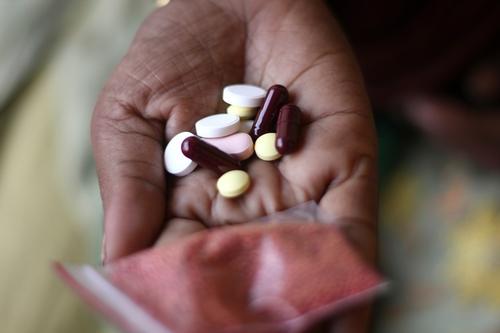
Carmen Jose-Panti is 32 years old. She is HIV positive and lives with her husband and two children from a previous marriage in Tete in Mozambique. Carmen discovered she was HIV positive in 2007 and started antiretroviral treatment in 2009. She runs a small business from home selling charcoal, soap, salt and other domestic items. She is also attending night school. Carmen is part of a six-woman community HIV group that is supported by MSF. The members of the group support each other and once a month, they take it in turns to travel to the health centre to collect refills of medicines for themselves and the rest of the group.
HIV/AIDS

Speed Up Scale Up

A first-of-its-kind study released today by Médecins Sans Frontières (MSF) maps progress across 23 countries on HIV treatment strategies, tools and policies needed to increase treatment scale-up. Report - 24 Jul 2012
 
Carmen Jose-Panti is 32 years old. She is HIV positive and lives with her husband and two children from a previous marriage in Tete in Mozambique. Carmen discovered she was HIV positive in 2007 and started antiretroviral treatment in 2009. She runs a small business from home selling charcoal, soap, salt and other domestic items. She is also attending night school. Carmen is part of a six-woman community HIV group that is supported by MSF. The members of the group support each other and once a month, they take it in turns to travel to the health centre to collect refills of medicines for themselves and the rest of the group.
HIV/AIDS

First-ever study of HIV treatment policies in 23 countries

A first-of-its-kind study released by MSF maps progress across 23 countries on HIV treatment strategies, tools and policies needed to increase treatment scale-up. The results show that governments have made improvements to get better antiretroviral (ARV) treatment to more people, but implementation of innovative community-based strategies is lagging in some countries. Press Release - 24 Jul 2012
 
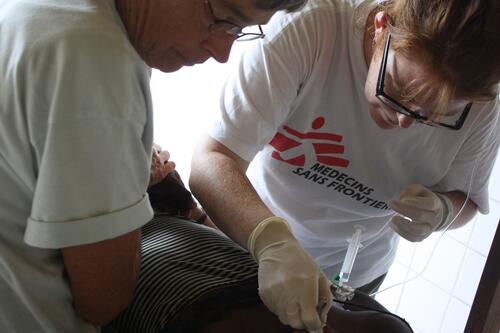
An MSF nurse gives a blood test to an HIV-positive patient, to check her viral load and the number of CD4 cells. A week later the patient was advised to start with ARV therapy.<br/>
MSF treats HIV/AIDS patients in prisons and in the civil sector of Transnistria, a breakaway region of Moldova. The region suffers from a lack of resources and political instability.  Here, the prevalence of HIV/AIDS is around 4 times higher than in the rest of Moldova. MSF provides life-prolonging anti-retroviral (ARV) therapy for the patients, as well as testing, counseling, health education for the HIV-positive people and their families, rehabilitation and equipment of health facilities and laboratories, and trainings for the local medical personnel. The project is scheduled to be handed-over to the local Ministry of Health by the end of 2008. 1
HIV/AIDS

Undetectable: How Viral Load Monitoring Can Improve HIV Treatment in Developing Countries

As HIV treatment is scaled up in developing countries, the lack of access to viral load monitoring - routine in wealthy countries - must be addressed. Increased access to viral load monitoring can help people stay on antiretroviral combinations as long as possible, and help stave off resistance, according to a new report released today by the international medical humanitarian organisation Médecins Sans Frontières (MSF). Report - 23 Jul 2012
 
msf-placeholder
HIV/AIDS

An HIV teen patient

An interview with Mqondisi Mkandla, a HIV-positive teen patient. He is travelling to the United States to share his story at the International AIDS Conference. He shares his impressions before the trip in this interview. Voices from the Field - 23 Jul 2012
 
An MSF nurse gives a blood test to an HIV-positive patient, to check her viral load and the number of CD4 cells. A week later the patient was advised to start with ARV therapy.<br/>
MSF treats HIV/AIDS patients in prisons and in the civil sector of Transnistria, a breakaway region of Moldova. The region suffers from a lack of resources and political instability.  Here, the prevalence of HIV/AIDS is around 4 times higher than in the rest of Moldova. MSF provides life-prolonging anti-retroviral (ARV) therapy for the patients, as well as testing, counseling, health education for the HIV-positive people and their families, rehabilitation and equipment of health facilities and laboratories, and trainings for the local medical personnel. The project is scheduled to be handed-over to the local Ministry of Health by the end of 2008. 1
HIV/AIDS

Viral load monitoring improves HIV treatment in developing countries

As HIV treatment is scaled up in developing countries, the lack of access to viral load monitoring — routine in wealthy countries — must be addressed. Increased access to viral load monitoring can help people stay on antiretroviral combinations as long as possible, and help stave off resistance, according to a new report released today by MSF. Press Release - 23 Jul 2012
 
msf-placeholder
Pakistan

MSF operates in the heart of the tribal areas

The situation in the Federally Administered Tribal Areas (FATA) was particularly unstable in 2010 and early 2011. Spikes of violence, isolation, closure of supply routes, and the near-collapse of the health system created obstacles to obtaining medical care. MSF has been working in Kurram Agency since 2004, supporting the hospitals in Alizai (a Shiite community) and Sadda (a Sunni enclave) since May 2006 and is trying to meet the populations' medical needs. Project Update - 20 Jul 2012
 
msf-placeholder
Afghanistan

Tackling child malnutrition in Helmand

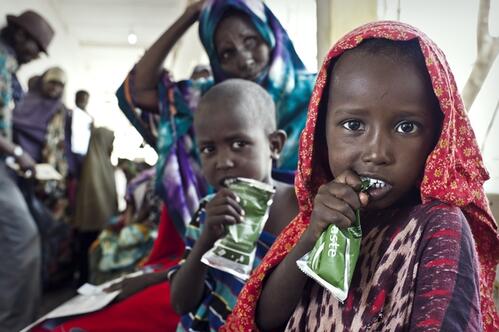
MSF opened its feeding centre in Boost hospital in Lashkar Gah in December 2011 to tackle the chronic problem of malnutrition among children in Helmand. This specialised unit helps children on the verge of starvation gain weight through assisted feeding. Project Update - 19 Jul 2012
 
msf-placeholder
HIV/AIDS

Donors must commit to fight the HIV emergency

New United Nations data points to gains made in the fight against HIV/AIDS, but countries most affected by the pandemic continue to struggle to place enough people on treatment and to implement the best science and strategies to fight the disease. “It would be outrageous to assume that African states could combat this emergency alone, given their current limited resources.” Press Release - 19 Jul 2012
 
msf-placeholder
Democratic Republic of Congo

MSF forced to suspend medical activities in Walikale

Heavy fighting over the last few days in Walikale, a town in the troubled North Kivu province of the Democratic Republic of the Congo (DRC), has forced MSF to suspend its medical activities despite the area being in the midst of a malaria outbreak. Press Release - 18 Jul 2012
 
msf-placeholder
Chad

A malnutrition patient's story

A story about how a two-year-old patient survived three killer diseases, including malnutrition. Voices from the Field - 17 Jul 2012
Four mothers posing in a corridor of the Hospital in Bili. All four of them are staying in the hospital with their child, that's suffering from a severe case of malaria. Since the beginning of the project in 2016, the pediatric ward already treated more than 4.000 cases of complicated/severe form of malaria.
Médecins Sans Frontières (MSF)

Independent medical humanitarian assistance

We provide medical assistance to people affected by conflict, epidemics, disasters, or exclusion from healthcare. Our teams are made up of tens of thousands of health professionals, logistic and administrative staff - most of them hired locally. Our actions are guided by medical ethics and the principles of independence and impartiality. We are a non-profit, self-governed, member-based organisation.

Learn more