



Ebola disease in DRC: find out how we're responding
Learn more
8003 Results
 
msf-placeholder
Sierra Leone

Slum environment worsens spread of cholera

Sierra Leone’s capital Freetown is currently struggling to contain a cholera outbreak, which has affected over 1500 people and claimed at least 17 lives in the city. Project Update - 31 Jul 2012
 
msf-placeholder
Uganda

MSF team fights Ebola outbreak

An emergency team from MSF is in Kagadi, in western Uganda’s Kibaale district, to help fight an outbreak of the Ebola virus. Other MSF teams in Uganda are closely monitoring the situation. The Ebola outbreak, confirmed by the Ugandan government on 28 July, has killed at least 14 people, while at least 20 more are suspected to be infected. Press Release - 31 Jul 2012
 
msf-placeholder
Democratic Republic of Congo

Emergency malaria intervention treats 10,000 patients a month

NSF has handed over its emergency malaria project in Kinkondja, a remote area in the Katanga province of the Democratic Republic of the Congo (DRC), after a four month intervention that saw 10,000 patients being treated every month. Project Update - 26 Jul 2012
 
msf-placeholder
South Sudan

'What we are facing is an extremely serious situation'

About 100,000 refugees fleeing the fighting in the Sudanese state of Blue Nile have taken refuge in Maban county in South Sudan. In the camp of Batil, home to 34,000 people, the number of children with malnutrition is increasing but humanitarian response remains inadequate. John Tzanos, MSF emergency coordinator in the region, provides an update. Voices from the Field - 26 Jul 2012
 
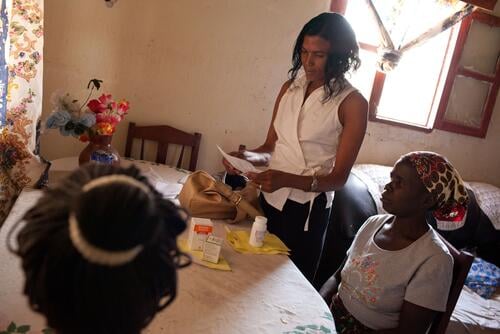
Carmen Jose-Panti is 32 years old. She is HIV positive and lives with her husband and two children from a previous marriage in Tete in Mozambique. Carmen discovered she was HIV positive in 2007 and started antiretroviral treatment in 2009. She runs a small business from home selling charcoal, soap, salt and other domestic items. She is also attending night school. Carmen is part of a six-woman community HIV group that is supported by MSF. The members of the group support each other and once a month, they take it in turns to travel to the health centre to collect refills of medicines for themselves and the rest of the group.
HIV/AIDS

Closer to Home: Delivering antiretroviral therapy in the community

This report highlights experience delivering ART in four countries in southern Africa. Report - 25 Jul 2012
 
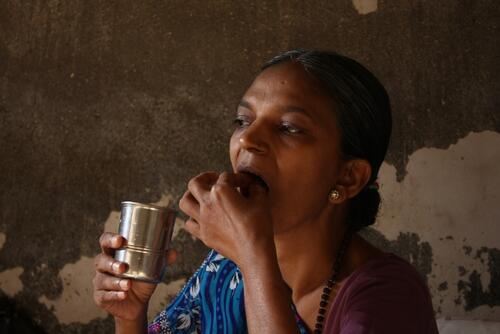
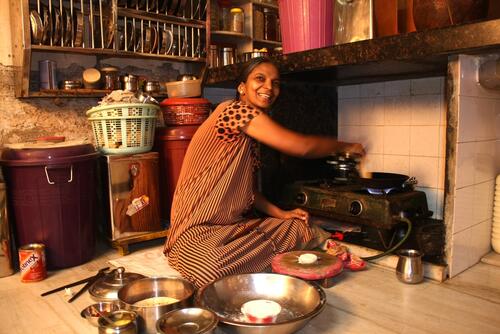
Veena Panchal lives in Andheri East, a crowded suburb of Mumbai, along with her two children.  She found out in 2002 that she was HIV positive, after the death of her husband from HIV/AIDS. Her two children are HIV negative.
HIV/AIDS

Untangling the web of antiretroviral price reductions - 15th Edition

Middle-income countries are increasingly taking measures to overcome the patents that price drugs out of reach, according to a new report released today by the international medical humanitarian organization Médecins Sans Frontières (MSF), Untangling the web of antiretroviral price reductions. Report - 25 Jul 2012
 
Veena Panchal lives in Andheri East, a crowded suburb of Mumbai, along with her two children.  She found out in 2002 that she was HIV positive, after the death of her husband from HIV/AIDS. Her two children are HIV negative.
HIV/AIDS

Middle-income countries are overcoming patents to bring down HIV drug prices

Middle-income countries are increasingly taking measures to overcome the patents that price drugs out of reach, according to a new report released by MSF 'Untangling the web of antiretroviral price reductions'. Press Release - 25 Jul 2012
 
Carmen Jose-Panti is 32 years old. She is HIV positive and lives with her husband and two children from a previous marriage in Tete in Mozambique. Carmen discovered she was HIV positive in 2007 and started antiretroviral treatment in 2009. She runs a small business from home selling charcoal, soap, salt and other domestic items. She is also attending night school. Carmen is part of a six-woman community HIV group that is supported by MSF. The members of the group support each other and once a month, they take it in turns to travel to the health centre to collect refills of medicines for themselves and the rest of the group.
HIV/AIDS

Speed Up Scale Up

A first-of-its-kind study released today by Médecins Sans Frontières (MSF) maps progress across 23 countries on HIV treatment strategies, tools and policies needed to increase treatment scale-up. Report - 24 Jul 2012
 
Carmen Jose-Panti is 32 years old. She is HIV positive and lives with her husband and two children from a previous marriage in Tete in Mozambique. Carmen discovered she was HIV positive in 2007 and started antiretroviral treatment in 2009. She runs a small business from home selling charcoal, soap, salt and other domestic items. She is also attending night school. Carmen is part of a six-woman community HIV group that is supported by MSF. The members of the group support each other and once a month, they take it in turns to travel to the health centre to collect refills of medicines for themselves and the rest of the group.
HIV/AIDS

First-ever study of HIV treatment policies in 23 countries

A first-of-its-kind study released by MSF maps progress across 23 countries on HIV treatment strategies, tools and policies needed to increase treatment scale-up. The results show that governments have made improvements to get better antiretroviral (ARV) treatment to more people, but implementation of innovative community-based strategies is lagging in some countries. Press Release - 24 Jul 2012
 
An MSF nurse gives a blood test to an HIV-positive patient, to check her viral load and the number of CD4 cells. A week later the patient was advised to start with ARV therapy.<br/>
MSF treats HIV/AIDS patients in prisons and in the civil sector of Transnistria, a breakaway region of Moldova. The region suffers from a lack of resources and political instability.  Here, the prevalence of HIV/AIDS is around 4 times higher than in the rest of Moldova. MSF provides life-prolonging anti-retroviral (ARV) therapy for the patients, as well as testing, counseling, health education for the HIV-positive people and their families, rehabilitation and equipment of health facilities and laboratories, and trainings for the local medical personnel. The project is scheduled to be handed-over to the local Ministry of Health by the end of 2008. 1
HIV/AIDS

Undetectable: How Viral Load Monitoring Can Improve HIV Treatment in Developing Countries

As HIV treatment is scaled up in developing countries, the lack of access to viral load monitoring - routine in wealthy countries - must be addressed. Increased access to viral load monitoring can help people stay on antiretroviral combinations as long as possible, and help stave off resistance, according to a new report released today by the international medical humanitarian organisation Médecins Sans Frontières (MSF). Report - 23 Jul 2012
Four mothers posing in a corridor of the Hospital in Bili. All four of them are staying in the hospital with their child, that's suffering from a severe case of malaria. Since the beginning of the project in 2016, the pediatric ward already treated more than 4.000 cases of complicated/severe form of malaria.
Médecins Sans Frontières (MSF)

Independent medical humanitarian assistance

We provide medical assistance to people affected by conflict, epidemics, disasters, or exclusion from healthcare. Our teams are made up of tens of thousands of health professionals, logistic and administrative staff - most of them hired locally. Our actions are guided by medical ethics and the principles of independence and impartiality. We are a non-profit, self-governed, member-based organisation.

Learn more