


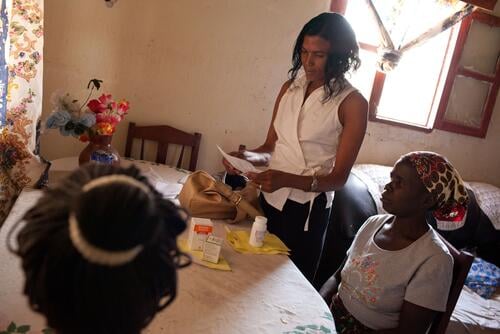
This report highlights experience delivering ART in four countries in southern Africa.
There has been remarkable progress in the past decade in increasing the access to antiretroviral therapy (ART) in resource-limited settings. Ambitious target setting by the World Health Organization and UNAIDS backed by substantial financial support from major donors has catalysed a global effort to scale up access to ART. At the end of 2011, more than eight million people were receiving ART in low- and middle-income countries; more than three quarters of all people on ART live in Africa.
The benefits of ART in reducing mortality and morbidity have been convincingly demonstrated. Despite initial concerns about the feasibility of large-scale HIV treatment programming in resource-limited settings, early reports showed comparable treatment outcomes to those reported from upper-income countries. More recent data suggests that people receiving ART in sub-Saharan Africa can have an almost normal life expectancy. Recent evidence also demonstrates that treating people early with ART reduces HIV transmission, which further supports the need to increase and sustain access to antiretroviral therapy.
Democratic Republic of Congo
Thousands at risk of violence and malaria in Katanga province
Project Update
25 Jan 2013