



Ebola disease in DRC: find out how we're responding
Learn more
8009 Results
 
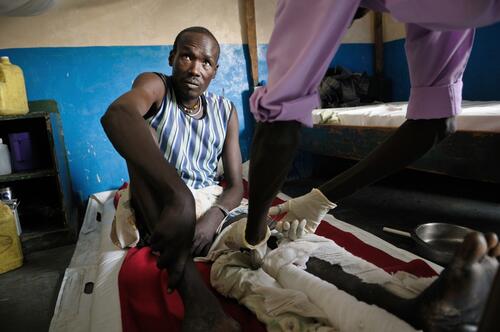
40-year-old Erogen Labarach in the MSF hospital in Pibor. "The bullet entered my leg, and then came out the other side. The place where I was shot was along the Kengen river. I have now been here for three weeks. At first I tried to bind my leg on my own. But when I came here the doctor, she cleaned everything and she dressed my leg properly, as you see it now. And they gave me medicines too." Full testimony available from OCB Cell 3 comms officer...

Jonglei State in South Sudan is in the grip of a cycle of extremely violent inter-communal fighting. Since 2008 MSF has witnessed in increase in intensity of the generations-old cattle-rustling between communities of different ethnicity. Over Christmas and New Year of 2011 a particularly violent attack in the area around Pibor and the outreach location of Lekwongole village displaced tens of thousands and left Lekwongole and some surrounding villages razed to the ground. MSF's hospital in Pibor was looted and the clinic in Lekwongole was largely destroyed. MSF treated 108 trauma victims in the following weeks, many women and children with gunshot wounds. But the consequences of fear and displacement in the bush continued long after, with malaria and malnutrition at very high levels in MSF's hospital.
South Sudan

90,000 deprived of care due to violence

Escalating violence has forced MSF to suspend medical services in two out of three of its facilities in Pibor county in Jonglei state, South Sudan, leaving up to 90,000 people deprived of essential medical care. Due to the insecurity, the populations of Lekwongole and Gumuruk, including all MSF staff and their families, have fled their homes to seek refuge in the bush. Project Update - 1 Oct 2012
 
msf-placeholder
Kenya

Médecins Sans Frontières calls for immediate action

This week, government leaders gather in Geneva for the 63rd UNHCR Executive Committee meeting, while in Dadaab, the world’s largest refugee camp, Somali refugees continue to live in extreme conditions and fear. MSF urges States Parties to the Refugee Convention to engage with the host Government of Kenya and UNHCR to fulfil their responsibilities towards the refugees. Press Release - 1 Oct 2012
 
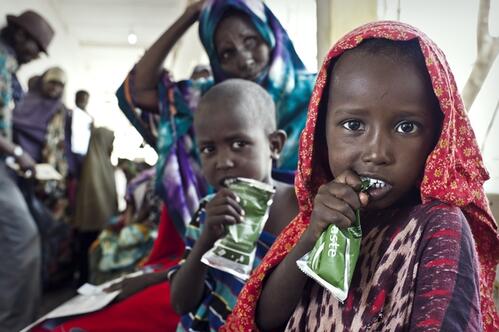
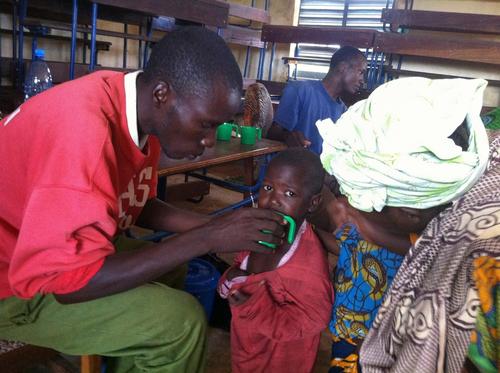
MSF staff distributing Plumpy Nut, or Eezee Paste, a nutritious paste for malnourished children. Ambulatory Therapeutic Feeding program at the hospital MSF runs in Galcayo South.
Somalia

Kismayo patients forced to flee fighting

The last children under treatment for severe malnutrition today left the Médecins Sans Frontières (MSF) feeding centre in the southern Somali city of Kismayo as parents fear the impact of imminent fighting on the city. Press Release - 28 Sep 2012
 
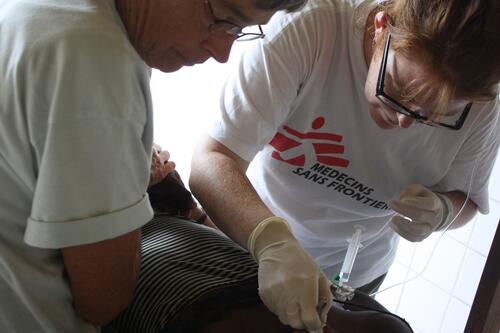
September 2012, MSF medical staff care for a war-wounded patient in Pinga, North Kivu province of the Democratic Republic of Congo
Democratic Republic of Congo

Aid workers flee conflict in North Kivu

The conflict in the east of DRC has worsened to such an extent that Congolese staff working for MSF in North Kivu province now fear for their safety. Most of the Congolese health workers and support staff employed by MSF in Pinga have fled following active fighting between armed groups in the area. People now no longer have access to critical medical services. Press Release - 27 Sep 2012
 
July 2012, in the health zone of Bouna, disctrict of Moïssala, Chad. 
For the first time, MSF is rolling out a large-scale in-situ strategy for the preventive treatment of malaria, called seasonal malaria chemoprevention (SMC), in a pilot projects in Chad.  Antimalarial treatments have been administered to some 10,000 children aged between 3 months and 5 years old. MSF teams saw a drop fluctuating between 72% and 86% in the number of simple malaria cases.
Malaria

'We may have found a real arm to fight malaria' in Mali and Chad

Since July, MSF has been employing seasonal malaria chemoprevention (SMC) for the first time in two Sahelian countries. The initial results are encouraging. Dr Estrella Lasry, malaria specialist at MSF, reflects on the different aspects and future prospects of this strategy. Voices from the Field - 24 Sep 2012
 
August 2012, in the village of Karangasso, district of Koutiala, Mali. For the first time, MSF is rolling out a large-scale in-situ strategy for the preventive treatment of malaria, called seasonal malaria chemoprevention (SMC), in a pilot projects in Mali.  Antimalarial treatments have been administered to some 165,000 children aged between 3 months and 5 years old. The initial results are highly encouraging, with a 65% drop in the number of malaria cases. Furthermore, the number of malaria-associated hospitalisations plummeted from 228 to 70 per week.
Malaria

A novel prevention programme has dramatically reduced malaria cases in Mali and Chad

A large-scale malaria prevention programme appears to be drastically reducing the number of new cases of the disease among young children during the peak transmission season. Preliminary results from the programme, known as seasonal malaria chemoprevention (SMC) show that the number of cases of simple malaria dropped by 65 per cent in the intervention area in Mali, and by up to 86 per cent in Chad. Press Release - 24 Sep 2012
 
msf-placeholder
Sleeping sickness

A new approach to tackle sleeping sickness

One small team, one big goal Project Update - 24 Sep 2012
 
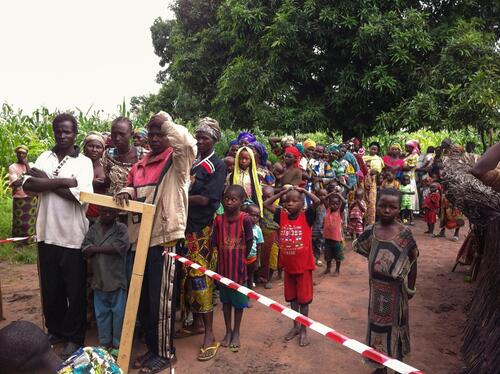
When 12.000 refugees were eventually transferred to Bambasi in July, nearly a quarter of the children under 5 suffered from acute malnutrition. Other refugees would have chosen to return to Sudan.<br/>
After vaccinated the children against measles, MSF opened a treatment center for malnutrition in Bambasi camp and distributes nutritional supplements to the most vulnerable until the situation stabilizes. *** Local Caption *** For over a year, nearly 40,000 Sudanese have fled the bombing of the Sudanese army in Blue Nile region to seek refuge in Ethiopia. About 18,000 of them lived in the camp of Ad-Amazin, about twenty kilometers from the border. End of April 2012, the Ethiopian authorities decided to close the camp, which was considered too close to Sudan, and move the refugees to a new site located near Bambasi in the Benishangul-Gumuz Region, with a capacity of 20,000 people and more than hundred kilometers from the Sudanese border. Humanitarian assistance, particularly food distribution and health care, has been interrupted end of April 2012 by the Ethiopian authorities for more than 2 months following violent protests by the refugees who refused to leave Ad Amazin, where they were exploiting gold.
Ethiopia

MSF assists aid-deprived Sudanese refugees

More than 2,000 white tents line the green hills near the village of Bambasi, in western Ethiopia. Since July, they have been home to 12,000 Sudanese refugees who fled their homeland and are now taking sanctuary from conflict in a camp established by the Ethiopian authorities and the United Nations High Commissioner for Refugees (UNHCR). Project Update - 20 Sep 2012
 
Le 26 juin 2012. Yida, Soudan du sud. Camp de refugies de Yida. // PHOTOS : V. WARTNER/20 MINUTES.<br/>South Sudan, Yida refugee camp.
South Sudan

Making progress in Yida camp

The work of MSF in Yida camp is proving effective. Mortality rates in the camp have been brought down. However, living conditions remain a concern, as does the high prevalence of disease. The main causes of mortality have not changed since early July when the situation reached a critical threshold. André Heller, MSF's head of mission in South Sudan, explains why. Voices from the Field - 18 Sep 2012
 
msf-placeholder
Bahrain

MSF International President meets Bahrain delegation in Geneva

The International President of Médecins Sans Frontières (MSF), Dr Unni Karunakara, met yesterday with a Bahraini parliamentary delegation that included the Minister of Human Rights, Dr Salah Bin Ali Abdularahman. Statement - 18 Sep 2012
Four mothers posing in a corridor of the Hospital in Bili. All four of them are staying in the hospital with their child, that's suffering from a severe case of malaria. Since the beginning of the project in 2016, the pediatric ward already treated more than 4.000 cases of complicated/severe form of malaria.
Médecins Sans Frontières (MSF)

Independent medical humanitarian assistance

We provide medical assistance to people affected by conflict, epidemics, disasters, or exclusion from healthcare. Our teams are made up of tens of thousands of health professionals, logistic and administrative staff - most of them hired locally. Our actions are guided by medical ethics and the principles of independence and impartiality. We are a non-profit, self-governed, member-based organisation.

Learn more