


Ebola disease in DRC: find out how we're responding
Learn more
7999 Results
 
Dr. Unni Karunakara, International President of MSF, consults with a survivor of family and sexual violence at the MSF family support centre in Lae,Papua New Guinea, where women receive medical and psychological assistance for what is considered one of the most endemic problems on the island nation.  Women who come to the centre receive an essential package of care including medical and psychological first aid, the provision of post-exposure prophylaxis for HIV infection, vaccinations for Hepatitis B and tetanus and contraception to prevent unwanted pregnancies.
Papua New Guinea

Victims of sexual violence must not suffer in silence

Every day, a woman in Papua New Guinea suffers the consequences of being raped and beaten by a member of their own family. Voices from the Field - 7 Dec 2012
 
A local health worker takes a blood sample from a young girl in Mboki, in the south-east region of the Central African Republic.  A MSF team spent 13 days in the village and screened 4,548 people for sleeping sickness. Four people received treatment.
Sleeping sickness

National control activities crippled by lack of funding

Advances in the development of new diagnostic tests and treatment bode well for the fight against sleeping sickness. Two new rapid screening tests are expected next year, and one new oral treatment is in clinical trial. However, national control activities on the ground are crippled by a lack of sustainable funding, warns MSF. Press Release - 6 Dec 2012
 
In Doro, South Sudan MSF vaccinating one of the last 10 children against Measles of a campaign reaching 22.014 children in 3 days. Measles vaccinations are a key part of MSF refugee response - measles is a real threat to anyone not vaccinated.
Vaccination

GAVI needs to offer lower vaccine prices to humanitarian actors

The GAVI Alliance should systematically extend the prices it obtains for vaccines to humanitarian actors that are often well placed to reach unvaccinated children, MSF said today at the GAVI Partners Forum meeting in Tanzania. Currently, humanitarian actors such as MSF are not able to access these prices, and are left to negotiate access to vaccines on a cumbersome case-by-case basis. Press Release - 5 Dec 2012
 
msf-placeholder
Global health

Visions for the future of healthcare and how we're going to pay for it

Speech by Dr Unni Karunakara, Médecins Sans Frontières International President, at the Global Healthcare Summit, The Economist, London, 29 November 2012 Speech - 30 Nov 2012
 
Eden, a nine-year-old boy, was seriously injured in the recent fighting between the Armed Forces of the Democratic Republic of Congo (FARDC) and the M23 rebel group in Goma, eastern Congo. He is one of 60 wounded patients currently being treated by MSF teams and local health staff in Virunga hospital. Goma, North Kivu.
Democratic Republic of Congo

Nine-year-old Eden wounded in Goma violence

Eden, a nine-year-old boy, was seriously injured in the recent fighting between the Armed Forces of the Democratic Republic of the Congo and the M23 rebel group in Goma, eastern Congo. He is one of 60 wounded patients currently being treated by MSF teams and local health staff in Virunga hospital. Voices from the Field - 30 Nov 2012
 
Displaced people. Mugunga 1 camp, Goma, North Kivu.
Democratic Republic of Congo

Critical humanitarian situation in east of country

An already fragile humanitarian situation in eastern Democratic Republic of the Congo has deteriorated further after the border city of Goma fell to M23 rebels last week. Teams from MSF have rapidly set up additional emergency response activities, treating victims of violence and providing assistance to newly displaced people in and around Goma. Project Update - 30 Nov 2012
 
msf-placeholder
Morocco

"In Morocco migrants are trapped in a constant cycle of violence"

Interview with David Cantero, Médecins Sans Frontières (MSF) head of mission in Morocco Voices from the Field - 29 Nov 2012
 
MSF Expert Client performing a HIV test at the MSF Dipping Tank community testing campaign at Nhletsheni, in Shiselweleni region, south of Swaziland.
Eswatini

Trying out new approaches to treat HIV

Thirty years into the HIV/AIDS epidemic, and more than a decade into antiretroviral (ARV) treatment being introduced in developing countries, the latest scientific evidence shows that treatment both keeps people healthy, and prevents the virus from spreading to others. Micaela Serafini,MSF medical referent, speaks about MSF’s work in Swaziland. Voices from the Field - 28 Nov 2012
 
Karajoi Maze (in red skirt) on the outskirts of Lekwongole village. Lekwongole was the scene of the abduction of her daughter and she feels uncomfortable being bak in the village. "My house was burned, totally. And my daughter was taken by the attackers. And our family was scattered, some of them taken away too…

We are not staying at night in the village. We are sleeping in the bush because we are afraid. When you come to the village, you hear people saying they have heard that the attackers are coming again from this direction or that direction, and you run away again. That is why we are not coming back to town, but are just staying away. Since the attack, we are living in fear." Full testimony available from OCB Cell 3 comms advisor.

Jonglei State in South Sudan is in the grip of a cycle of extremely violent inter-communal fighting. Since 2008 MSF has witnessed in increase in intensity of the generations-old cattle-rustling between communities of different ethnicity. Over Christmas and New Year of 2011 a particularly violent attack in the area around Pibor and the outreach location of Lekwongole village displaced tens of thousands and left Lekwongole and some surrounding villages razed to the ground. MSF's hospital in Pibor was looted and the clinic in Lekwongole was largely destroyed. MSF treated 108 trauma victims in the following weeks, many women and children with gunshot wounds. But the consequences of fear and displacement in the bush continued long after, with malaria and malnutrition at very high levels in MSF's hospital.
South Sudan

South Sudan’s hidden crisis: how violence against civilians is devastating communities and preventing access to life saving healthcare in Jonglei

MSF report reveals medical consequences of violence and the impact on healthcare. Report - 27 Nov 2012
 
MSF hospital in Lankien South Sudan. Patients come and go from the main entrance of the hospital.
South Sudan

Violence a 'hidden crisis' in Jonglei

A report released today by MSF highlights the devastating impact of violence on the lives and health of civilians in South Sudan’s Jonglei state. Women and children as young as four months old are among the victims. Healthcare is threatened as medical facilities are targeted and destroyed. Press Release - 27 Nov 2012
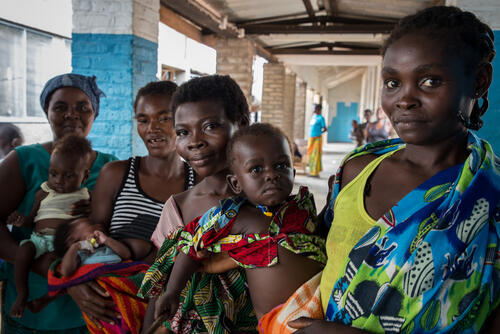
Four mothers posing in a corridor of the Hospital in Bili. All four of them are staying in the hospital with their child, that's suffering from a severe case of malaria. Since the beginning of the project in 2016, the pediatric ward already treated more than 4.000 cases of complicated/severe form of malaria.
Médecins Sans Frontières (MSF)

Independent medical humanitarian assistance

We provide medical assistance to people affected by conflict, epidemics, disasters, or exclusion from healthcare. Our teams are made up of tens of thousands of health professionals, logistic and administrative staff - most of them hired locally. Our actions are guided by medical ethics and the principles of independence and impartiality. We are a non-profit, self-governed, member-based organisation.

Learn more