



Ebola disease in DRC: find out how we're responding
Learn more
8007 Results
 
In response to a malaria outbreak, MSF launched a 4-month emergency project in Kinkondja, a remote area in the Katanga province of the Democratic Republic of Congo (DRC). During the
four month intervention, a medical team treated 10,000 patients every month. In total, almost 40,000 men, women and children were treated for malaria.
 
â??When we arrived, one in ten of our patients required immediate hospitalisation. In the last weeks of our intervention, we had reduced this to one in a hundred.â? said Melanie Silbermann, MSFâ??s medical co-ordinator in Lubumbashi.
 
MSFâ??s intervention in Kinkondja was just one emergency project among the many that MSF is currently running throughout the Democratic Republic of Congo, where the disease is endemic. Malaria remains the leading cause of death for children under five. In the Katanga province, and elsewhere in the Congo, the absence of other healthcare providers and overstretched health systems leave people vulnerable to contracting malaria.
Democratic Republic of Congo

Lives at risk as fighting continues in Katanga province

Fighting between government forces and Mai-Mai militias in the Katanga province of the Democratic Republic of Congo has caused thousands of people to flee their homes and hundreds to seek refuge at the MSF hospital in Shamwana. Statement - 20 Feb 2013
 
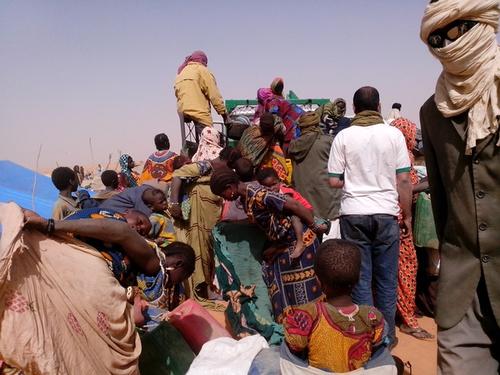
Since January 2012, nearly 67,000 refugees, mostly women and children arrived in the border town of Fassala. The number of arrivals has decreased from 1,000 to 400 per day in recent weeks. Last year, refugees were leaving
in an organized manner but since January 2013, nearly 14,000 refugees fled in haste cities of Timbuktu, Lere, Goundam Larnab Nianfuke in northern Mali. Many people arrived with few belongings after traveling for several
days. For the moment, the number of tents distributed is insufficient so families are exposed to the dust.
Project Update

Desperate conditions causing disease among Malian refugees

Crisis Update - 15 Feb 2013
 
msf-placeholder
Burundi

Women are still suffering from the backyard disease

Project Update - 15 Feb 2013
 
Hiloweyn camp is the fourth camp in the Liben region opened mid 2011. MSF started working in Hiloweyn refugee camp August 2011 and provides primary health care, psycho social care, TB care and runs a nutritional program, and an out patient department (OPD). The camp now counts 25000 (twenty-five thousand) refugees.
Somalia

Hear my voice: Somalis on living in a humanitarian crisis

In a report released today, MSF highlights violence, displacement and food shortages as salient features of Somalia’s humanitarian landscape. The report draws on a survey of more than 800 Somali patients attending MSF medical facilities in Somalia and in Ethiopian refugee camps, as well as quotes from personal testimonies from community members. Report - 13 Feb 2013
 
MSF midwife Mariam Toure (centre) treating patients at the Sossokoira Community Health Centre in Gao, in northern Mali, Feb 6, 2013.
Mali

We will not abandon our patients

Project Update - 13 Feb 2013
 
Dadaab, Kenya - July 2011

The eastern regions of the Horn of Africa have experienced consecutive poor rainy seasons, resulting in one of the driest years in decades in many pastoral zones. The impact has been exacerbated by high local cereal prices, high livestock mortality, ongoing conflict, and restricted humanitarian access in some areas.

Tens of thousands of Somalis have been fleeing to Kenya and Ethiopia in search of assistance. Waves of people continue to arrive every day at the sprawling Dadaab refugee camp in eastern Kenya. With the camps already badly overcrowded\204originally built to hold 90,000 people, they now house four times that number\204many are forced to seek shelter in the surrounding desert.
Somalia

Crisis not over

In a report released today, MSF highlights violence, displacement and food shortages as salient features of Somalia’s humanitarian landscape. The report draws on a survey of more than 800 Somali patients attending MSF medical facilities in Somalia and in Ethiopian refugee camps, as well as quotes from personal testimonies from community members. Press Release - 13 Feb 2013
 
Doctor from MSF medical team examines a child with diarrhoea at MSF clinic in a refugee camp on the outskirts of Pauk Taw township, February 3, 2013. On that day, more than 80 diarrhoea cases were treated by MSF medical team. photo by Kaung Htet

Humanitarian emergency in Rakhine state

Project Update - 7 Feb 2013
 
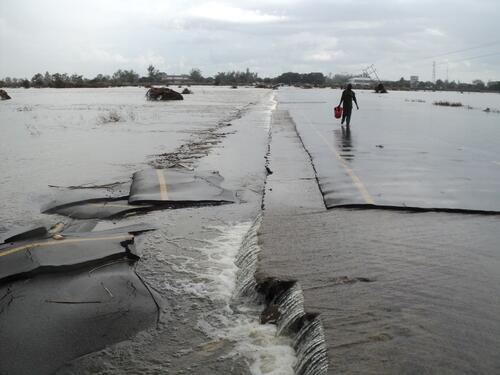
Road to Guija - The floods in Mozambique forced 150,000 people to leave their homes behind.
Mozambique

Emergency response to flooding

Project Update - 7 Feb 2013
 
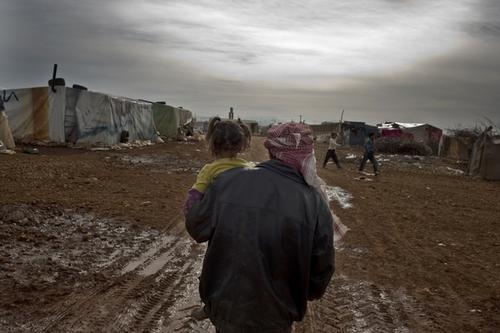
A Syrian refugee carries his two-year-old daughter in the rain-soaked Taybeh makeshift refugee camp outside Baalbek in Lebanon's Bekaa Valley, January 18, 2013.  Unhygienic conditions in the camp are leading to various communicable illnesses, especially among children. The camp is home to approximately 300 people who fled conflict in Syria.
Lebanon

Aid lags as Syrian refugee numbers increase

Syrians who have fled violent conflict at home in search of safety in Lebanon do not receive anywhere near adequate levels of humanitarian assistance and are living in extremely precarious conditions, a detailed survey released today by MSF reveals. More than half of interviewees cannot afford treatment for chronic diseases and nearly one-third have been forced to suspend treatment. Press Release - 7 Feb 2013
Four mothers posing in a corridor of the Hospital in Bili. All four of them are staying in the hospital with their child, that's suffering from a severe case of malaria. Since the beginning of the project in 2016, the pediatric ward already treated more than 4.000 cases of complicated/severe form of malaria.
Médecins Sans Frontières (MSF)

Independent medical humanitarian assistance

We provide medical assistance to people affected by conflict, epidemics, disasters, or exclusion from healthcare. Our teams are made up of tens of thousands of health professionals, logistic and administrative staff - most of them hired locally. Our actions are guided by medical ethics and the principles of independence and impartiality. We are a non-profit, self-governed, member-based organisation.

Learn more