



Ebola disease in DRC: find out how we're responding
Learn more
7999 Results
 
Angelina* is one of the 11% of people in Mozambique who are living with HIV; she also suffers from Kaposi’s Sarcoma, a type of cancer related to her condition, that causes painful and disfiguring lesions on the skin. Angelina sometimes develops wounds on her skin caused by infections secondary to HIV. “It’s happened that I scratch them until I can see the new skin below,” she says. “The skin goes up into the air like dust.” 
MSF offers treatment for Kaposi’s Sarcoma and other HIV-related complications at the Centro de Referência do Alto-Maé (CRAM), Maputo, Mozambique. Here, Angelina receives a consultation with doctors at the CRAM. 17 December 2012.
*Name has been changed
Mozambique

Treating Kaposi’s sarcoma in Maputo

In Maputo, the country’s capital, MSF is working alongside the Ministry of Health to treat patients suffering from Kaposi's sarcoma, a type of cancer that causes painful and disfiguring lesions on the skin. Project Update - 15 Jul 2013
 
msf-placeholder
Central African Republic

Civil war is killing children in the Central African Republic but it's not doing it with bullets

Getting health care has never been simple in the Central African Republic, where there’s a 16 percent chance a baby won’t make it past his or her fifth birthday and life expectancy tops out at age 50. In the Media - 15 Jul 2013
 
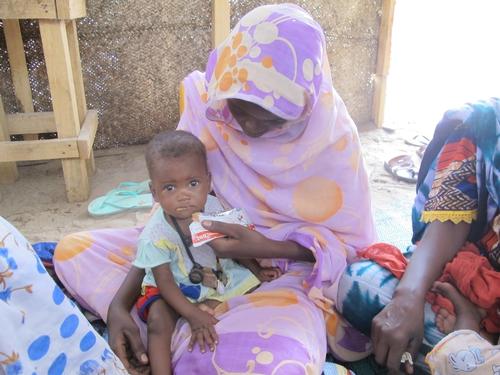
Women and children wait for treatment at a mobile clinic near Bossangoa, in the northwest region of the Central African Republic. MSF has launched an emergency response in the area to support a local hospital and health centres after they were looted during a coup d'etat. Many of the women and children are suffering from malaria, which is the main illness amongst children in the country.
Central African Republic

Central African Republic: Abandoned to its fate?

Three months after Seleka rebels seized power in Central African Republic, the country is in the grip of a humanitarian emergency while the international community looks on with indifference, warned MSF today. Report - 9 Jul 2013
 
msf-placeholder
Malawi

Scholarship scheme trains health workers for rural areas

MSF started a scholarship in collaboration with the Ministry of Health in 2010 to train health workers in the rural areas of Malawi. Project Update - 9 Jul 2013
 
Children`s workshop on sexual violence in a school in Cauca department, Colombia.

For over 50 years, civilians have been caught up in the daily violence of Colombia's armed conflict. People from the most affected regions are exposed to forced displacement, massacres, murders, mines, kidnappings, threats and sexual violence. The state fails to respond effectively to their medical and psychological needs, and these vulnerable populations are left to face alone the repercussions of violence in their daily life.
MSF is one of the few international medical-humanitarian organizations that provides primary and mental healthcare in some of the regions most affected by conflict. During 2012, its teams ran mobile clinics and permanent and semi-permanent health posts in Cauca, Nariño, Caquetá and Putumayo.
The findings of MSF’s report “The less visible wounds: Mental health, violence and conflict in southern Colombia”, based on the testimonies of more than 4,400 patients treated in MSF’s mental health programmes in the south of the country between January and December 2012, show that the majority (67%) had experienced one or more violence-related events and had daily exposure to various risk factors associated directly or indirectly with the dynamics of the conflict.
Colombia

An invisible problem

The psychological consequences of violence on ordinary people in the south of the country Project Update - 8 Jul 2013
 
Camp for displaced people in the South Sudan's state of Northern Bahr el Ghazal.
South Sudan

20,000 people neglected after fleeing disputed border region

More than 20,000 people are almost cut off from aid in South Sudan’s Northern Bahr el Ghazal state after fleeing violence in the disputed border region with Sudan, warned MSF today. Press Release - 8 Jul 2013
 
msf-placeholder

Gallery: Am Timan, Chad

A gallery of MSF's activities in Am Timan, Chad. Photo Story - 5 Jul 2013
 
High blood pressure is common amongst patients due to a diet rich in fat and sugar. It is not uncommon for people to have meat for breakfast. at the Timbuktu reference hospital tend to patients on Friday Feb. 1, 2013.

International Financial Report 2012

Annual Report - 5 Jul 2013
 
The main task of Flora Escourrou (center of the picture), a French nurse, was to supervise operations on the numerous vaccination sites.
Chad

We had two weeks to vaccinate 100,000 children

Nurse Flora Escourrou has recently returned from eastern Chad where she took part in a measles vaccination campaign. Voices from the Field - 3 Jul 2013
 
MSF Clinical Supervisor Martha Pogo consults a survivor of family and sexual violence. The consultation takes place at 9 mile health district clinic in Port Moresby. In May 2013, MSF launched a project that aims to provide essential care to survivors of family and sexual violence in Port Moresby.
Papua New Guinea

Reaching more survivors of family and sexual violence

Survivors of family and sexual violence in Papua New Guinea now have greater access to quality medical and psychosocial care with the opening of a new MSF project in the capital, Port Moresby. Project Update - 3 Jul 2013
Four mothers posing in a corridor of the Hospital in Bili. All four of them are staying in the hospital with their child, that's suffering from a severe case of malaria. Since the beginning of the project in 2016, the pediatric ward already treated more than 4.000 cases of complicated/severe form of malaria.
Médecins Sans Frontières (MSF)

Independent medical humanitarian assistance

We provide medical assistance to people affected by conflict, epidemics, disasters, or exclusion from healthcare. Our teams are made up of tens of thousands of health professionals, logistic and administrative staff - most of them hired locally. Our actions are guided by medical ethics and the principles of independence and impartiality. We are a non-profit, self-governed, member-based organisation.

Learn more