




Ebola disease in DRC: find out how we're responding
Learn more
8003 Results
 
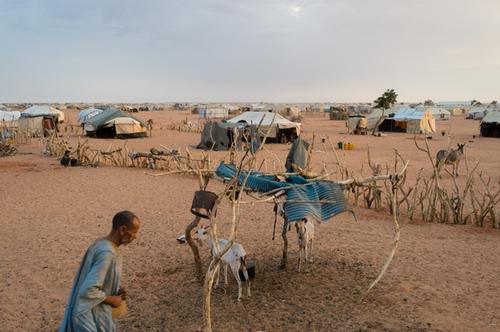
The Mbera refugee camp for Malian refugees on 2 March 2013.

As of January 2012, the Malian crisis has resulted in population movements. Nearly 150,000 refugees now live in refugee camps in Burkina Faso, Mauritania and Niger, where MSF teams are providing maternal, primary and secondary health care. Since the beginning of 2013, MSF has recorded nearly 12,000 consultations and 5,000 vaccinations in these three countries. Mauritania is the country with the largest number of refugees.  Mbera camp nearly 70,000 refugees who have fled for fear of reprisals or lack of access to food since the beginning of the conflict. In February 2013, the border post of Fassala (Mauritania) recorded an average of 300 arrivals per day. They are mostly women and children from Timbuktu, Lere, Goundam Larnab and Nianfuke. These Malian refugees continue to live in precarious conditions with no future prospects.
Mauritania

More effort underway for Malian refugees

An update from Dr Louis Kakudji Mutokhe, an MSF doctor in Mauritania, on the organisation's work with Malian refugees at Mbéra camp. Interview - 25 Jul 2013
 
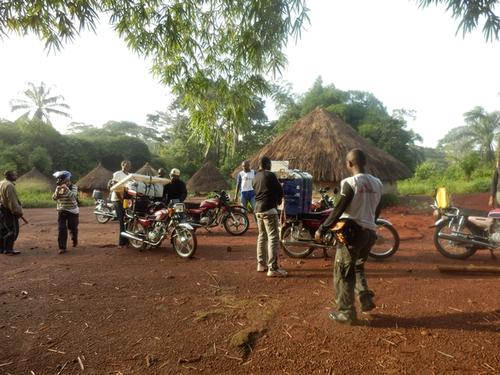
A motorbike HAT screening team including technicians and equipment arrives in the town of Mafoto, DRC to start testing villagers early in the day before they head to work in the fields. A MSF mobile sleeping sickness team is currently testing and treating villagers for human African trypanosomiasis in and around the village of Bili, in northeast Democratic Republic of Congo. Without treatment, a person whose nervous system is under attack by the disease will suffer sleeping disorders, become disorientated and eventually die.
Democratic Republic of Congo

Treating sleeping sickness in the forests

Barrie Rooney, a laboratory scientist from County Leitrim, Ireland swapped her lecturing job in Kent, England to join MSF mobile sleeping sickness team in a remote corner of DRC. Voices from the Field - 23 Jul 2013
 
msf-placeholder
Syria

From birth to death - Testimony of an MSF surgeon

US Surgeon Steve Rubin describes his work in one of Médecins Sans Frontières (MSF) hospitals in northern Syria, where MSF treats common health problems as well as injuries inflicted by the war. Voices from the Field - 23 Jul 2013
 
msf-placeholder
Syria

Testimony of a Syrian doctor

A Syrian doctor working with MSF explains the medical needs now that Syria is at war. Voices from the Field - 23 Jul 2013
 
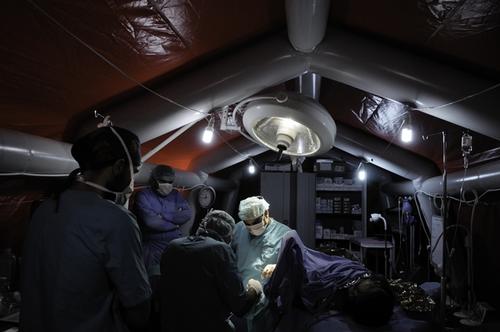
An inflatable operating theatre is erected inside this MSF makeshift hospital in Syria (a converted chicken farm) as it is an efficient way to maintain a sterile environment. Surgeon Steve Rubin operating.
Syria

Diabetes, shrapnel wounds and newborn twins

In Syria the number of people in need of urgent medical care keeps increasing. MSF runs six hospitals, four health centres and several mobile clinic programmes inside Syria. Project Update - 23 Jul 2013
 
mone_blanca
Attacks on medical care

MSF aid workers freed from Somalia arrive in Spain today

Families ask for privacy at this sensitive time Press Release - 19 Jul 2013
 
msf-placeholder
Somalia

Two MSF aid workers freed in Somalia

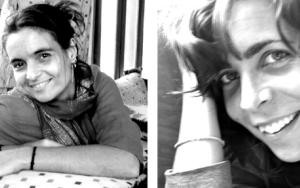
Montserrat Serra and Blanca Thiebaut, abducted from the Dadaab refugee camp, in Kenya, on 13 October 2011, have been released. Statement - 18 Jul 2013
 
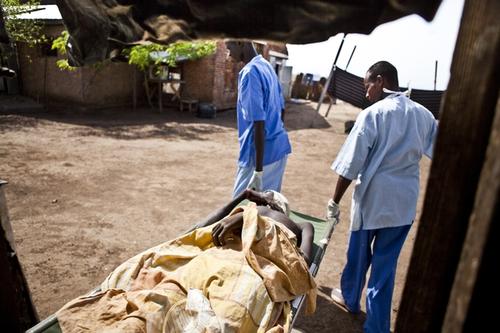
Choal Bang was shot in the head during clashes. Bang was shot in the head while trying to defend cattle. He spent one night alone before he was found. He was  flown from Lankien to Nasir for surgery and has been in recovery  for two months.
South Sudan

Violence intensifies in Jonglei, wounded left without access to medical care

MSF teams treating wounded and sick on both sides of fighting Press Release - 17 Jul 2013
 
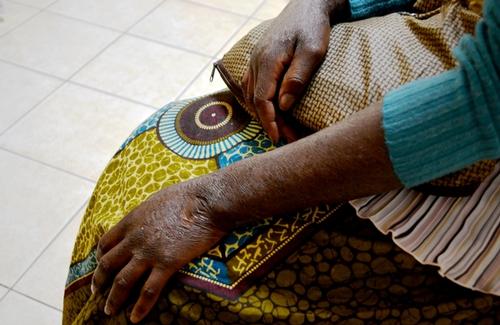
Angelina* is one of the 11% of people in Mozambique who are living with HIV; she also suffers from Kaposi’s Sarcoma, a type of cancer related to her condition, that causes painful and disfiguring lesions on the skin. Angelina sometimes develops wounds on her skin caused by infections secondary to HIV. “It’s happened that I scratch them until I can see the new skin below,” she says. “The skin goes up into the air like dust.” 
MSF offers treatment for Kaposi’s Sarcoma and other HIV-related complications at the Centro de Referência do Alto-Maé (CRAM), Maputo, Mozambique. Here, Angelina receives a consultation with doctors at the CRAM. 17 December 2012.
*Name has been changed
Mozambique

Treating Kaposi’s sarcoma in Maputo

In Maputo, the country’s capital, MSF is working alongside the Ministry of Health to treat patients suffering from Kaposi's sarcoma, a type of cancer that causes painful and disfiguring lesions on the skin. Project Update - 15 Jul 2013
 
msf-placeholder
Central African Republic

Civil war is killing children in the Central African Republic but it's not doing it with bullets

Getting health care has never been simple in the Central African Republic, where there’s a 16 percent chance a baby won’t make it past his or her fifth birthday and life expectancy tops out at age 50. In the Media - 15 Jul 2013
Four mothers posing in a corridor of the Hospital in Bili. All four of them are staying in the hospital with their child, that's suffering from a severe case of malaria. Since the beginning of the project in 2016, the pediatric ward already treated more than 4.000 cases of complicated/severe form of malaria.
Médecins Sans Frontières (MSF)

Independent medical humanitarian assistance

We provide medical assistance to people affected by conflict, epidemics, disasters, or exclusion from healthcare. Our teams are made up of tens of thousands of health professionals, logistic and administrative staff - most of them hired locally. Our actions are guided by medical ethics and the principles of independence and impartiality. We are a non-profit, self-governed, member-based organisation.

Learn more