



Ebola disease in DRC: find out how we're responding
Learn more
8009 Results
 
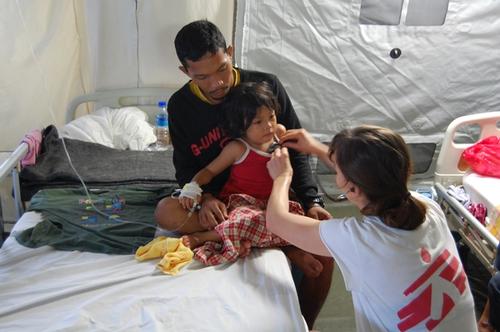
Pediatric rounds at MSF's inflatable hospital in Tacloban. MSF doctor, Ylva Paulsson, checks a young girl during pediatric rounds at the inpatient department of MSF's inflatable hospital in Tacloban. The hospital, which is run on the site of the city's BethanyHospital, which was badly damaged by the typhoon, is still busy three months after the typhoon. More than 100 babies have been born at the hospital since it opened, and each week, more than 2000 people come to the outpatients department for treatment.
Philippines

Specialised mental health treatment to target survivors of Haiyan

Specialised mental health treatment will target survivors of typhoon Haiyan, Philippines Voices from the Field - 7 Feb 2014
 
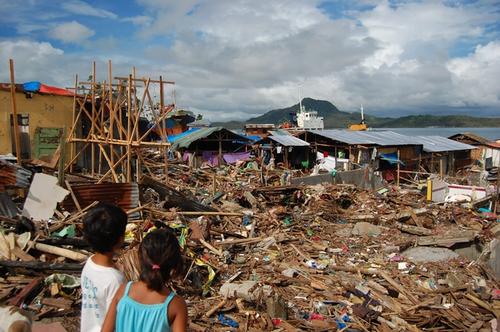
Two children look out across the Tacloban slum, which was badly damaged by typhoon Haiyan. Just to the right of the photo is one of the many boats which were run aground by the force of the typhoon. Despite the destruction, months after the typhoon many people have started to rebuild their homes.
Philippines

Three months on from typhoon Haiyan

Although the relief effort is well underway after typhoon Haiyan, recovery will take a lot longer Project Update - 7 Feb 2014
 
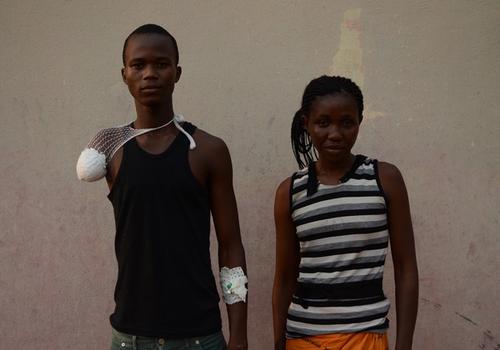
Dorassio’s older sister, Cynthia, comes every day to provide support, help him wash and eat, and keep him company. 
<br/>Dorassio L. is 23. He is among the many victims of the inter-communal violence taking place in the Central African Republic today. On January 18, he was shot in the arm in Bouar, in the country’s Northwest region. His arm had to be amputated. He was treated by Médecins Sans Frontières (MSF) in Bouar, and then transferred by plane to the Bangui Community Hospital, where our surgical teams continue to monitor his condition. <br/>
In a poor country, where there is no treatment for people with disabilities, what kind of future will Dorassio have?   
 *** Local Caption *** MSF has been managing surgical emergencies at the hospital since early December, treating an average of 140 patients every week. One-third of them are hospitalized so that they can be operated on.  Our surgical activities focus on victims of violence (including injuries from gunshots, knife attacks, grenade explosions and arrows). The patients’ prognosis for survival is often uncertain. In many cases, patients will, unfortunately, suffer permanent consequences from open fractures and complex wounds.
Central African Republic

MSF condemns continued attacks against civilians

The extreme violence in CAR has reached intolerable and unprecedented levels, says MSF. Press Release - 7 Feb 2014
 
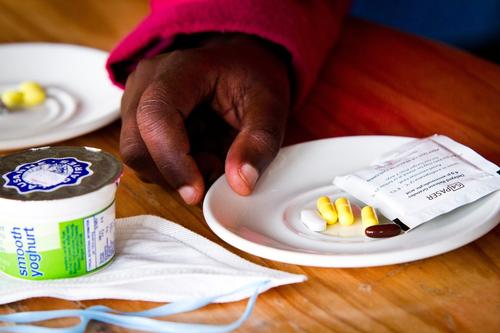
Phumeza Tisile, 23 years, takes her last tablets for XDR-TB at Lizo Nobanda TB Care Centre, Khayelitsha, South Africa on August 16, 2013. During her two year treatment for XDR-TB, Phumeza took over 20,000 pills and had over 200 injections.
Tuberculosis

Clinical Access to Bedaquiline Programme for the treatment of drug-resistant tuberculosis

This article documents the process whereby MSF obtained access to bedaquiline for TB patients in South Africa. Journal article - 6 Feb 2014
 
And yet another wave of displacement in the town of Bouca, (Ouham region) northeastern Central African Republic (CAR), after clashes between reported anti-balaka elements and ex-Séléka forces took place last week. For the second time in over two months, people had to flee to the bush running away from the fighting. Bouca was the center of attacks in September in which the civilian population, both Christians and Muslims, were targeted by the armed groups. Around 80 people were killed. The video shows, through interviews with direct an indirect victims of violence, the consequences of the fighting, forcing thousands of people to hide in the bush or to look for protection in churches, schools or airstrips.
Central African Republic

Rain does not wash the blood away (Part II)

José Mas Campos, MSF Emergency Coordinator in Bangui, describes what he saw in CAR. Voices from the Field - 6 Feb 2014
 
And yet another wave of displacement in the town of Bouca, (Ouham region) northeastern Central African Republic (CAR), after clashes between reported anti-balaka elements and ex-Séléka forces took place last week. For the second time in over two months, people had to flee to the bush running away from the fighting. Bouca was the center of attacks in September in which the civilian population, both Christians and Muslims, were targeted by the armed groups. Around 80 people were killed. The video shows, through interviews with direct an indirect victims of violence, the consequences of the fighting, forcing thousands of people to hide in the bush or to look for protection in churches, schools or airstrips.
Central African Republic

Rain does not wash the blood away (Part I)

José Mas Campos, MSF Emergency Coordinator in Bangui, describes what he saw in CAR. Voices from the Field - 6 Feb 2014
 
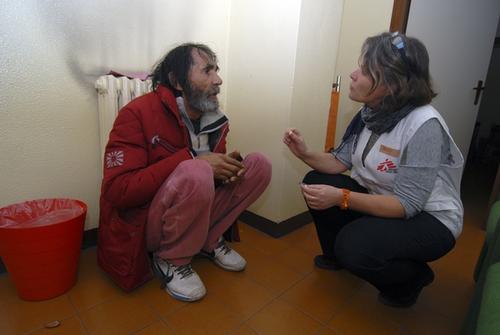
MSF nurse Rebecca Cuthbert takes care of a 63 year-old Romanian homeless.
The nurse is at the dorm in via Aldini, Quarto Oggiaro area.
Italy

Reaching out to the forgotten: providing access to medical care for the homeless in Italy

A programme for outpatient and intermediate inpatient care for the homeless was pioneered by Médecins Sans Frontières (MSF) in Milan, Italy, during the winter of 2012-2013. This paper documents the characteristics and clinical management of inpatients and outpatients seen during this programme. Journal article - 5 Feb 2014
 
Recovery room of the Community Hospital.
Central African Republic

"This was my most difficult mission”

Jessie Gaffric, MSF project coordinator at Bangui Community Hospital describes the situation there. Voices from the Field - 5 Feb 2014
 
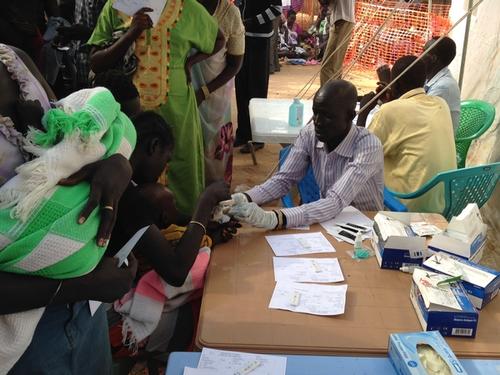
View of a Médecins sans frontières (MSF) clinic set up at the Tomping camp for  displaced people in the grounds of the United Nations Mission to South Sudan (UNMISS) base in Juba, South Sudan. MSF is currently carrying out around 230 consultations per day in the camp since three weeks.  Between 13,000 and 17,000 people are residing at the camp. The main diseases include respiratory diseases, acute diarrhea and malaria.
South Sudan

"Living in impossible conditions"

MSF’s emergency coordinator, Forbes Sharp, gives an update on the dire conditions for people in Tomping camp. Voices from the Field - 5 Feb 2014
 
Mothers are feeding their children ready-to-use fortified peanut paste.
Democratic Republic of Congo

Providing mental healthcare in North Kivu

MSF teams integrated psychosocial care into activities in Bibwe to respond to mental health needs in the area. Project Update - 4 Feb 2014
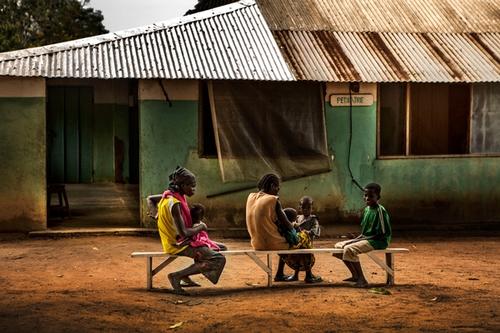
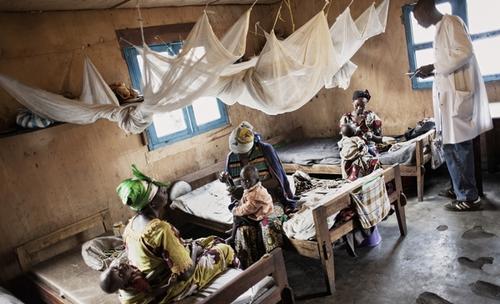
Four mothers posing in a corridor of the Hospital in Bili. All four of them are staying in the hospital with their child, that's suffering from a severe case of malaria. Since the beginning of the project in 2016, the pediatric ward already treated more than 4.000 cases of complicated/severe form of malaria.
Médecins Sans Frontières (MSF)

Independent medical humanitarian assistance

We provide medical assistance to people affected by conflict, epidemics, disasters, or exclusion from healthcare. Our teams are made up of tens of thousands of health professionals, logistic and administrative staff - most of them hired locally. Our actions are guided by medical ethics and the principles of independence and impartiality. We are a non-profit, self-governed, member-based organisation.

Learn more