


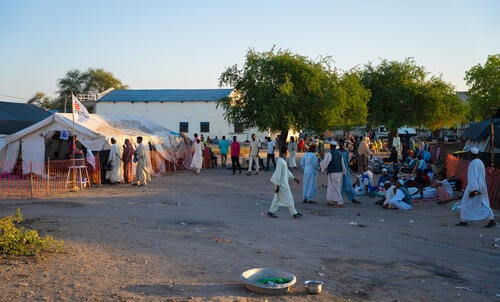
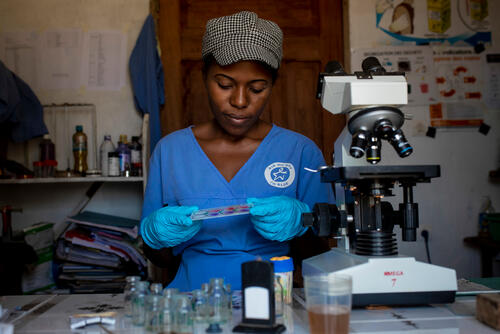

Ebola disease in DRC: find out how we're responding
Learn more
7999 Results
 
Treatment decision algorithms, a hope for the diagnosis of tuberculosis in children.

Les algorithmes de décision de traitement, un espoir pour le diagnostic de la tuberculose chez l'enfant.

Every three minutes, a child dies of tuberculosis (TB), even though treatment is available. In children, under-diagnosis is a major obstacle to effective treatment. New WHO recommendations, including treatment decision algorithms, could change all that. As part of the TACTiC project, launched in 2023, Médecins Sans Frontières (MSF) is implementing these recommendations in 12 countries in Africa and Asia. In parallel, Epicentre is conducting a study in five of these countries to document their implementation, assess their diagnostic performance, feasibility and acceptability. This report illustrates the operational research carried out on these algorithms at Epicentre's research center in Mbarara, Uganda.


Toutes les trois minutes, un enfant meurt de la tuberculose, alors que le traitement est disponible. Chez les enfants, le sous-diagnostic est un obstacle majeur à un traitement efficace. Les nouvelles recommandations de l'OMS, comprenant le recours à des algorithmes de décision de traitement, pourraient changer la donne. Dans le cadre du projet TACTiC, lancé en 2023, Médecins Sans Frontières (MSF) met en œuvre ces recommandations dans 12 pays d'Afrique et d'Asie. En parallèle, Epicentre mène une étude dans cinq de ces pays pour documenter leur mise en œuvre, évaluer leur performance diagnostique, leur faisabilité et leur acceptabilité. Ce reportage illustre la recherche opérationnelle menée sur ces algorithmes dans le centre de recherche d'Epicentre à Mbarara, en Ouganda.
TACTiC – Test, Avoid, Cure Tuberculosis in Children

TB treatment decision algorithms: promising early data highlight their added value in diagnosing children

Every three minutes, a child succumbs to tuberculosis, a curable disease if diagnosed in time. Can new treatment decision algorithms improve the diagnosis of TB in children? Project Update - 15 Nov 2024
 
Following the explosion of a fuel tanker on 14 September in Miragoâne, injured people began to arrive at the MSF hospital in Carrefour.
Haiti

MSF outraged by police attack on ambulance and execution of patients in Haiti

At least two patients have been executed and MSF staff attacked by police and members of a self-defence group in Port-au-Prince, Haiti. Press Release - 13 Nov 2024
 
A view of one of the wards in the newly constructed Malaria Village at Aweil State Hospital.
Malaria

Alarming spike in admissions of children with malaria at Aweil state hospital

MSF is concerned about the alarming numbers of children suffering from malnutrition admitted to Aweil state hospital in Northern Bahr El-Ghazal state, South Sudan. Press Release - 12 Nov 2024
 
Open-air Mental Health group session for Unaccompanied Minors (UAMs) at Harmanli reception center
Refugees, IDPs and people on the move

MSF closes activities in Bulgaria amid ongoing challenges for refugees

MSF closes medical programme at the Harmanli reception and registration centre, Bulgaria, due to declining numbers of people in refugee reception centres. Project Update - 12 Nov 2024
 
Illustration images from Bekaaa Valley, Lebanon. September 25, 2024
Lebanon

Seeking refuge from Israeli bombardment in Baalbek, Lebanon

At a school in Baalbek, Lebanon, our team met women sheltering with their families. Voices from the Field - 4 Nov 2024
 
Aerial view of flooded villages, near Old Fangak in South Sudan.
Climate emergency

MSF and the Lancet Countdown joint brief 2024

msf.org.uk - 1 Nov 2024
 
Between August 2023 and February 2024, the Arbovirus Prevention Project team in Tegucigalpa released more than eight million mosquitoes carrying Wolbachia bacteria in El Manchén.
Honduras

Promising results from study on mosquitoes has researchers buzzing in Honduras

A research study that has seen 8 million mosquitoes released into Tegucigalpa, Honduras, to combat dengue fever is showing promising results. Project Update - 1 Nov 2024
 
Laura Guardiola, MSF nurse: “With the long incursions we’ve been seeing, training the community makes a real difference—for them and for the patients. The more people we train, the better and safer it is for everyone.”
Gaza-Israel war

Treating open wounds in Tulkarem, West Bank

In Tulkarem, a town in the West Bank, Palestine, MSF teams address the physical and psychological impacts of military incursions by Israeli forces through first aid training. Project Update - 31 Oct 2024
 
The MSF hospital in Agok is the only facility providing secondary care in the entire Abyei region of South Sudan. This structure deals with emergencies, surgeries, treatments of HIV, tuberculosis, chronic diseases as well as neglected diseases, such as snake bites, a real scourge in the region. In 2019, in order to improve the quality of care, a radiology room was set up and the pharmacy was extended. A lack of specialized structures in the surrounding states forces some patients to travel very long distances to get to Agok hospital, some have to walk for up to 10 hours. This phenomenon illustrates the need for a comprehensive hospital in a country where health care is almost non-existent
Gaza-Israel war

Protection must be guaranteed for MSF doctor and medical staff detained by Israeli forces

MSF last had contact with Dr Mohammed Obeid on 25 October before he was detained by Israeli forces. Statement - 31 Oct 2024
Four mothers posing in a corridor of the Hospital in Bili. All four of them are staying in the hospital with their child, that's suffering from a severe case of malaria. Since the beginning of the project in 2016, the pediatric ward already treated more than 4.000 cases of complicated/severe form of malaria.
Médecins Sans Frontières (MSF)

Independent medical humanitarian assistance

We provide medical assistance to people affected by conflict, epidemics, disasters, or exclusion from healthcare. Our teams are made up of tens of thousands of health professionals, logistic and administrative staff - most of them hired locally. Our actions are guided by medical ethics and the principles of independence and impartiality. We are a non-profit, self-governed, member-based organisation.

Learn more