



Ebola disease in DRC: find out how we're responding
Learn more
7999 Results
 
Medicine students in front of new dressing used by MSF to treat wounds caused by Buruli Ulcer. The MSF medical team is explaining how to use them.
HIV/AIDS

Impact of HIV on the Severity of Buruli Ulcer Disease: Results of a Retrospective Study in Cameroon

HIV-positive patients are at higher risk for Buruli Ulcer. HIV-induced immunosuppression appears to have an impact on Buruli Ulcer clinical presentation and disease evolution. Journal article - 26 Apr 2014
 
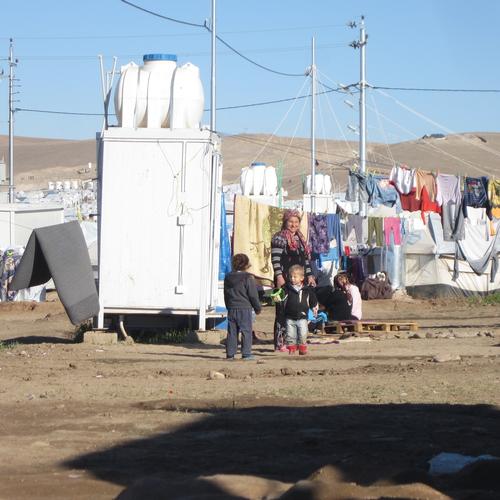
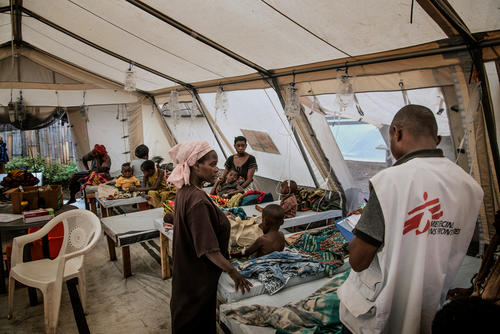
MSF is providing medical care in two camps in Juba, South Sudan, where 40,000 people are seeking refuge from widespread fighting that erupted in mid-December. Over 27,000 people are living in deplorable conditions in Tomping camp. The first rains of the season have left a significant part of the camp flooded and further degraded the poor sanitation conditions.
Malaria

Malaria control in emergencies: time for action

What can be done beyond just waiting for malaria to sweep in and then treating people who become ill, as MSF and other aid organisations are now doing? We now have tools - from weather monitoring to close surveillance of new cases - to predict the onset of a malaria peak and a large proportion of severe cases, so shouldn’t we be taking more aggressive preventive measures? Opinion - 25 Apr 2014
 
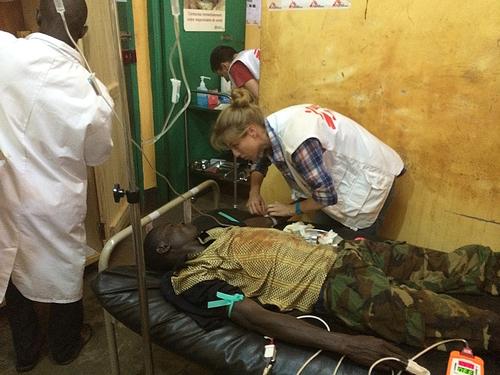
Madeleine Boyer (infirmière anesthésiste). au chevet d'un jeune patient.<br>
Rwanda

Twenty years after the Rwandan genocide: “We don’t talk about things that are hard to recount”

Nurse anesthetist Madeleine Boyer describes recollections of her two missions to Kigali in 1994 Voices from the Field - 25 Apr 2014
 
DEMOCRATIC REPUBLIC CONGO, BARAKA, 24 FEBRUARI 2014
Mothers and children in the paediatric ward in Baraka hospital.
Malaria

"My heart leaps for joy": the ups and downs of treating malaria in DRC

MSF medic Dr Josine Blanksma treated hundreds of patients for malaria. This is her testimony. Voices from the Field - 25 Apr 2014
 
msf-placeholder
Malaria

Another weapon in the fight against malaria

Seasonal malaria chemoprevention (SMC) in Niger Project Update - 25 Apr 2014
 
msf-placeholder

Seasonal malaria chemoprevention in Niger

Gallery: Revolutionary protection against childhood malaria in Niger Photo Story - 25 Apr 2014
 
Tounfafi, a village of 6,000 people, is one of the sites within the Madaoua district where seasonal malaria chemoprevention (SMC) has been implemented in Niger.
The combination of malnutrition and malaria is fatal. Both diseases pose a threat to younger children between June and October. It is a critical period because of the so-called hunger gap in between harvests when child malnutrition increases and because during the rainy season malaria cases are more frequent.
In 2013, MSF and the Ministry of Health jointly implemented seasonal malaria chemoprevention for the first time in Niger - a strategy that consists of administering a full anti-malarial treatment course during the seasonal malaria peak to children between 3 and 59 months of age. During these four months, children take three amodiaquine tablets and one sulfadoxine/pyrimethamine tablet for three days each month.
Malaria

Seasonal Malaria Chemoprevention - “It’s not a miracle cure, but it is an effective preventative strategy”

Seasonal Malaria Chemoprevention - “It’s not a miracle cure, but it is an effective preventative strategy” Project Update - 25 Apr 2014
 
Siyabulela Qwaka is the fourth patient cured of drug resistant TB in MSF’s project in Khayelitsha, South Africa. His story is an inspiration for patients currently fighting the new form of tuberculosis against which existing drugs are of limited effectiveness.
South Africa

"This disease is for heroes. If you can fight this, you can stand anything in this world"

The story of Siyabulela Qwaka, the latest patient cured of drug resistant TB in MSF’s project in Khayelitsha, South Africa Voices from the Field - 24 Apr 2014
 
msf-placeholder
Disease prevention

Taking the fridge out of the equation

Storing, transporting and administering vaccines in conditions where MSF works are some of the biggest logistical challenges. Project Update - 23 Apr 2014
 
Sudanese refugees began streaming across the border into South Sudan in June 2011 when conflict erupted between the Khartoum government and the rebels of the Sudan People’s Liberation Movement-North (SPLM-N) in Sudan’s South Kordofan State. At the height of the crisis in Yida camp last summer, high mortality rates were reported among young children admitted to MSF’s hospital with respiratory tract infections, such as pneumonia, one of the leading causes of death. MSF determined that vaccinating with the pneumococcal conjugate vaccine (PCV) could result in a substantial mortality reduction in Yida. MSF has been working since September 2012 to procure PCV but faced significant delays due to lengthy negotiations and international legal procurement constraints. MSF was eventually able to obtain the vaccine from GSK at a reduced price, but delays have now pushed the planned vaccination into the logistically challenging rainy season.

The objective is to immunize approximately 5,000 children under the age of 2 against several pathogens, including haemophilus influenza type B and pneumococcus. This is the first time that PCV is being used in South Sudan and one of the first vaccines to be implemented in compliance with the new WHO emergency vaccination recommendations.
Access to medicines

Heat-stable vaccines urgently needed to reach the one in five children missed by immunisation worldwide

MSF study shows a tetanus vaccine remains effective for up to a month when used outside a cold chain. Press Release - 22 Apr 2014
Four mothers posing in a corridor of the Hospital in Bili. All four of them are staying in the hospital with their child, that's suffering from a severe case of malaria. Since the beginning of the project in 2016, the pediatric ward already treated more than 4.000 cases of complicated/severe form of malaria.
Médecins Sans Frontières (MSF)

Independent medical humanitarian assistance

We provide medical assistance to people affected by conflict, epidemics, disasters, or exclusion from healthcare. Our teams are made up of tens of thousands of health professionals, logistic and administrative staff - most of them hired locally. Our actions are guided by medical ethics and the principles of independence and impartiality. We are a non-profit, self-governed, member-based organisation.

Learn more