



Ebola disease in DRC: find out how we're responding
Learn more
8009 Results
 
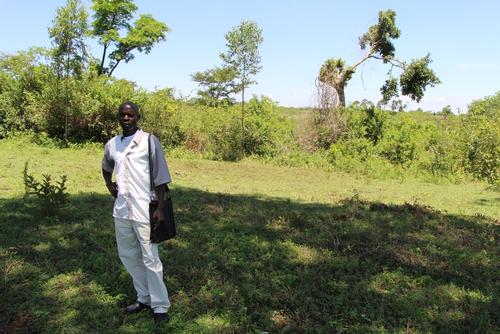
Thomas Soyoua is leaving with HIV. He discovered his status in 2008. He is a farmer, in Kawanga, a sub-district near the city of Ndhiwa. It is a very rural area, where the population is spread out in the country side, in the West part of Kenya, not far from Victoria Lake. 
He has five children and he needs to work in the fields to feed his family. But, by the time he discovered his status he was feeling weak, he couldn’t work and he couldn’t pay the school fees for his children.
“At that time I was very week. Then I was immediately put under treatment with ARVs. I was given the adherence on how to use the drugs. And from those days until now, I am just feeling okay” he says.
 *** Local Caption *** On April 11th, 2014 –Médecins Sans Frontières (MSF) and local health authorities officially launched a new HIV program that they will jointly run in Ndhiwa sub-county, Homa Bay County, in Western Kenya. In this region, more than one fourth of the population is leaving with HIV.
During the 4 years of activities, the program will aim at reducing the number of new infections among the population as well as the mortality related to HIV. This will be made possible by implementing universal and regular testing for the whole population of Ndhiwa sub county and setting up early quality treatment for people living with HIV as well as providing quality care for people hospitalized. Furthermore, the increase access to viral load testing will help ascertain that patients are at the lowest risk of transmitting the virus
The MSF / Ministry of Health program will focus on simplifying the way healthcare is provided to patients, through an adaptation of medical protocols and the inclusion of non-medical workers in the provision of care. Such medical protocols will include encouraging the community to get tested and receive ART as early as possible if found infected to reduce transmitting the virus to others, as well as to support adherence to the treatment. Systematic screening and provision of ART for all HIV positive pregnant women will be implemented, in order to reduce mother-to-child transmission (PMTCT) of the virus. HIV testing program will also be integrated in routine immunization programs for young children. Medical male circumcision will also be key in impacting the rate at which men get infected.
Kenya

Testimony: Thomas Soyoua from Kawanga

Testimony: Thomas Soyoua from Kawanga Voices from the Field - 26 May 2014
 
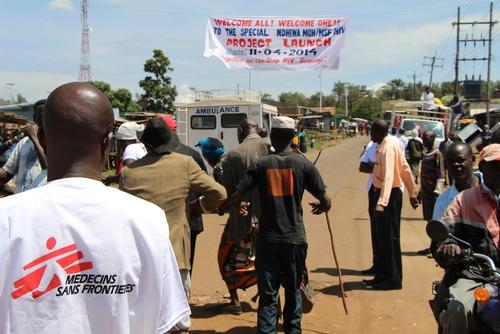
During the April 14th launch event, the out-reach team, with a street theater group, went around the city of Ndhiwa to call on public participation to the ceremony and raise public awareness on HIV. *** Local Caption *** On April 11th, 2014 –Médecins Sans Frontières (MSF) and local health authorities officially launched a new HIV program that they will jointly run in Ndhiwa sub-county, Homa Bay County, in Western Kenya. In this region, more than one fourth of the population is leaving with HIV.
During the 4 years of activities, the program will aim at reducing the number of new infections among the population as well as the mortality related to HIV. This will be made possible by implementing universal and regular testing for the whole population of Ndhiwa sub county and setting up early quality treatment for people living with HIV as well as providing quality care for people hospitalized. Furthermore, the increase access to viral load testing will help ascertain that patients are at the lowest risk of transmitting the virus
The MSF / Ministry of Health program will focus on simplifying the way healthcare is provided to patients, through an adaptation of medical protocols and the inclusion of non-medical workers in the provision of care. Such medical protocols will include encouraging the community to get tested and receive ART as early as possible if found infected to reduce transmitting the virus to others, as well as to support adherence to the treatment. Systematic screening and provision of ART for all HIV positive pregnant women will be implemented, in order to reduce mother-to-child transmission (PMTCT) of the virus. HIV testing program will also be integrated in routine immunization programs for young children. Medical male circumcision will also be key in impacting the rate at which men get infected.
Kenya

MSF launches new project to curb spread of HIV in western Kenya

MSF launches new project to curb spread of HIV in western Kenya Press Release - 26 May 2014
 
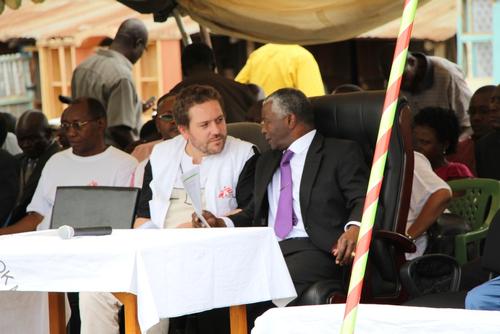
William Hennequin, MSF Head of Mission, with Hon. Hamilton Orata, deputy governor- Homa Bay County *** Local Caption *** On April 11th, 2014 –Médecins Sans Frontières (MSF) and local health authorities officially launched a new HIV program that they will jointly run in Ndhiwa sub-county, Homa Bay County, in Western Kenya. In this region, more than one fourth of the population is leaving with HIV.
During the 4 years of activities, the program will aim at reducing the number of new infections among the population as well as the mortality related to HIV. This will be made possible by implementing universal and regular testing for the whole population of Ndhiwa sub county and setting up early quality treatment for people living with HIV as well as providing quality care for people hospitalized. Furthermore, the increase access to viral load testing will help ascertain that patients are at the lowest risk of transmitting the virus
The MSF / Ministry of Health program will focus on simplifying the way healthcare is provided to patients, through an adaptation of medical protocols and the inclusion of non-medical workers in the provision of care. Such medical protocols will include encouraging the community to get tested and receive ART as early as possible if found infected to reduce transmitting the virus to others, as well as to support adherence to the treatment. Systematic screening and provision of ART for all HIV positive pregnant women will be implemented, in order to reduce mother-to-child transmission (PMTCT) of the virus. HIV testing program will also be integrated in routine immunization programs for young children. Medical male circumcision will also be key in impacting the rate at which men get infected.
Kenya

Can the HIV epidemic be curbed?

An op-ed written by William Hennequin, MSF representative in Kenya Opinion - 26 May 2014
 
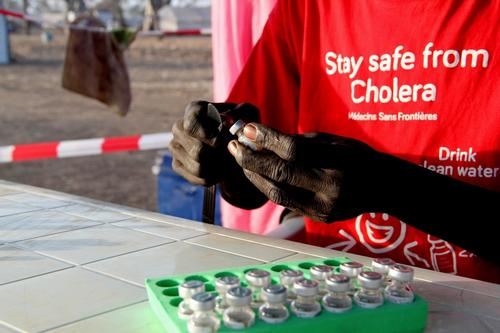
MSF team member preparing the oral cholera vaccine.
Cholera

MSF rapidly scales up response to contain cholera outbreak in South Sudan

MSF rapidly scales up response to contain cholera outbreak Project Update - 23 May 2014
 
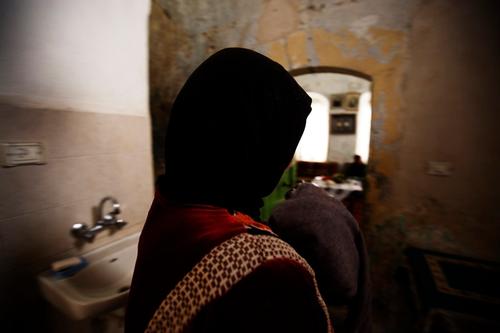
In Hebron and East Jerusalem, MSF is running a medical and psychosocial programme for people suffering from trauma because of the conflict. MSF teams focus on people with psychological distress (acute stress, anxiety disorders, post traumatic syndromes, depression) caused by violent incidents involving Israeli settlers and Israeli Army, but also due to the intra-Palestinian conflict. In Hebron, MSF staff carried out 1726 individual mental health consultations and 945 medical consultations in 2011.
In the beginning of 2011, MSF conducted a needs assessment in East Jerusalem and decided to start providing in this part of the city mental health care to the population who suffers trauma or psychological distress due to the consequences of violence caused by the conflict and who has no access to mental health services. MSF therapies started in July in the Shufat refugee camp and Silwan area and since then MSF staff carried out 223 individual mental health consultations.
Palestine

Occupied Minds - Mariam’s story

Palestine: Occupied Minds - Mariam’s story Voices from the Field - 22 May 2014
 
msf-placeholder
Tuberculosis

MSF intervention on Global Strategy and targets on tuberculosis at 67th World Health Assembly

World Health Assembly 67 – Agenda item 12.1, Global strategy and targets for tuberculosis prevention, care and control after 2015
Intervention by Phumeza Tisile
Speech - 19 May 2014
 
msf-placeholder
Tuberculosis

‘We demand action’: Death toll from drug-resistant tuberculosis must be slashed within a year

Phumeza Tisile delivers urgent plea to WHA delegates on behalf of 50,000 supporters worldwide Press Release - 19 May 2014
 
msf-placeholder
Central African Republic

Doctors on the frontline

The critical work MSF medical teams are doing on the ground in Bossangoa Project Update - 16 May 2014
 
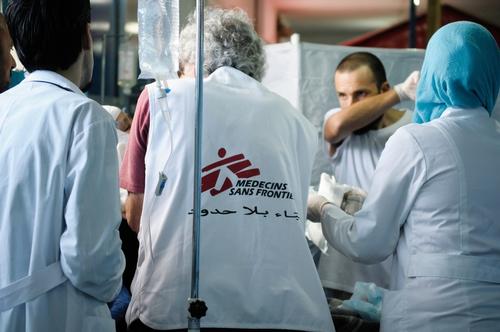
In the ER section of an MSF hospital in Syria.
Syria

Five MSF staff held in Syria Released

Abduction Forces Closure of Three of MSF’s Medical Facilities providing care to 150,000 Syrians Press Release - 15 May 2014
 
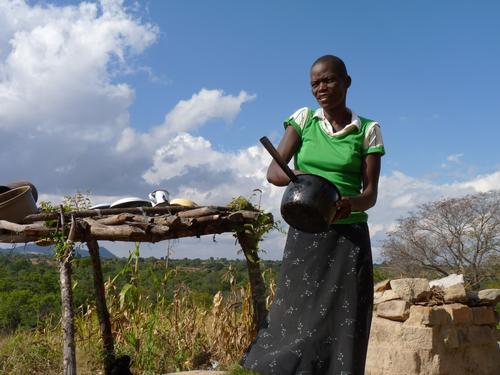
Lorraine Zemba struggled with DR-TB for two harrowing years where she flirted with death and was too weak to take care of her two year old son. Today she is healed thanks to MSF who sent a nurse every day to her home to allow her to get access to treatment.
Tuberculosis

Home care gives hope of survival for DR-TB patients in Zimbabwe

Home care gives hope of survival for DR-TB patients in Zimbabwe Voices from the Field - 15 May 2014
Four mothers posing in a corridor of the Hospital in Bili. All four of them are staying in the hospital with their child, that's suffering from a severe case of malaria. Since the beginning of the project in 2016, the pediatric ward already treated more than 4.000 cases of complicated/severe form of malaria.
Médecins Sans Frontières (MSF)

Independent medical humanitarian assistance

We provide medical assistance to people affected by conflict, epidemics, disasters, or exclusion from healthcare. Our teams are made up of tens of thousands of health professionals, logistic and administrative staff - most of them hired locally. Our actions are guided by medical ethics and the principles of independence and impartiality. We are a non-profit, self-governed, member-based organisation.

Learn more