


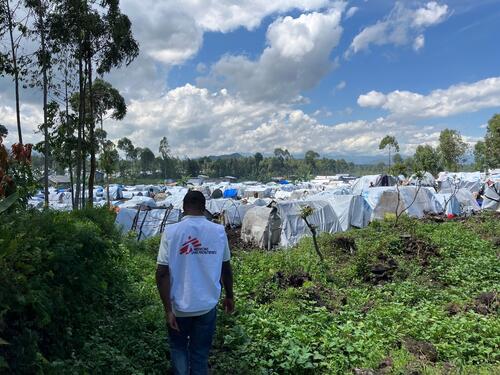

Ebola disease in DRC: find out how we're responding
Learn more
4633 Results
 
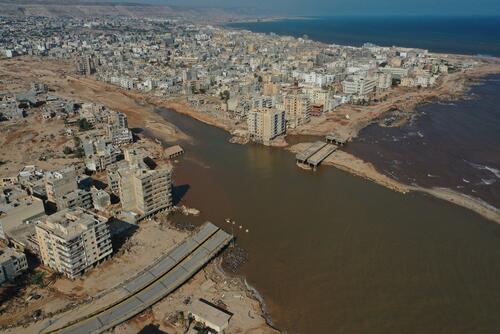
DERNA, LIBYA - SEPTEMBER 17: An aerial view of devastation after the floods caused by the Storm Daniel ravaged the region, in Derna, Libya on September 17, 2023.
Libya

Mental health support needed after Storm Daniel destroys Derna

Two weeks after the devastation of Storm Daniel on Derna, Libya, our teams on the ground have begun mental heath support for people affected in the region. Interview - 27 Sep 2023
 
Commune of Ranobe, Amboasary District.

People in the south-east of Madagascar are facing the most acute nutritional and food crisis the region has seen in recent years. MSF began setting up mobile clinics in Amboasary district in late March to screen and treat acute malnutrition in remote villages like those of Ranobe commune, providing ready-to-use therapeutic food and medical care.
Libya

MSF begins medical activities in Derna after Storm Daniel

After Storm Daniel rocked the cities of Derna and Susah in Libya, our teams are set to begin medical activities in the region. Here are four things to know. Interview - 20 Sep 2023
 
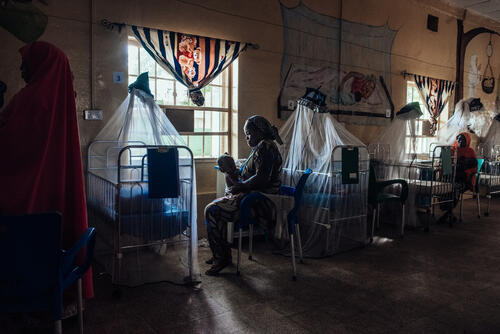
Diphtheria, Kano project
Nigeria

Urgent response needed to curb Nigeria’s worsening diphtheria outbreak

As a diphtheria outbreak surges through Nigeria and neighbouring countries, an urgent increase in access to medicines and vaccination is vital to avoid further deaths. Press Release - 19 Sep 2023
 
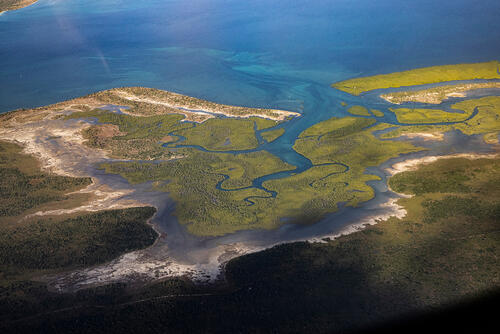
Images of the coast from Pemba to Mocimboa da Praia, the area most affected by the insurgents and also the area where the insurgents are hiding.
Mozambique

Six things to know about the destruction of Mocímboa da Praia

Over half a million people previously displaced by horrific conflict in Cabo Delgado, Mozambique, have returned to their areas of origin only to find destitution and destruction. Project Update - 14 Sep 2023
 
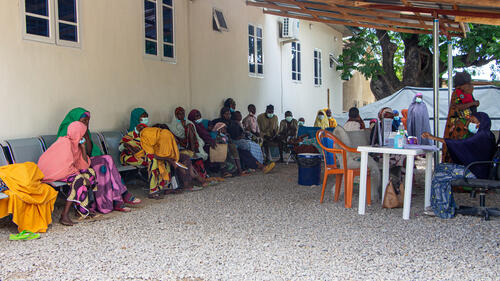
Amaka Joseph, 35, tends to her recovering child at an ITFC facility at Specialist Hospital Sokoto, Nigeria on Friday 22 July 2022.
 
“When we began treatment, I started seeing improvement. Now they can eat well and play and this makes me happy” she said. 
 
She would leave her children in the care of her mother when she goes to her shop, so she suspects that maybe the hygiene of the children has not been up to par. 
 
“Now, I will take care of everything that has to do with these children, their food, their water and environment, I will make sure that everywhere is clean” says Amaka.
Access to Healthcare

Urgent measures needed to address gaps in Universal Health Coverage targets

Ahead of the UN High Level meeting on Universal Health Coverage on 21 September, this report highlights why access to healthcare continues to be challenging for people in vulnerable circumstances. Report - 13 Sep 2023
 
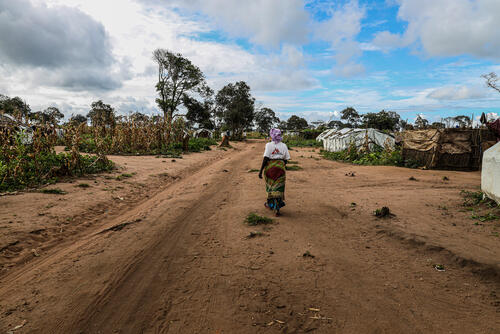
Atija walks through Eduardo Mondlane camp for displaced people to counsel pregnant and lactating women. She is 66 years old and lives there too. She is originally from Mocímboa da Praia, a town heavily hit by attacks due to the ongoing conflict in the northern province. She now works with MSF as a traditional birth attendant (TBA) and assists more than 100 women in the camp. Like many of them, she lived through traumatic experiences, witnessing her husband’s and son’s murder. Now, she says she loves doing her job since she can help women in their time of need – “When I arrived here, this place was a forest. Some good people helped me to get settled. Now I can also help pregnant women. I know they need my support.”
Access to Healthcare

Universal Health Coverage targets leave behind the most vulnerable

Ahead of the UN High Level meeting on Universal Health Coverage on 21 September, we examine why access to healthcare continues to be challenging for people in vulnerable circumstances. Interview - 13 Sep 2023
 
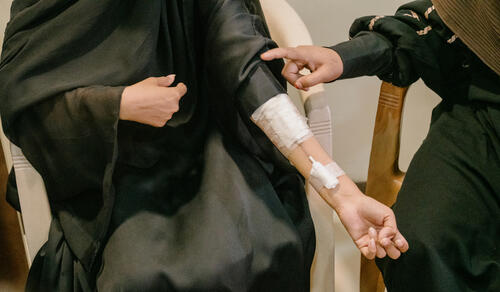
Anam (name changed), a 17-year-old DRTB (Drug Resistant Tuberculosis) patient, shows her intravenous access port through which she receives her TB medication.

Anam (name changed on request), a bright 17-year-old, excels not only at English and Science in school but is an equally good Mehndi/henna artist. She tells us happily that she has completed a professional Mehndi course and learnt needlework. She aspires to become a fashion designer. 
She scrolls through her phone gallery, bringing up photos of the bridal henna designs that she has created. As her hand moves over the screen, there is a contrast between those delicate designs and the pattern on her own hand from the PICC Line (Peripherally Inserted Central Catheter).
Anam was first diagnosed with pulmonary TB at the age of nine. Before her diagnosis, she frequently had a cough and a fever. When her mother initially took her to a doctor, she was suspected of having double typhoid. 
Being diagnosed with TB at such a young age came as a blow to Anam’s family, who had no history of the disease.  Her mother later got to know that Anam studied with around eight to ten TB positive patients in school. The stigma around the disease is so strong that other children or their families never informed the school authorities. The parents feared that their children would be expelled, bullied, harassed or discriminated against. Anam’s mother decided that it was important to break this lethal chain. She informed the Principal and did not send Anam to school for the next five months. 
For 14 months, Anam received treatment at a private hospital with support from her immediate family and friends. However, the treatment did not work and her symptoms such as weight loss and vomiting worsened. The treatment at the private hospital cost her family around Rs 5,500 monthly (Rs 2,500 for medicines and Rs 3,000 for tests). In February 2021 she was finally diagnosed with drug-resistant tuberculosis (DR-TB) at a government DR-TB centre.  She was put on a DR-TB regimen, however subsequent investigations revealed additional resistance to other drugs as well. She suffered from cough, fever and weight loss. Since her condition was not improving with the treatment received so far, she ultimately came to MSF.  
At the MSF Clinic, Anam was put on a regimen of the oral drugs bedaquiline, delamanid, linezolid and amoxicillin, and an intravenous treatment with the injection imipenem. This regimen was built for her based on her resistance to certain drugs and she has been taking it for the last one and a half years.  
Anam’s mother says, “We have been through a very rough patch, but we found help every step of the way. The psychosocial support in terms of counselling, and the medical support that we received at the MSF clinic reduced our financial and medical treatment worries.”
Despite constant encouragement and support, every day Anam is also witness to another TB story unfolding outside her bedroom window. The impact of stigma and lack of awareness about TB is having serious consequences for a girl not much older than Anam in the neighbouring house. Anam recalls distraught conversations with her ‘window friend’: how she has been locked inside her room because of the disease; how her parents have abandoned her; and the irregularity of her meals. Anam’s mother says that their neighbours don’t allow other community members to help them. Bereft of medical and psychosocial support, her ‘window friend’ developed suicidal tendencies that resulted in one failed attempt to jump off the roof.  
Anam realises that her friend’s parents may have prevented the suicide attempt, yet they contributed nothing to alleviating the everyday suffering. No proper treatment is sought, she says. Anam’s mother tried to counsel the girl’s parents but they are reluctant to listen to anyone.
The story of Anam and her ‘window friend’ highlights the importance of medical treatment and psychosocial support in TB treatment, and the importance of raising awareness around the disease and fighting stigma.  And for Anam, even a small dream like hanging out with friends on a vacation post-recovery, keeps her going.
Tuberculosis

Johnson & Johnson and Cepheid must pledge access to lifesaving TB medicines and tests

Ahead of the global tuberculosis High-Level Meeting at the United Nations, Johnson & Johnson and Cepheid must pledge access to lifesaving TB medicines and tests for everyone in need. Press Release - 12 Sep 2023
 
Abortion: women more at risk of death in fragile and conflict-affected settings
Women's health

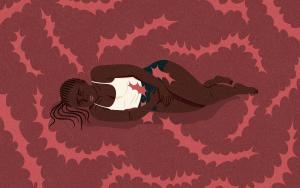
Abortion: Women more at risk of death in fragile and conflict-affected settings

The AMoCo study assesses the extent and severity of abortion-related complications in hospitals located in fragile and conflict-affected settings. Project Update - 5 Sep 2023
 
MSF staff entering Rusayo site, where over 100,000 displaced persons live in dire conditions for several months, lacking shelter, food, water and sanitation, and protection.
Democratic Republic of Congo

The struggle to survive amidst violence and displacement in North Kivu

This documentary tells the story of four women who fled fighting linked to the resurgence of the M23 in North Kivu, and of their daily struggle to survive. Documentary - 4 Sep 2023
 
The MSF flag flutters in the wind at MSF’s clinic in Al-Tanideba camp for Tigray refugees, in Eastern Sudan.
Conflict in Sudan

Turkish Hospital in Khartoum: Last lifeline for sick children and pregnant women

In Khartoum, where the health system has all but collapsed, we are addressing myriad health problems among people, especially very sick children, who are also at risk of deadly diseases and malnutrition. Voices from the Field - 4 Sep 2023
Four mothers posing in a corridor of the Hospital in Bili. All four of them are staying in the hospital with their child, that's suffering from a severe case of malaria. Since the beginning of the project in 2016, the pediatric ward already treated more than 4.000 cases of complicated/severe form of malaria.
Médecins Sans Frontières (MSF)

Independent medical humanitarian assistance

We provide medical assistance to people affected by conflict, epidemics, disasters, or exclusion from healthcare. Our teams are made up of tens of thousands of health professionals, logistic and administrative staff - most of them hired locally. Our actions are guided by medical ethics and the principles of independence and impartiality. We are a non-profit, self-governed, member-based organisation.

Learn more