




Ebola disease in DRC: find out how we're responding
Learn more
8008 Results
 
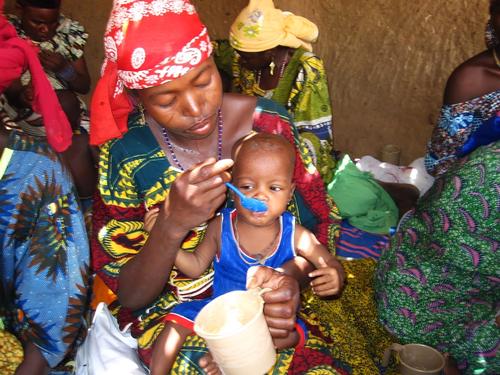
Souweba Mamane takes part in the “mamans lumière” sessions in Doney.
The “mamans lumière” (mothers of light) are at the centre of a strategy to prevent acute malnutrition in the community itself, known as Homes of Nutritional Learning, Rehabilitation and Prevention (FARPN, in its French initials). In the programme, families take responsibility for improving the nutritional condition of children who are at risk of suffering acute malnutrition. To achieve this objective, positive changes in the community's behaviour are encouraged by the “mamans lumière” with regard to nutrition, hygiene and health practices.
In 2013, MSF put the FARPN strategy into operation in the districts of Madaoua and Bouza, Niger.
Niger

The mothers of light

A highly successful nutrition programme in Niger Project Update - 30 Jul 2014
 
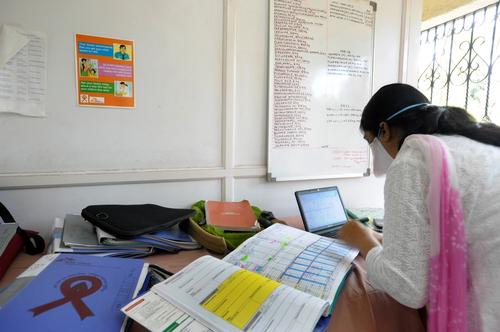
An MSF doctor prepares the schedule treatment for HIV patients.

Since 2006, MSF runs an anti-retroviral treatment (ART) centre in the Khar area of Mumbai. The centre provides psychosocial and medical care to a limited cohort of HIV patients, with a special focus on patients that are co-infected with multi-drug resistant tuberculosis. MSF also runs outreach activities in the community to complement the care offered to patients at the ART centre, and to provide capacity building to partner NGOs and health professionals. Operational research also constitutes an important part of the project activities.
HIV/AIDS

Second-line failure and first experience with third-line antiretroviral therapy in Mumbai, India

There are limited data on the failure of second-line antiretroviral therapy (ART) and the use of third-line ART in people living with HIV in resource-limited settings. Since 2011, the Médecins Sans Frontières (MSF) HIV/tuberculosis programme in Mumbai, India, has been providing third-line ART to patients in care. Journal article - 30 Jul 2014
 
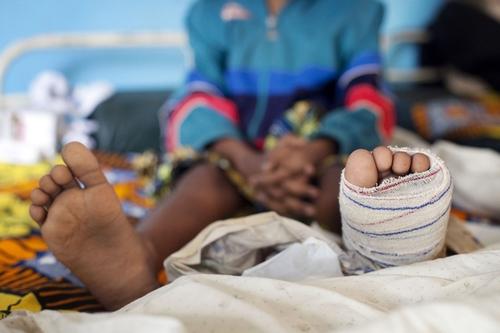
Dressing of a Buruli ulcer plague.
HIV/AIDS

Clinical features and management of a severe paradoxical reaction associated with combined treatment of Buruli ulcer and HIV co-infection

In this case we present a severe paradoxical reaction occurring after commencing antibiotic treatment for BU combined with antiretroviral therapy for HIV, and describe its clinical features and management. This includes to our knowledge the first reported use of prednisolone in Africa to manage a severe paradoxical reaction related to BU treatment. Journal article - 30 Jul 2014
 
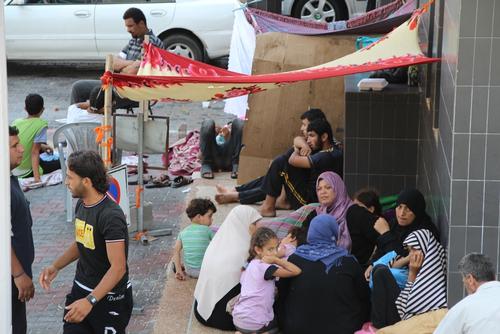
24th of July of 2014. Israeli military offensive "Protective Edge". Families displaced by the bombings took refuge in the Shifa hospital compound, in Gaza City, where MSF is working (OT, burn unit, ICU, ER and ressucitation room). 

24/07/2014. Offensive militaire israélienne "Bordure protectrice". Familles déplacées par les bombardements et réfugiées dans l'enceinte de l'hôpital Shifa, Gaza ville, où MSF travaille (bloc opératoire, service des brûlés, soins intensifs, urgences et salle de réanimation).
Palestine

MSF strongly condemns attack on Al Shifa hospital

Yesterday’s attack on Al Shifa hospital, where nearly 2,000 people are sheltering, demonstrates how civilians have nowhere safe to go Press Release - 29 Jul 2014
 
msf-placeholder
Syria

Car bombs in northern Syria target Eid shoppers

Two car bombs exploded in towns in northern Syria on 26 July Press Release - 28 Jul 2014
 
msf-placeholder
Democratic Republic of Congo

A team of MSF vaccinated 38,000 children against measles in Minova before continuing the campaign in Kalonge

The immunization campaign took place for about three weeks, from 27 June to 16 July in four health areas (Lumbishi, Numbi, Shanje and Tushunguti) in the hilly surroundings of the town of Minova, the so called Hauts Plateaux. Project Update - 25 Jul 2014
 
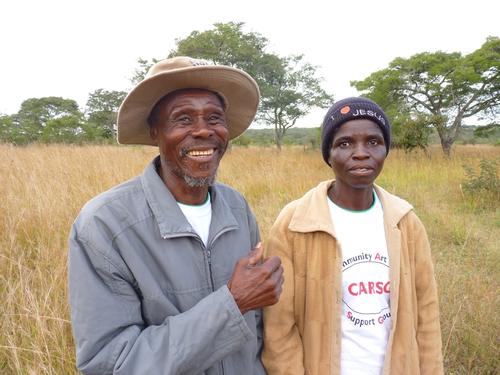
For Arnon Chipondoro, hearing that his daughter Elizabeth was HIV positive was not a shock, but a relief : a possibility for him to share his secret with someone else. Both of them have been on ARV treatment for three years, a treatment that allow to control the disease and live a long and healthy life – if and only people on ARV can access their treatment without fail so as to be able to take it every single day. Arnon and Elizabeth are now members of a Community ART Group, or CAG, which, they say, has transformed their lives. In a CAG, members take turn to take the three hours long hike to get to the nearest clinic and pick up the drugs for the whole group. It’s a simple but very efficient way to manage disease: in other places where MSF has introduced the CAGs, retention in care is at over 90% of patients after four years of their initiation on treatment, against only two third in traditional models of care.
Zimbabwe

Divided we fall

New system of HIV treatment transforms lives in Zimbabwe Project Update - 25 Jul 2014
 
msf-placeholder
Myanmar

MSF welcomes offer to resume operations in Rakhine, Myanmar but remains cautious

MSF welcomes offer to resume operations in Rakhine, Myanmar but remains cautious Press Release - 25 Jul 2014
 
msf-placeholder
HIV/AIDS

More positive stories needed

HIV in countries with low antiretroviral therapy coverage Project Update - 25 Jul 2014
 
Samrajam Yellamali, a HIV / XDRTB patient receives her TB medication  at the MSF clinic during her visit for routine check up.
Tuberculosis

Impact of Introducing the Line Probe Assay on Time to Treatment Initiation of MDR-TB in Delhi, India

To evaluate before and after the introduction of the line Probe Assay (LPA) the overall time to MDR-TB diagnosis and treatment initiation; the step-by-step time lapse at each stage of patient management; and the lost to follow-up rates.

Journal article - 24 Jul 2014
Four mothers posing in a corridor of the Hospital in Bili. All four of them are staying in the hospital with their child, that's suffering from a severe case of malaria. Since the beginning of the project in 2016, the pediatric ward already treated more than 4.000 cases of complicated/severe form of malaria.
Médecins Sans Frontières (MSF)

Independent medical humanitarian assistance

We provide medical assistance to people affected by conflict, epidemics, disasters, or exclusion from healthcare. Our teams are made up of tens of thousands of health professionals, logistic and administrative staff - most of them hired locally. Our actions are guided by medical ethics and the principles of independence and impartiality. We are a non-profit, self-governed, member-based organisation.

Learn more