


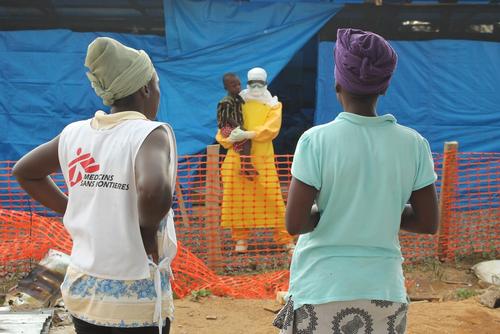
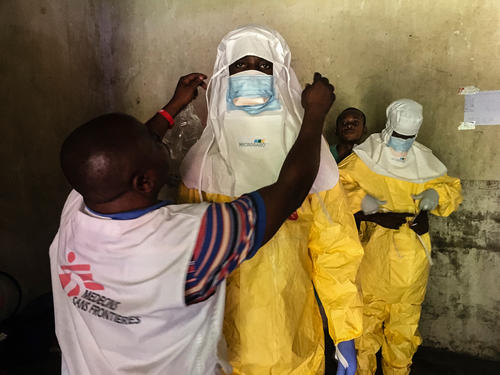
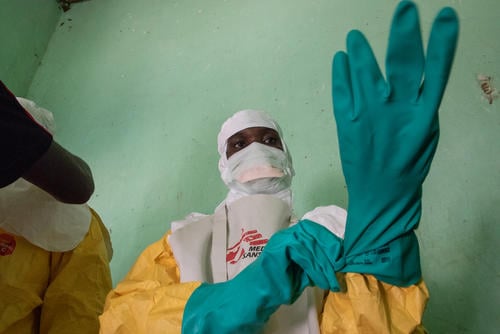

Ebola disease in DRC: find out how we're responding
Learn more
7999 Results
 
Migrants, asylum seekers and refugees mainly from Eritrea and Gambia land a few hours after being rescued from the sea.
Italy

Italy and the EU must not abandon refugees at sea

The European Union must continue active search and rescue operations to save lives in the Mediterranean. Press Release - 1 Oct 2014
 
PYONGYANG, NORTH KOREA, ASIA, 25.11.97. Hospital health center.  Conditions in these hospitals are very poor. The government of North Korea has difficulties in supplying its people with food. The crop was ruined this year. Many young children are suffering and dying of malnutrition.    
Photo by  Peter van Quaille /MSF-H

From the Illustrious database.
MSF Speaking Out

MSF and North Korea 1995-1998

The MSF in North Korea 1995-1998’ case study is describing the constraints and dilemmas that led Médecins Sans Frontières to speak out publicly while its teams were trying to bring assistance to the North Korean population on its territory between 1995 and 1998 and to the North Korean refugees in Asia in the following years. Speaking Out Case Studies - 1 Oct 2014
 
MDRTB patient Heshi, 28, showing her daily dose of pills given to her by the MSF staff nurse. Churchandpur, Manipur, India, 24 October 2012. Heshi has MDRTB. When she first got sick she did not know what was wrong with her, she could not sleep because of pain in her lungs and when she coughed she also felt pain. She had been on treatment for one month when this photo was taken and is feeling much better than before. She doesn't cough any more and can sleep again. When she started the treatment she thought she was going to die, she was depressed, but now she is very positive and looks forward to finishing her treatment.
India

MSF urges PM to resist US patent pressure

"India’s production of affordable medicines is a vital life-line for MSF" Press Release - 26 Sep 2014
 
Medical coordinator Vanessa Cramond is examining a patient. On Wednesday 27 and Thursday 28 June, approximately 11,000 refugees were 
relocated from the temporary site known as K18, to another temporary 
site next to Jamam refugee camp. MSF provided each family with plastic 
sheeting, blankets and high-energy biscuits upon arrival and set up a 
mobile clinic. After six centimetres of rain in just an hour and a half 
on the night of the 28th, parts of the transit camp were flooded. 
Amongst the mud, MSF staff provided consultations in its mobile 
clinic, including many for children with diarrhoea, malnutrition or eye 
infections.
South Sudan

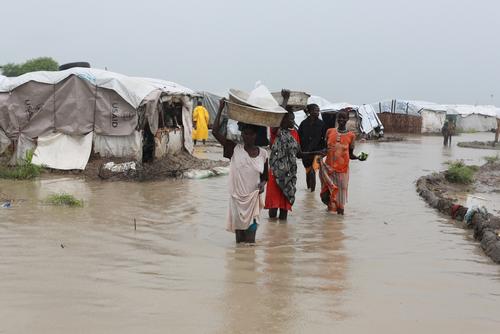
In Bentiu camp, floodwaters recede but tension remains

Thousands of people have taken refuge in a camp near Bentiu and set up spontaneously after violence swept across the country. Voices from the Field - 26 Sep 2014
 
Operation by Belgian and Cambodian MSF-surgeon in hospital of Kompong Thom.
Years of civil war and terror caused by the Khmer Rouge regime (during which many trained/educated people, like doctors, were killed) ruined Cambodia's infrastructure and health care. The country is also littered with mines.
Global

Why Humanitarian Aid Became Professional - the experience of MSF

This article describes the history of Médecins Sans Frontières’ move towards professionalisation in response to the challenges it faced in the field and explores the sometimes unintended organisational consequences that accompanied this move. Journal article - 26 Sep 2014
 
The team in Kailahun, Sierra Leone - September 2014
Ebola and haemorrhagic fevers

Ebola crisis update - Sept 25th

Crisis Update - 26 Sep 2014
 
Dr. Joanne Liu, International President. October 2013
Ebola and haemorrhagic fevers

MSF President urges UN General Assembly to act NOW

High-level Meeting on Response to the Ebola Disease Outbreak Speech - 25 Sep 2014
 
msf-placeholder
South Sudan

"The humanitarian community should be doing everything in its power to prevent this unnecessary loss of life"

Address by Jerome Oberreit, Secretary General, Médecins Sans Frontières, at the 69th Session of the UN General Assembly Speech - 25 Sep 2014
 
MSF experts provide in-house training in Brussels to MSF staff volunteering for Guinea, Sierra Leone and Liberia. 
Because Ebola is highly contagious, the main priority is training health staff to reduce the risk of catching the disease while caring for patients. Staff treating patients suffering from the disease must wear personal protective equipment to prevent transmission. 

MSF is carrying in-house training for other NGO's
Ebola and haemorrhagic fevers

Ebola workers at risk: the tragic reality of the Ebola response in West Africa

Despite intense precautions, Ebola workers remain at risk of infection Statement - 25 Sep 2014
 
msf-placeholder

More about malaria

Learn more about one of the world's deadliest diseases. Project Update - 25 Sep 2014
Four mothers posing in a corridor of the Hospital in Bili. All four of them are staying in the hospital with their child, that's suffering from a severe case of malaria. Since the beginning of the project in 2016, the pediatric ward already treated more than 4.000 cases of complicated/severe form of malaria.
Médecins Sans Frontières (MSF)

Independent medical humanitarian assistance

We provide medical assistance to people affected by conflict, epidemics, disasters, or exclusion from healthcare. Our teams are made up of tens of thousands of health professionals, logistic and administrative staff - most of them hired locally. Our actions are guided by medical ethics and the principles of independence and impartiality. We are a non-profit, self-governed, member-based organisation.

Learn more