




Ebola disease in DRC: find out how we're responding
Learn more
7999 Results
 
msf-placeholder
Uganda

Update on Marburg hemorrhagic fever outbreak

Death of Ugandan on September 29th confirmed to have been due to Marburg fever Project Update - 9 Oct 2014
 
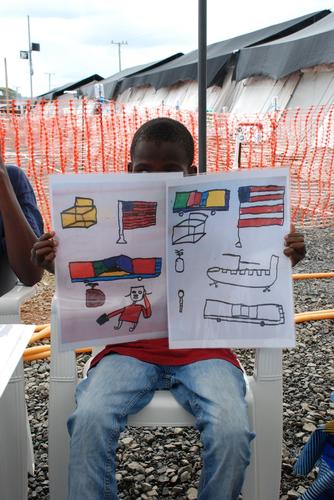
Tike, 9 years old, together with his elder sister Miatta and younger brother Jina sent by ambulance to MSF Ebola treatment centre in Kailahun, Sierra Loene. Both their parents already died of Ebola.
Guinea

Conakry Ebola centre stretched to limit

Following a new spike in Ebola cases in Guinea’s capital, Conakry, MSF’s Ebola management centre is approaching full capacity Project Update - 9 Oct 2014
 
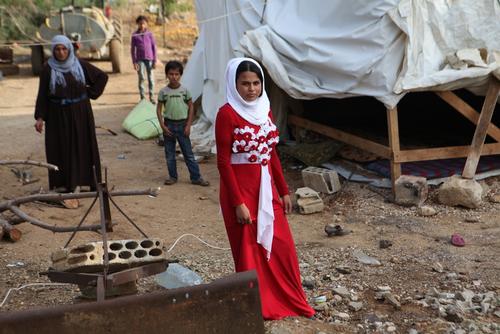
MSF teams are reaching out to the displaced people in Sharya, listening to them, advising them and letting them know that they can access free healthcare at the MSF dispensary in Dalal camp, Zakho.
Iraq

Fleeing Violence in Northern Iraq

Photo Story - 9 Oct 2014
 
msf-placeholder
Ebola and haemorrhagic fevers

Norwegian MSF staff member infected in Sierra Leone

Will soon be transferred to a specialised treatment center in Europe Press Release - 6 Oct 2014
 
Alfred Nema, 18 years old, from Ntweya village is an MSF patient (HIV and TBC positive).


How do you feel living with HIV? 
I don’t feel comfortable especially when am alone, sometime back people used to mock me about the my status.

Do you think people’s look changed when they look about you?
People feel sad about my status.

What is the main constraint for someone living with HIV?
To me going to hospital monthly to collect drugs is constraint and also mixing with older people waiting for drugs gives me headache.

Is there anything you don’t do because you have HIV?
I do anything.

What changed in your life since you know you have HIV?
Nothing really changed but sometimes am stressed when I think about my status and I don’t feel comfortable and I spend much of my time worrying about my future.

Greatest regret-having HIV without knowing where I got the it from, it makes me sad.
Greatest hope- I heard that sometime back a lot of people had to opportunity to receive treatment and now a days drugs are available it gives me hope and I see the bright future.
HIV/AIDS

Training HIV clinicians in eye examination to diagnose cytomegalovirus retinitis

Skills necessary for screening and diagnosis of CMV retinitis can be taught in a four-day task-oriented training workshop. Successful implementation depends on institutional support, ongoing training and technical support. The next challenge is to scale up this approach in other countries. Journal article - 3 Oct 2014
 
Since 2007, MSF has been supporting Degehbur Hospital in Somali Region of Ethiopia.
Ethiopia

Mother grateful for MSF intervention

"I felt the sparkle of my child’s life return" Voices from the Field - 3 Oct 2014
 
The scientific agenda of the first day includes the following sessions: Antibiotic Resistance in the Middle East: Overview of the Problem; Maintaining the Effectiveness of Current Antibiotics; and Reducing Drug-resistant Infections in Hospitals.  The second day will be dedicated for meetings with MoH experts and other international participants as well as roundtable discussions.  *** Local Caption *** Key message Antibiotic resistance, Amman Conference 21 Sept 2014
Antibiotic resistance is a rapidly evolving health problem worldwide extending far beyond the human health sector.<br>
Growing antibiotic resistance threatens the effectiveness of antibiotics now and in the future<br>Surveillance of antimicrobial resistance tracks changes in microbial populations, permits the early detection of resistant strains of public health importance, and supports the prompt notification and investigation of outbreaks.<br>
Promotion of infection control and reinforcement of basic hygiene and sanitation is crucial.<br>
Communicating with patients is key.
Jordan

Experts recommend steps to tackle growing antibiotic resistance

Regional health experts agree on steps to address growing concern Project Update - 3 Oct 2014
 
The outbreak is spreading rapidly in Monrovia, overwhelming the few medical facilities accepting Ebola patients. Much of the city’s medical system has shut down over fears of the virus among staff members and patients, leaving many people with no healthcare at all, generating an emergency within the emergency. MSF is rapidly scaling up its operations in Liberia as the international response to the Ebola outbreak in West Africa continues to be chaotic and entirely inadequate. In its first week, MSF’s ebola management centre – also known as ELWA3 – in the capital Monrovia, is already at capacity with 120 patients, and a further expansion is underway. The centre has eight tents, each with 15 beds, in separate sections for suspected and confirmed Ebola patients. On site, MSF is preparing for further construction and to erect three larger tents with space for 40 beds each. The team is planning to admit patients in these tents in the coming week. (MSF caption)
Liberia

MSF distributing family protection kits

“We know these kits are not the solution to the Ebola crisis in Monrovia” Project Update - 3 Oct 2014
 
The Oaxaca Health Secretariat has initiated Chagas diagnosis and treatment activities in collaboration with Médecins Sans Frontières (MSF) in Santa María Tonameca Municipality, Oaxaca State, Mexico. The 43,000 inhabitants in San Pedro Pochutla and Mazunte towns now have access to medical care for Chagas in primary healthcare facilities.
Mexico

Chagas diagnosis and treatment a reality in Oaxaca state

Residents now have access to diagnosis and treatment for Chagas. Press Release - 2 Oct 2014
 
msf-placeholder
Democratic Republic of Congo

MSF treating patients in difficult conditions

The Ebola outbreak has not yet been contained. Project Update - 2 Oct 2014
Four mothers posing in a corridor of the Hospital in Bili. All four of them are staying in the hospital with their child, that's suffering from a severe case of malaria. Since the beginning of the project in 2016, the pediatric ward already treated more than 4.000 cases of complicated/severe form of malaria.
Médecins Sans Frontières (MSF)

Independent medical humanitarian assistance

We provide medical assistance to people affected by conflict, epidemics, disasters, or exclusion from healthcare. Our teams are made up of tens of thousands of health professionals, logistic and administrative staff - most of them hired locally. Our actions are guided by medical ethics and the principles of independence and impartiality. We are a non-profit, self-governed, member-based organisation.

Learn more