




Ebola disease in DRC: find out how we're responding
Learn more
7999 Results
 
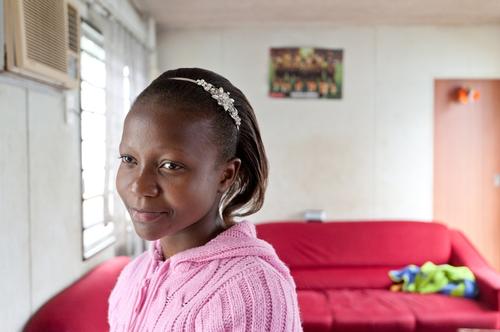
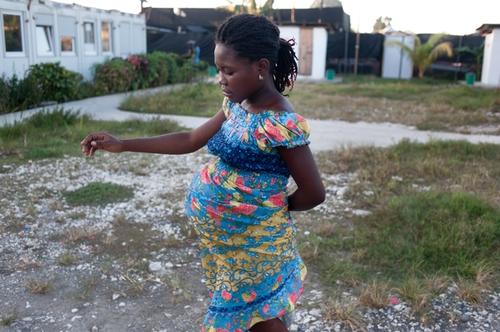
Young girl from HIV support group from Bulawayo.
Zimbabwe

Making HIV an ‘undetectable’ virus

The latest generation of HIV medical technology is making breakthroughs in care for HIV-positive patients, and in containing the epidemic in many African countries. Project Update - 27 Jan 2015
 
msf-placeholder
Ebola and haemorrhagic fevers

MSF's address to the UN Special Session of the Executive Board on the Ebola response

Read by Jerome Oberreit, Secretary General of MSF Speech - 26 Jan 2015
 
Ebola is finally declining in Liberia, although gaps remain in infection control and prevention, surveillance, case investigation and contact tracing. Access to medical care for non-Ebola patients is still a major issue due to the collapse public health system.
Ebola and haemorrhagic fevers

Decline encouraging, but critical gaps remain

Reaching zero cases difficult unless weaknesses in the response addressed. Press Release - 26 Jan 2015
 
msf-placeholder
Syria

Crisis update - January 2015

What began in 2011 in Syria as protests inspired by the Arab Spring has become an entrenched and bloody conflict that shows no sign of resolution.
Crisis Update - 26 Jan 2015
 
MSF staff deliver medicines, to treat chronic diseases, to Hospital no.6 in Donetsk, Ukraine.
Ukraine

Hospitals shelled and civilians cut off as fighting intensifies

As fighting escalates, the situation for civilians caught in the conflict zone is now dire. Project Update - 23 Jan 2015
 
Along with the Ministry of Health, MSF is distributing 1.8 million antimalarial treatments in Sierra Leone. This is the largest distribution in an Ebola oubreak. The picture is taken in Tombo Town.
Sierra Leone

Malaria - the other epidemic

MSF distributes 1.8 million antimalarial treatments in midst of Ebola outbreak. Project Update - 23 Jan 2015
 
Grace Mailosi, 20 years, sitting down with her two children in a classroom at M’bwazi primary school in East Bank in southern Malawi. She lost her husband in the floods.
Malawi

Floods in Malawi

At least 20.000 people have been with little to no food, clean water and medical aid for ten days. MSF has established a continuous presence in two locations: Trinity and Makhanga. Three teams of four people (two medical, one patient support officer and one logistician) are at work there distributing mosquito nets and clean water kits, as well as building latrines and monitoring the situation for potential emergence of water borne diseases and malaria. Photo Story - 22 Jan 2015
 
msf-placeholder
Malawi

Crisis upate: January 2015

Médecins Sans Frontières (MSF) is focusing its intervention on the most hard-to-reach areas of Nsanje and East Bank. We are currently the only humanitarian organisation physically present to support people. Crisis Update - 22 Jan 2015
 
On  20 January  2015,  the  hospital  managed  by MSF in Frandala village, South Kordofan  region in the Nuba Mountains, has been directly targeted during a bombing lead by Sudanese Air Force (SAF). This is one of the indiscriminate bombing  occurring  regularly in South Kordofan in the war between Khartoum Authorities  and  the  rebels  groups  in  the Nuba Mountains. 

The Frandala hospital  was  previously  bombed  on 16 June,  2014.  That attack took place despite Sudanese government’s knowledge of the MSF presence.
Sudan

MSF hospital bombed in South Kordofan

Press Release - 22 Jan 2015
 
msf-placeholder
Ebola and haemorrhagic fevers

How does MSF care for patients suffering from Ebola?

Dr. Armand Sprecher, Public Health Specialist at MSF describes MSF’s clinical protocols, the challenges faced, and lessons learned during the world’s largest outbreak ongoing in West Africa. Voices from the Field - 21 Jan 2015
Four mothers posing in a corridor of the Hospital in Bili. All four of them are staying in the hospital with their child, that's suffering from a severe case of malaria. Since the beginning of the project in 2016, the pediatric ward already treated more than 4.000 cases of complicated/severe form of malaria.
Médecins Sans Frontières (MSF)

Independent medical humanitarian assistance

We provide medical assistance to people affected by conflict, epidemics, disasters, or exclusion from healthcare. Our teams are made up of tens of thousands of health professionals, logistic and administrative staff - most of them hired locally. Our actions are guided by medical ethics and the principles of independence and impartiality. We are a non-profit, self-governed, member-based organisation.

Learn more