



Ebola disease in DRC: find out how we're responding
Learn more
7999 Results
 
MSF health promotion officer Abdullatif Bokay provides patients at the waiting area of the mobile clinic in East Ghouta, Syria, with essential information on non-communicable diseases (NCDs). This awareness helps patients better manage their conditions, promotes early detection, and improves overall health outcomes.
Syria

MSF mobile clinics bring care to Syria’s neglected region of east Ghouta

For the first time in over a decade, MSF teams have returned to east Ghouta, Syria. Project Update - 6 Feb 2025
 
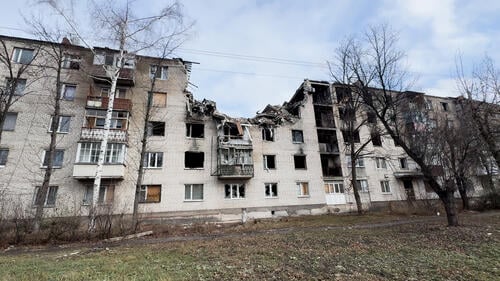
After the 9-day incursion that took place in Jenin from 28 August to 6 September, MSF teams resumed their psychological first-aid activities in the refugee camp.  


Salwa and Rahma visit the camp weekly to meet the residents and make assessments on their mental health and evolution.  


“The level of destruction keeps becoming bigger, and the psychological impact is huge” explains Rahma, “residents believe that what is happening in Gaza will happen as well in the camp. Many people, and especially women and children, suffer from symptoms of psychological trauma, and develop eating and sleeping problems like recurrent nightmares and anxiety due to the fear of incursions which often happen at night”  


People cannot feel safe given the brutality of the incursions and the impossibility to foresee when the next one will come. In this context, psychological treatment is challenging as the trauma is ongoing.
Gaza-Israel war

“Inflicting harm and denying care” in the West Bank: MSF report on escalation of attacks and obstructions of healthcare

A new report by MSF details how Israeli forces and settlers are obstructing healthcare in Palestine's West Bank. Press Release - 6 Feb 2025
 
After the 9-day incursion that took place in Jenin from 28 August to 6 September, MSF teams resumed their psychological first-aid activities in the refugee camp.  


Salwa and Rahma visit the camp weekly to meet the residents and make assessments on their mental health and evolution.  


“The level of destruction keeps becoming bigger, and the psychological impact is huge” explains Rahma, “residents believe that what is happening in Gaza will happen as well in the camp. Many people, and especially women and children, suffer from symptoms of psychological trauma, and develop eating and sleeping problems like recurrent nightmares and anxiety due to the fear of incursions which often happen at night”  


People cannot feel safe given the brutality of the incursions and the impossibility to foresee when the next one will come. In this context, psychological treatment is challenging as the trauma is ongoing.
Gaza-Israel war

“Inflicting harm and denying care” in the West Bank

A new MSF report details how Israeli forces and settlers are obstructing healthcare in Palestine's West Bank. Report - 6 Feb 2025
 
Displaced people reaching Tawila locality. They mainly come from El Fasher and surrounding camps like Zamzam and Abu Shok and report extreme violence, repeated shelling, skyrocketing commodity prices and food shortages as the main reasons to move. Many remain behind because of increased protection concerns on the road and a lack of financial means to pay for transportation and fees.  

 Tawila is under the control of a faction of the armed group SLA/M led by Abdul Wahid el-Nur, who comes from the Fur community. The faction itself as a neutral player in the conflict which often facilitates a convoy for civilians to move between El Fasher and Tawila.
Conflict in Sudan

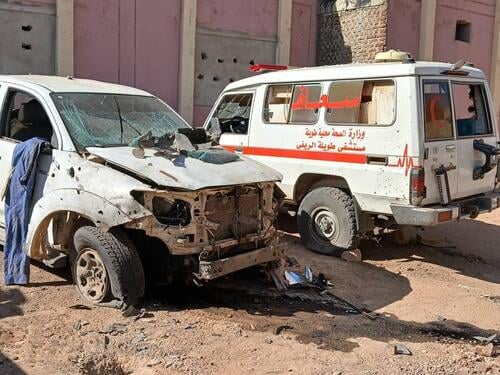
Mass influxes of wounded patients arrive at hospitals across Sudan as “war on people” continues

MSF teams have responded to multiple mass casualty incidents across Sudan in the last few days. Press Release - 5 Feb 2025
 
As the epidemic emerged in Kagera, MSF mission officially offered our services and expertise to the MoH on three main pillars of the response:
1.	Health Response Capacity: Deployment of medical teams and logistical resources to support case management, contact tracing, and health facility strengthening. 
2.	Training and Capacity Building: Collaborating with healthcare professionals on infection prevention and control (IPC) measures, as well as the management of patients in critical care. 
3.	Medical Supply :  Providing Personal Protection Equipment (PPE) and other useful medical and non-medical devices. 

Following this, an experienced team in Oubtreak management was invited by the MoH to take part in the assessment of local response capacities that took place in January in Kagera, together with the WHO and other partners.
Tanzania

MSF team supports response to outbreak of Marburg virus in Tanzania

The outbreak was declared on 20 January 2025. Press Release - 3 Feb 2025
 
The beginning of the targeted food distribution. At this site children enrolled in MSF’s outpatient malnutrition programme will receive two months of food for them and their families.
Conflict in Sudan

MSF renews call for immediate action to prevent death and starvation in Sudan

Action must be taken now to prevent even more avoidable death from malnutrition in Sudan. Press Release - 3 Feb 2025
 
MSF staff offloading the truck to prepare for the distribution in outskirts of Nyala / South Darfur
United States of America

Freezing US foreign aid will result in humanitarian disaster

The loss of services supported by USAID will affect millions of the world’s most vulnerable people. Statement - 2 Feb 2025
 
The MSF supported Al Nao hospital in Omdurman, to the northwest of Khartoum, where intense fighting is taking place.
Conflict in Sudan

Sudan: MSF condemns Omdurman market attack

The emergency room of Al Nao hospital became a scene of carnage after an attack on a nearby market. Statement - 1 Feb 2025
 
Before the fighting broke out in the Goma, MSF teams were working in Kyeshero hospital, located in the western part of the city, supporting the Ministry of Health. They were providing care for malnourished children; most of whom came from the displaced people camps near the city. When fighting broke out in the city in the last week of January, MSF quickly put in place a plan for a mass influx of wounded, in particular to support the International Commitee of the Red Cross’s (ICRC) work in Ndosho hospital.
Democratic Republic of Congo

A chaotic situation and many war-wounded in Goma

Virginie Napolitano, MSF emergency coordinator in Goma, Democratic Republic of Congo, describes the situation in the city. Voices from the Field - 31 Jan 2025
 
Overcrowded housing in the informal settlement of Machar Colony in Karachi, Pakistan.
Pakistan

Turning the tide of hepatitis C treatment in Machar Colony

While hepatitis C remains a challenge in Machar Colony, Pakistan, the alarming spread has been curtailed, thanks to widespread awareness and early detection. Project Update - 30 Jan 2025
Four mothers posing in a corridor of the Hospital in Bili. All four of them are staying in the hospital with their child, that's suffering from a severe case of malaria. Since the beginning of the project in 2016, the pediatric ward already treated more than 4.000 cases of complicated/severe form of malaria.
Médecins Sans Frontières (MSF)

Independent medical humanitarian assistance

We provide medical assistance to people affected by conflict, epidemics, disasters, or exclusion from healthcare. Our teams are made up of tens of thousands of health professionals, logistic and administrative staff - most of them hired locally. Our actions are guided by medical ethics and the principles of independence and impartiality. We are a non-profit, self-governed, member-based organisation.

Learn more