



Ebola disease in DRC: find out how we're responding
Learn more
4636 Results
 
msf-placeholder
Project Update

MSF denounces the policy of forced repatriation of the Hmong population of Huai Nam Khao camp back to Laos, and refuses to work under military pressure

Médecins Sans Frontières (MSF) denounces the methods employed by the Thai authorities, who have stamped out any possibility of offering independent humanitarian assistance to the camp's refugee population. Press Release - 20 May 2009
 
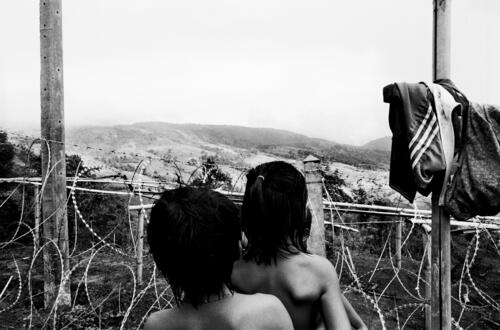
Medecins Sans Frontieres has been assisting some 7,800 Hmong refugees-25 percent of them under the age of 5-living in the village of Huay Nam Khao in Thailand's Phetchabun province since July 2005. These refugees fled Laos starting in 2005 with some seeking safety from attacks on their mountain villages and others from religious or political persecution while yet others are looking for better economic opportunities in Thailand or a third country. The Thai government has denied UNHCR access to the camp to determine the protection status of these refugees under international humanitarian law and has reached an agreement with the Lao government to forcibly return them to Laos as soon as possibly. Until June 2007, the refugees were forced to live within 10 meters of either side of the village's main road. They now live in a camp, with barbwire fencing, roughly 3 kilometers away on a mountainside overlooking the village. MSF provides a full-food ration to every refugee in the camp as well as specialized rations for pregnant and lactating women; therapeutic food to malnourished children; outpatient, ante-natal, and referral medical services; vaccinations; shelter materials; and maintains the water-and-sanitation systems, which provide 60 to 80 liters of water per person per day.
Thailand

Hidden Behind Barbed Wire

Plight of Hmong refugees held in detention camp in northern Thailand ignored amid ongoing deportations to Laos. Report - 20 May 2009
 
msf-placeholder
Chagas disease

Chagas disease not addressed by World Health Assembly - Neglected disease neglected once again

Médecins Sans Frontières (MSF) urges affected countries to scale up diagnosis and treatment on 100th anniversary of the discovery of the disease. Press Release - 19 May 2009
 
msf-placeholder
Kenya

Somali refugees imperilled in overcrowded camps in Kenya

More than 270,000 refugees who have fled war in Somalia are facing such alarming shortages of food, water and adequate shelter in severely overcrowded camps in northern Kenya that many are considering returning to the Somali war zone. Press Release - 18 May 2009
 
msf-placeholder
Sleeping sickness

NECT added to WHO Essential Medicines List as combination treatment against sleeping sickness

A new treatment option against sleeping sickness, a fatal disease which threatens 60 million people across sub-Saharan Africa, has been added to the Essential Medicines List of the WHO. Press Release - 15 May 2009
 
msf-placeholder
Somalia

MSF forced to close a clinic due to heavy fighting in Mogadishu, Somalia

MSF wants to remind all parties to respect medical facilities. Press Release - 15 May 2009
 
msf-placeholder
Sri Lanka

A 'full blown storm of medical and humanitarian needs' in Sri Lanka

Since Saturday, MSF teams have been working alongside the Sri Lankan Ministry of Health doing triage at the main crossing point, selecting the most seriously injured, then treating and stabilising them on site. Project Update - 15 May 2009
 
msf-placeholder
Sri Lanka

Dr Paul McMaster, MSF surgical advisor on surgical work in northern Sri Lanka

Interview with Dr Paul McMaster, MSF Surgical Advisor, arrived in Vavuniya, in northern Sri Lanka, on April 16 and left on May 8. Voices from the Field - 13 May 2009
 
msf-placeholder
Project Update

Seven million vaccinated for meningitis in West Africa

Photo Essay: Seven million vaccinated for meningitis in West Africa Photo Story - 12 May 2009
 
msf-placeholder
Sudan

Women and children are majority of victims in new violent attacks on village in Upper Nile State, Sudan

Many patients suffered multiple gunshot wounds and will need follow-up surgery and care.
Project Update - 12 May 2009
Four mothers posing in a corridor of the Hospital in Bili. All four of them are staying in the hospital with their child, that's suffering from a severe case of malaria. Since the beginning of the project in 2016, the pediatric ward already treated more than 4.000 cases of complicated/severe form of malaria.
Médecins Sans Frontières (MSF)

Independent medical humanitarian assistance

We provide medical assistance to people affected by conflict, epidemics, disasters, or exclusion from healthcare. Our teams are made up of tens of thousands of health professionals, logistic and administrative staff - most of them hired locally. Our actions are guided by medical ethics and the principles of independence and impartiality. We are a non-profit, self-governed, member-based organisation.

Learn more