



Ebola disease in DRC: find out how we're responding
Learn more
8003 Results
 
msf-placeholder
South Sudan

Distressing humanitarian situation in Upper Nile as civilians come under fire in Malakal shooting attack

Following a shooting incident in Malakal, Upper Nile state on 01 July 2015, directed at the Protection of Civilians (PoC) site Médecins Sans Frontières (MSF) received 9 wounded patients, including women and the elderly at its hospital in the PoC. This adds to an already deteriorating humanitarian situation in the state over the last few weeks, which has left the civilian population constantly exposed to episodes of violence, increased numbers of wounded, further displacements, heightening rates of malnutrition and the risk of outbreaks. Statement - 2 Jul 2015
 
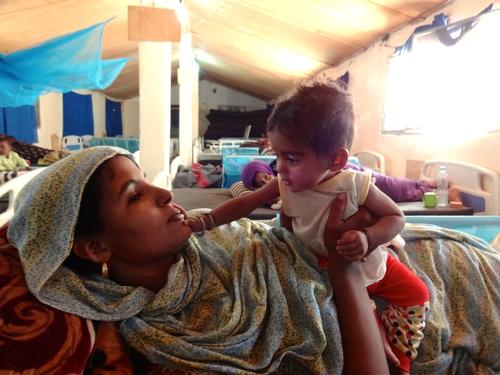
Fatimata Walet Mohamed’s 10 month old daughter Abubakri was a patient in the intensive therapeutic feeding centre in Mbera camp. “There are days when we find nothing to eat,” said the mother of three.
Mauritania

Malian refugees at risk of increased malnutrition following cancelled food distributions

“The timing of the gap in food distributions is all the more cruel because people are already fasting during daylight hours for the month of Ramadan, and now they have little food to break their fast at sunset,” said Maya Walet Mohamed, leader of the women’s committee in the camp. Press Release - 2 Jul 2015
 
msf-placeholder
Italy

“I had no idea how bad it would be. The journey to Europe was worse than what I left behind in Somalia.”

"I did not know how hard the journey would be. What I experienced reaching Europe was worse than what I left behind in Somalia." , says a Somali migrant arrived in Pozzallo, Sicily, after having endured a six-month ordeal in the hands of smugglers, travelling through Ethiopia, Sudan and Libya and finally crossing the Mediterranean in a small plastic dinghy. Voices from the Field - 2 Jul 2015
 
msf-placeholder
Mediterranean migration

From Eritrea to Mediterranean: "A Lot of Trouble"

On June 19, MSF rescued 345 people from a small boat on the Mediterranean. One man described the journey from Eritrea, through Sudan and Libya. Project Update - 2 Jul 2015
 
msf-placeholder
Libya

The challenge of medical aid

“We had a lot of problems delivering all these drugs and medical supplies,” says Dr. Anne-Marie Pegg, MSF’s head of mission in Libya. “It was a challenge to find an airplane that transports freight to Libya. And then road transport is very dangerous because of the insecurity in both the east and the west.” Voices from the Field - 1 Jul 2015
 
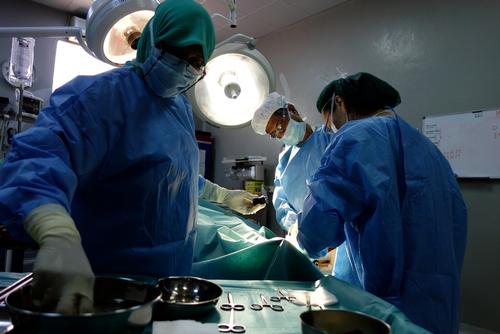
Operating theatre.
Yemen

The crisis in Yemen

First published in the International Activity Report 2015 Report - 1 Jul 2015
 
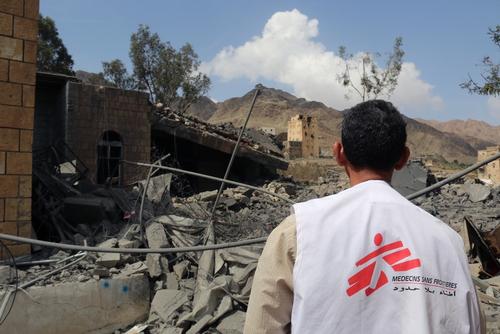
On october 26th, the Haydan hospital we support in northern Yemen has been hit by several air strikes. The first bombing took place at 22:30 local time and last midnight.
Miriam, project coordinator in Saada, went this morning Haydan, but could not enter the building because there were still bombs that had not exploded.
The hospital is completely destroyed: the emergency room, OPD, IPD, the laboratory, motherhood and the block. But the bombing did not cause any casualties. Only one person was slightly injured. Staff and two hospitalized patients could leave the building after the first strike.
This hospital was still functional only for the whole Haydan region which has a population of about 200,000 inhabitants. On average 150 patients had received emergency a week by personnel from the Department of Health that is supported with incentives.
The Haydan region bordering Saudi Arabia is in Sa'ada governorate, which is controlled by the Houthis. It is bombarded every day by the coalition led by Saudi Arabia.
Global

A Year in Review | 2015

2015 International Activity Report: The Year in Review Report - 1 Jul 2015
 
msf-placeholder
Bosnia-Herzegovina

MSF releases case study that reveals the organisation’s dilemmas to position itself in the face of the Srebrenica events

Twenty years after the events that followed the fall of Srebrenica’s Muslim enclave, Médecins Sans Frontières (MSF) is publishing for the first time the case study ‘MSF and Srebrenica 1993–2003’. Report - 1 Jul 2015
 
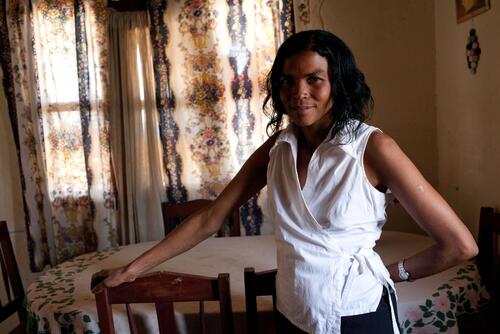
Carmen Jose-Panti is 32 years old. She is HIV positive and lives with her husband and two children from a previous marriage in Tete in Mozambique. Carmen discovered she was HIV positive in 2007 and started antiretroviral treatment in 2009. She runs a small business from home selling charcoal, soap, salt and other domestic items. She is also attending night school. Carmen is part of a six-woman community HIV group that is supported by MSF. The members of the group support each other and once a month, they take it in turns to travel to the health centre to collect refills of medicines for themselves and the rest of the group.
Access to medicines

Why MSF needs India to remain open for business

First published in the International Activity Report 2015. Report - 1 Jul 2015
 
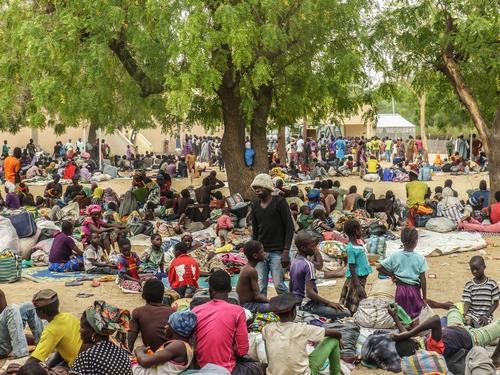
Thousands of people have fled their villages on islands in Lake Chad, in south-eastern Niger, after Nigerien authorities urged them to leave the area following the deadly attack of Boko Haram on the island of Karamga on 25 April. About 1,500 additional people are now in a transit site in Diffa, the capital of the region.
Lake Chad Crisis

Around Lake Chad: People living in fear

First published in the International Activity Report 2015 Photo Story - 1 Jul 2015
Four mothers posing in a corridor of the Hospital in Bili. All four of them are staying in the hospital with their child, that's suffering from a severe case of malaria. Since the beginning of the project in 2016, the pediatric ward already treated more than 4.000 cases of complicated/severe form of malaria.
Médecins Sans Frontières (MSF)

Independent medical humanitarian assistance

We provide medical assistance to people affected by conflict, epidemics, disasters, or exclusion from healthcare. Our teams are made up of tens of thousands of health professionals, logistic and administrative staff - most of them hired locally. Our actions are guided by medical ethics and the principles of independence and impartiality. We are a non-profit, self-governed, member-based organisation.

Learn more