


First published in MSF's International Activity Report 2015, available to download below.
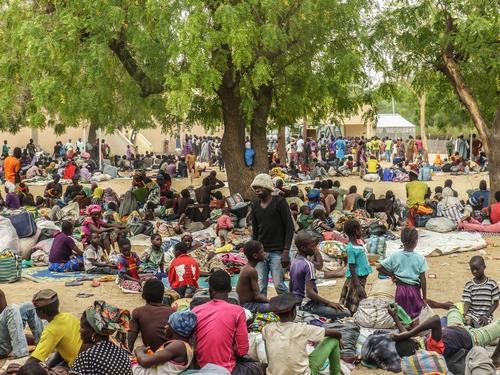
In recent years the region around Lake Chad – a body of fresh water in west-central Africa that straddles Chad, Cameroon, Nigeria and Niger – has become an epicentre of violence.
The resulting suffering and displacement has meant that MSF has expanded its operations in the region but unfortunately the magnitude of the humanitarian crisis remains largely unknown.

For many years the lake has been shrinking, which has forced people to compete for resources and has resulted in conflict, food insecurity, livestock deaths and increased poverty. There are recurrent outbreaks of disease in the region, and healthcare is almost non-existent.
Since May 2013, attacks by Islamic State’s West Africa Province (ISWAP), also known as Boko Haram, have put even more pressure on the populations and have forced thousands of people from their homes and across borders.
Retaliatory governmental military operations have also contributed to mass displacement, and to date over 2.5 million people have been rendered homeless as a result of violence.
This is fast becoming Africa’s largest displacement crisis, and is aggravating what was already a desperate situation.
"What is striking about this crisis is the sheer terror under which people are living. Attacks are occurring at markets, [in] places of worship and schools causing widespread fear and displacement. Meanwhile, counteroffensives and violence force people out of their villages to search for a place to live in safety and peace. People feel unsafe and are unwilling to return to their homes. It is as if they are just waiting. It is difficult to see what the future will hold for them."
DR JEAN-CLÉMENT CABROL, MSF Director of Operations
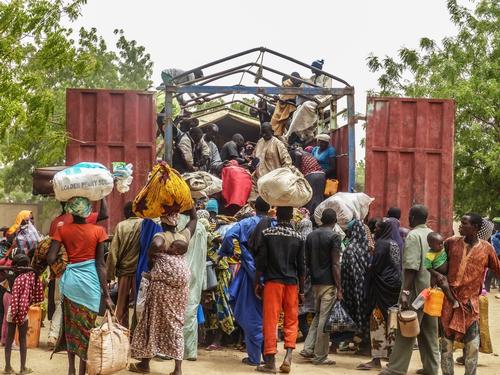
In April 2015, after ISWAP attacked the island of Karamga and killed Nigerien soldiers and civilians, thousands of people living in around 100 island villages on Lake Chad were ordered by the authorities to evacuate ahead of an offensive.
With little in place to receive them, many found themselves living in dire conditions.
"The government asked us to leave our village for security reasons. We found this place ourselves. Since then, nobody has visited us. We are surviving on what we have or can find. We have nothing to do."
MOHAMMED, from Nigeria and now in Chad
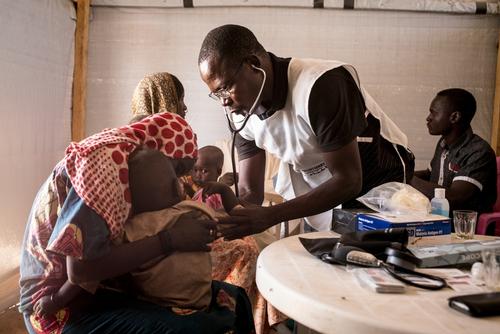
Health facilities are few and far between in the region and some have closed as they lack essential drugs, equipment or medical staff.
The insecurity also impedes thousands of people from accessing the healthcare they need, as they cannot reach hospitals or clinics or fear violence on the road.
This is especially problematic as the rainy season causes an increase in the number of people suffering from waterborne diseases such as malaria and diarrhoea which, combined with malnutrition, are especially dangerous for young children.
"Boko Haram fighters attacked our village in the middle of the night … They killed several people including my father and one of my sisters. We tried to flee, but they attacked us again while we were on the road. My mother and my sister had to stay behind. I hope I will find them one day. I arrived in Cameroon with my 9-month-old daughter and my 14-year-old sister after walking for two days."
ESTHER, 24, from Nigeria
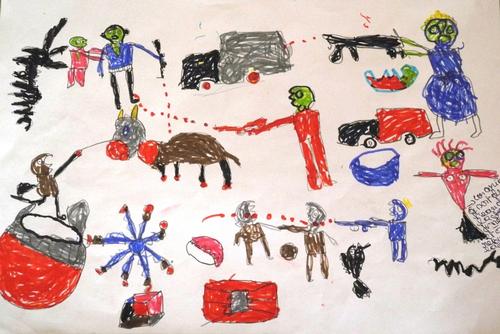
Close to Baga Sola in Chad, MSF is working in the Dar as Salam refugee camp and is providing mental healthcare to refugees, many of whom display symptoms of depression and anxiety.
In 2015, there was also a weekly workshop for children, where they were encouraged to express their emotions through drawing what they had witnessed.
MSF is also providing psychosocial support to people in Diffa in Niger, due to the high levels of violence.
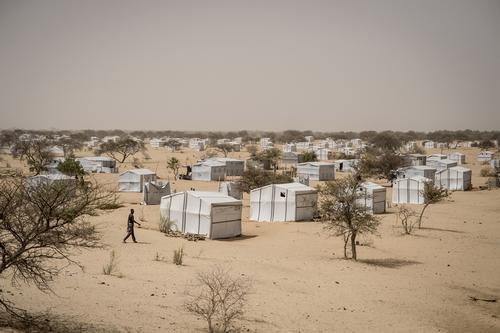
The living conditions of displaced people and refugees – who have little access to safe water and sanitation – are critical. Many are unable to harvest their fields, and food prices have risen dramatically.
This is adding pressure to an already fragile and neglected region where basic services are not sufficient.
Hundreds of thousands of people are being supported by local communities, who are coming under strain as they struggle to survive with limited means.
"We left our fishing tools behind when we fled our village. Survival is very difficult. If we had our tools, we would be able to fish to survive."
HASSAN, from Nigeria and now in Chad
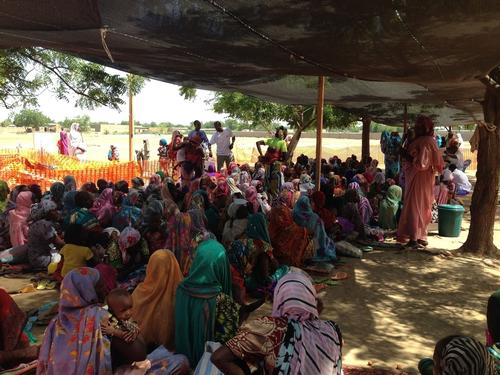
In Cameroon, the security situation along the border with Nigeria remains volatile and over 100 refugees continue to arrive on a daily basis in the camp established by national authorities in the Extreme North region.
Here, MSF provides basic and nutritional healthcare consultations.
MSF is also present in Kousseri, on the border with Chad, where tens of thousands of displaced people are scattered around the city.
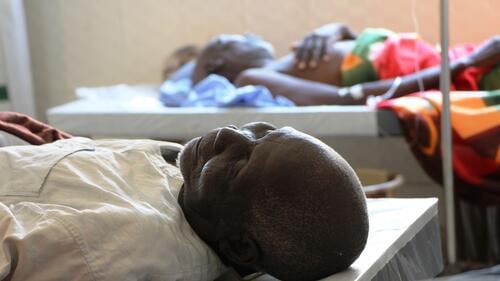
In mid-August, the first cases of cholera appeared in the camps in Nigeria, and as well as providing medical care it was essential to prioritise hygiene and sanitation activities.
Cholera is more common in densely populated areas, and the infection can spread rapidly.
For more details on MSF’s response in the Lake Chad region in 2015, see the country reports for Cameroon, p.31; Chad, pp. 34, Niger, pp. 70–71; and Nigeria, pp. 72–73 in the PDF below.