




Ebola disease in DRC: find out how we're responding
Learn more
7999 Results
 
msf-placeholder
Ebola and haemorrhagic fevers

MSF response to WHO Ebola Interim Assessment Panel report

“MSF has repeatedly raised the alarm on the WHO and global response to Ebola and was also interviewed by the panel. On paper, there are a lot of strong points in the report that reflect many issues MSF is concerned about, but the question how will this translate into real action on the ground in future outbreaks and epidemics and what will Member States do to make sure this really happens?" Statement - 7 Jul 2015
 
A group of around 150 Syrians set off to cross the Greek border with the Former Yugoslav Republic of Macedonia (FYROM), with the hope of being able to apply for refugee status in countries such as Germany or Sweden. The Greek border with the FYROM is increasingly under the control of people-smugglers, and is becoming less safe each day, so migrants try to cross the border in large groups so they can defend themselves from any extortion. 6 June 2015.
Greece

Thousands of migrants & refugees blocked at borders

“The situation will become much worse if more people get stranded in the area, because there are no basic facilities here and people are scared of what will happen to them” says Antonis Rigas, MSF project coordinator in Idomeni. "It’s absurd how people who are fleeing war and violence are forced to risk their lives in order to finally reach safety in countries that are able to ensure their protection.” Voices from the Field - 7 Jul 2015
 
Muhammed (not real name), 18 years old, fled Idlib in Syria after he was wounded in a missile explosion. He says he is anxious about the journey that lies ahead of him: 
 “The smuggler lied to us. He said: when you get to Greece, it’s going to be easy to get to the other countries in EU, you just take some ticket and leave and it will be easy.  When I came here I realized that that’s not the case and that I have to walk, there’s no other way. 
I am very nervous about crossing border, because I have heard many stories of people getting beaten. But my main concern right now is that if something bad happens, my family won’t know what happened to me. 
I have been told that you have to cross Macedonia and once you get into Serbia everything will be alright. They give you papers and you can use it and you can go to Hungary. After that you get into Austria and you are going to be fine.  
I don’t regret the decision to leave Syria. If I was back there, either I would have to fight in the army or I would be dead by now. And I can’t go back to Turkey, if I go back there, there will be nothing for me.”
Greece

Testimonies from migrants blocked at borders

MSF is offering medical consultations, psychological support and relief items to migrants and refugees in Evzonoi and Idomeni, close to the Macedonian border. Most of the people seen by MSF’s medical team are fleeing war and violence in Syria, Afghanistan and Iraq. Voices from the Field - 7 Jul 2015
 
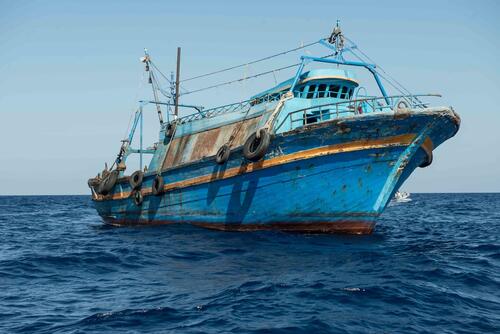
The Bourbon Argos at sea.
Mediterranean migration

Testimonies from the Bourbon Argos

Testimonies from the Bourbon Argos, the MSF search-and-rescue ship. Voices from the Field - 7 Jul 2015
 
Not wanting to worry his family, 20-year-old Fresghy left Eritrea without telling anyone. More than a year later he found himself imprisoned in Libya. His only chance of release was if his relatives could raise the money to pay off his captors. 

“I migrated from my country because there are too many problems. My family has no work and no salary – things are impossible. The only solution was to leave. I decided to do it by myself, without telling anybody. 

When I reached a refugee camp in Ethiopia, I called my relatives and they told my parents where I was and not to worry about me. This was 18 months ago. 

I spent two months in Ethiopia before heading to Sudan. I decided to work in Khartoum so I could send money to my family. I spent more than a year there. Sudan is not a peaceful nation, but there is the chance of work sometimes. 

There are a lot of Eritreans in Khartoum, especially from poor families. They know that in order to go to Libya and cross the Mediterranean Sea, they need money, so they stop in Khartoum to work. They know that if you go to Libya without money you will probably die. 

I didn’t want to live in Khartoum because it is not possible to save money there. All you earn goes into rent and food. I couldn’t support my family from there. 

So I went to Libya. I didn’t tell my parents I was going because they would have opposed me. 

We went from Sudan to Libya in small containers, open at the back. The people were compressed in these containers, 30 to 40 people in each one. Many people fell off, but they didn’t get any help. They were left to die in the desert. Nobody can help you because no one knows where you are. Only the driver knows, but he says, “Leave him. Those who fall down must be left behind”. 

I called my family when I was in Libya and asked my relatives if they could help me pay for the voyage to Europe. I had to do that because I was taken by Libyan people. They robbed me and I had no choice but to call my relatives. 

People in Libya are unkind. They argue all the time and they animalise people. They put me in a closed compound. It was very hot. There was no air supply, no facilities, and if you were sick, nobody gave you medicine because nobody cared about you. They care only about money, not about the life of the man. 

Many women who were with us were raped. 

When we called our relatives on the telephone, we told them what Libya was like and asked them to please hurry up getting the money, otherwise they would kill us. Libyans want to scare us, and we automatically scare our parents. 

For rich ones there is no problem. But for ones like me and my parents, it takes many months to gather the money. 

Once my family had paid, they put me into a boat with 550 other people. It was very unsafe. There were too many people on it. I was on top of the boat, but down below it was very hot and people started having problems breathing. 

Everybody felt afraid because the boat was not safe. They didn’t give us any life jackets, and I don’t know how to swim. If any problem had occurred, I would have had no choice but to die.

I have many friends and relatives who came to Europe before me. I knew how dangerous the travel is – they had told me on Facebook and Messenger. But I had no choice. In Sudan there is no peace. In Ethiopia there is no peace. In Libya there is no government. We decide to cross very hard countries and be transferred in an unsafe boat, but this is the only choice we have: to cross the sea by the help of God.

The only thing you are thinking about is how to help your family and how to get to a peaceful place where you can live by working. 

My dream is to be able to provide for my family so that they will not be poor anymore. 

ENDS
Mediterranean migration

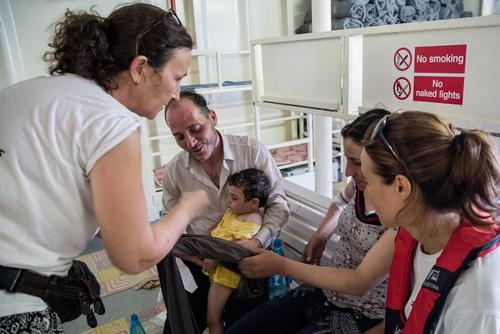
Testimonies from the MY Phoenix

Testimonies from migrants rescued by the search and rescue ship, MY Phoenix Voices from the Field - 7 Jul 2015
 
Hajja Hania lost 20 members of her family in one air strike during Protective Edge, in Gaza city MSF clinic waiting for physiotherapy session.
Palestine

Aiding & Abetting? The Limits of Humanitarian Aid in the Occupied Palestinian Territories

As has been the case for the past 15 years, our presence is our protest in the face of an occupation that has taken on a near-permanent character. While there is no shortage of suffering in Gaza and the West Bank, an international acceptance of the unacceptable is now the deadliest form of the occupation for Palestinians – with no end in sight. Voices from the Field - 7 Jul 2015
 
Ahem Market, Yemen.
Yemen

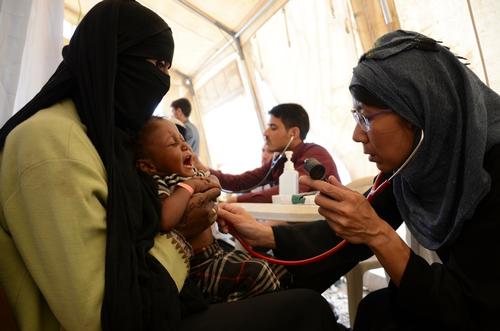
MSF treats dozens wounded after attacks on markets and residential areas

“It is unacceptable that airstrikes take place in highly concentrated civilian areas where people are gathering and going about their daily lives, especially at a time such as Ramadan”, said Colette Gadenne, MSF Head of Mission in Yemen. Press Release - 7 Jul 2015
 
MSF surgeon Dr. Martin John Jarmin III (right) operates on a 20-year-old man at the MSF hospital in Kunduz, Afghanistan, December 1, 2011.  The man had suffered a gunshot wound to the lower chest and upper abdomen and required extensive exploratory surgery, during which a large section of his bowel was removed.  The 55-bed MSF hospital opened in August, 2011 and provides urgent surgical care and follow-up treatment for people who have suffered injuries, some life-threatening. It is the only trauma center of its kind in the region.
Afghanistan

MSF condemns violent armed intrusion in hospital in Kunduz

"We are shocked by this incident," says Dr Bart Janssens, MSF’s Director of Operations. "This serious event puts at risk the lives of thousands of people who rely on the centre for urgent care." Press Release - 3 Jul 2015
 
msf-placeholder
South Sudan

Distressing humanitarian situation in Upper Nile as civilians come under fire in Malakal shooting attack

Following a shooting incident in Malakal, Upper Nile state on 01 July 2015, directed at the Protection of Civilians (PoC) site Médecins Sans Frontières (MSF) received 9 wounded patients, including women and the elderly at its hospital in the PoC. This adds to an already deteriorating humanitarian situation in the state over the last few weeks, which has left the civilian population constantly exposed to episodes of violence, increased numbers of wounded, further displacements, heightening rates of malnutrition and the risk of outbreaks. Statement - 2 Jul 2015
 
Fatimata Walet Mohamed’s 10 month old daughter Abubakri was a patient in the intensive therapeutic feeding centre in Mbera camp. “There are days when we find nothing to eat,” said the mother of three.
Mauritania

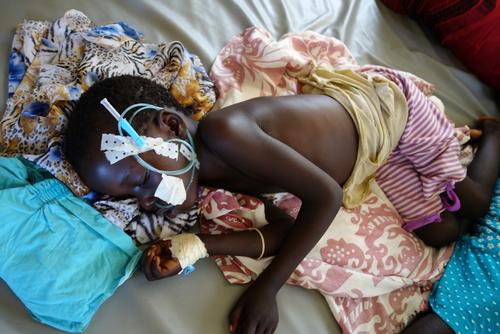
Malian refugees at risk of increased malnutrition following cancelled food distributions

“The timing of the gap in food distributions is all the more cruel because people are already fasting during daylight hours for the month of Ramadan, and now they have little food to break their fast at sunset,” said Maya Walet Mohamed, leader of the women’s committee in the camp. Press Release - 2 Jul 2015
Four mothers posing in a corridor of the Hospital in Bili. All four of them are staying in the hospital with their child, that's suffering from a severe case of malaria. Since the beginning of the project in 2016, the pediatric ward already treated more than 4.000 cases of complicated/severe form of malaria.
Médecins Sans Frontières (MSF)

Independent medical humanitarian assistance

We provide medical assistance to people affected by conflict, epidemics, disasters, or exclusion from healthcare. Our teams are made up of tens of thousands of health professionals, logistic and administrative staff - most of them hired locally. Our actions are guided by medical ethics and the principles of independence and impartiality. We are a non-profit, self-governed, member-based organisation.

Learn more