



Ebola disease in DRC: find out how we're responding
Learn more
8008 Results
 
msf-placeholder
Syria

Half a million more people under siege as intense bombing in Damascus region results in one of the bloodiest months since conflict began

“August was the worst month we’ve seen medically,” says an MSF-supported hospital director in one of the besieged areas. “Anyone who isn’t injured or dead can count themselves lucky. Enough death and siege. Enough blood and misery. Enough.” Makeshift hospitals supported by MSF have reported a series of extreme mass-casualty influxes resulting from 20 consecutive days of intense bombing attacks in August on markets and civilian buildings in the besieged communities of East Ghouta, near the Syrian capital. Press Release - 11 Sep 2015
 
msf-placeholder
Serbia

On the refugee trail: “My dream is peace in Afghanistan”

For months, an abandoned brick factory on the outskirts of the Serbian town of Subotica, close to the border with Hungary, has been a place of rest for refugees on their way to the border crossing, further north. MSF is running a mobile clinic here since late 2014 for refugees and undocumented migrants. Voices from the Field - 9 Sep 2015
 
msf-placeholder
South Sudan

Activity Update, August 2015

Médecins Sans Frontières (MSF) employs more than 3,054 South Sudanese staff and 284 international staff to respond to a wide range of medical emergencies and provide free and high quality healthcare to people in need. Crisis Update - 8 Sep 2015
 
msf-placeholder
Jordan

Patients testimonies from the upgraded reconstructive surgery hospital in Amman

MSF has officially opened its newly upgraded reconstructive surgery hospital in Amman, Jordan. The hospital serves war wounded patients from across the region who have no access to specialized surgical care in their home countries. Voices from the Field - 7 Sep 2015
 
msf-placeholder
Jordan

Staff testimonies from the upgraded reconstructive surgery hospital in Amman

Médecins Sans Frontières (MSF) has officially opened its newly upgraded reconstructive surgery hospital in Amman, Jordan. Voices from the Field - 7 Sep 2015
 
msf-placeholder
Jordan

MSF officially opens upgraded reconstructive surgery hospital for victims of war in Amman

MSF has officially opened its newly upgraded reconstructive surgery hospital in Amman, Jordan.“In this new and expanded facility, our highly trained and specialized medical teams from the region are able to improve the quality of care provided to our patients,” says Marc Schakal, MSF’s Head of Mission In Amman. “Our highest patient quota is currently from Syria, followed by Yemen and Iraq. The people of these countries have already witnessed and experienced so much suffering.” Press Release - 7 Sep 2015
 
From the 21st-26th of May 2018, health leaders will gather together at the World Health Assembly (WHA) to discuss one of our most challenging health problems – the hidden health crisis of snakebite.

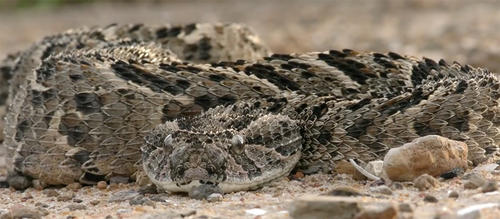
100,000 people die every year from snakebite, many more are disabled or disfigured. The vast majority cannot access effective antivenom treatment. Now there’s an opportunity with WHO’s proposed snakebite roadmap to tackle the issue on a broad number of fronts. Member states at the WHA this year will be able to vote on a resolution to establish this roadmap. 

MSF is calling countries to get behind this resolution to create a roadmap and turn the words in to action because for too long people have been suffering and dying in silence, unable to access effective treatment.
Snakebite

Snakebite: How a public health emergency slithered under the radar

Many snakebite victims come from remote, rural areas, and have little access to treatment. Fav-Afrique, produced by Sanofi, is one of the few products able to neutralise the venom of ten snakes across sub-Saharan Africa. But a dangerous gap in its production could endanger hundreds of thousands of lives. msfaccess.org - 6 Sep 2015
 
msf-placeholder
Greece

Testimonies from refugees and staff in Lesbos

Refugee testimonies and MSF emergency team member testimony, Lesbos, Greece. "Now, for the first time, I feel like I am really human. This is the first time that someone has taken care of me," says Mohamed, a Syrian refugee. Voices from the Field - 4 Sep 2015
 
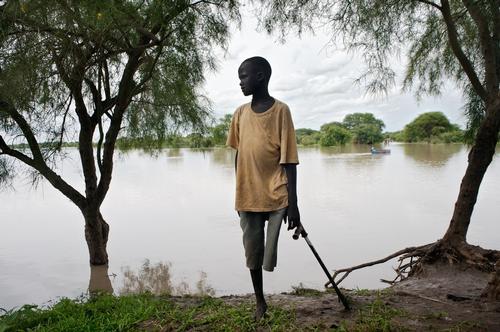
A boy, with an amputated leg due to lack of access to care after being bitten by a snake, on the banks of the Pibor River in Jonglei State. Up to 75 per cent of people cannot access even the most basic healthcare in South Sudan. Apart from a small Ministry of Health facility in Pibor town, MSF is the only primary healthcare provider for over 160,000 people in this part of Jonglei State.
Snakebite

Global health community slithers away from snakebite crisis as antivenom runs out

“We are now facing a real crisis so why do governments, pharmaceutical companies and global health bodies slither away when we need them most?” said MSF Snakebite Medical Advisor, Dr Gabriel Alcoba.” Imagine how frightening it must be to be bitten by a snake - to feel the pain and venom spread through your body – knowing it may kill you and there is no treatment available or that you can’t afford to pay for it?” Press Release - 4 Sep 2015
 
msf-placeholder
Mediterranean migration

1,658 people rescued in busiest day ever for MSF search and rescue operations

“Yesterday was a day of big numbers for MSF’s search and rescue operations, but for our teams at sea the focus is always on the individuals,” said Lindis Hurum, MSF Emergency Coordinator on the Bourbon Argos. Project Update - 3 Sep 2015
Four mothers posing in a corridor of the Hospital in Bili. All four of them are staying in the hospital with their child, that's suffering from a severe case of malaria. Since the beginning of the project in 2016, the pediatric ward already treated more than 4.000 cases of complicated/severe form of malaria.
Médecins Sans Frontières (MSF)

Independent medical humanitarian assistance

We provide medical assistance to people affected by conflict, epidemics, disasters, or exclusion from healthcare. Our teams are made up of tens of thousands of health professionals, logistic and administrative staff - most of them hired locally. Our actions are guided by medical ethics and the principles of independence and impartiality. We are a non-profit, self-governed, member-based organisation.

Learn more