



Ebola disease in DRC: find out how we're responding
Learn more
8007 Results
 
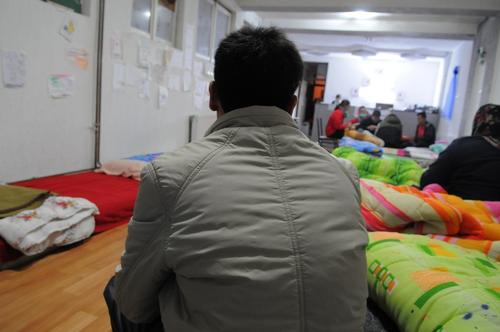
Portrait of  Sayed a 16-year-old from Herat in Afghanistan. He is travelling from Iran with his aunt, her husband and Sayed’s cousin. His journey came to an abrupt end when he reached the border between Macedonia (FYROM) and Serbia on November 19, the day when Balkan countries started to accept only certain nationalities to cross their borders.
Mediterranean migration

“I had no choice but to run“

The new procedures of segregation by nationality can produce dramatic effects and we fear that a part of the transiting people will be forced to go into hiding again, where they will have no access to any humanitarian assistance Voices from the Field - 26 Nov 2015
 
msf-placeholder
South Africa

Chose life – chose treatment

The fact is that nobody should be dying of AIDS today, nobody should even be infecting others: as long as you are on dutiful, daily and lifelong treatment, you have close to zero risk of passing on the virus to your partner or unborn child.

So why is it that AIDS is still killing 140,000 South Africans every year, and infecting three times this number - the equivalent of the entire population of Khayelitsha?
Project Update - 26 Nov 2015
 
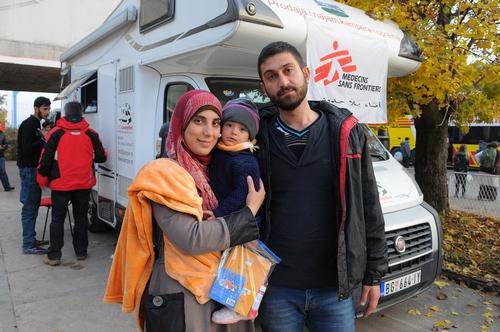
Portrait of  Hala, her husband Mahmoud and their son Wail outside a Medecins Sans Frontiers (MSF) mobile clinic in Sid.

'We are from Homs in Syria. My husband and myself have studied Agricultural Engineering, that is how we have met each other, at the university. Our son Wail is one and a half years old. We have fled from the war in our country and have spent some time in Lebanon before we started our journey to Europe. We want to go to Germany, because we have family living there. We made this journey together with Wails grandparents. We want to go to Germany, because we have family there. We would like to continue our studies there.
From Turkey we took a small boat to Greece. The crossing was very dangerous: The boat was full and there were waves, we were very afraid. The trip is really exhausting. We have been on the road for days, and Wail is crying almost all the time. I'm so tired. He is sick, has not eaten for two days and he coughs. He only accepts rice, but I don't know where to find it for him, we are all the time on the road. I want to have him examined by a doctor, that's why I came to the clinic while we wait to cross the border to Croatia. I hope that we reach Germany soon.'
Mediterranean migration

Hundreds stranded without aid as new border control measures come into force

One week after the arbitrary decisions taken by Western Balkans governments to allow the entrance in their territory to certain nationalities only, thousands are still stranded at the border between Greece and FYROM without information and adequate humanitarian assistance, forced to find alternative and more dangerous routes. Crisis Update - 26 Nov 2015
 
msf-placeholder

Statement by Christopher Stokes, MSF General Director

The US version of events leaves MSF with more questions than answers. The frightening catalogue of errors illustrates gross negligence on the part of US forces, and violations of the rules of war. Statement - 25 Nov 2015
 
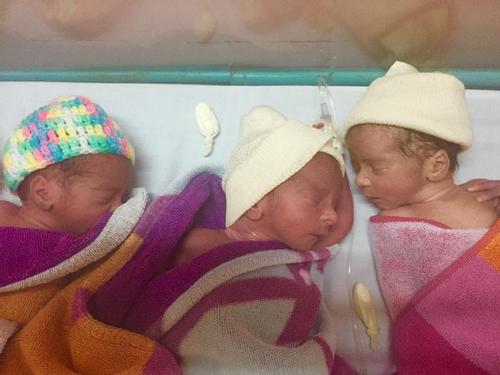
"One day, a woman arrived from Hangu, in the FATA area after a four hour-long drive. She had been referred by the MSF hospital there for "twins". She had already had four children, and when she arrived with her husband and her mother-in-law she was extremely tired, dehydrated and in early pre-term labour. After two weeks, thanks to our ultra sound machine, some specialised medication and the skill of our staff, we were able to plan a safe vaginal delivery and she gave birth to not two but three small but healthy babies from 1.5 to 1.7 kg, two boys and a girl. They stayed in our neonatal unit for another three weeks before finally being able to go home" Midwife Amy Le Compte with a new born in Médecins Sans Frontières (MSF) Women's Hospital in Peshawar.
Pakistan

Delivering healthcare to women and children in the communities

Amy Le Compte is a midwife from Gisborne in New Zealand. She just returned from a six- month assignment in MSF Women's Hospital in Peshawar, in the north of Pakistan where, along with daily maternity work, she supported the launch of a new community outreach program to enable access to quality maternity care for poor and marginalised populations. Voices from the Field - 25 Nov 2015
 
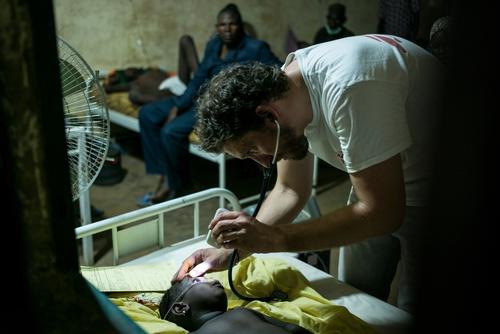
A patient affected by meningitis is cared by an MSF doctor Clement Van Galen.
Epidemics and pandemics

Epidemics: Neglected emergencies?

MSF draws attention to the challenges and choices that may impair effective response to emergencies, epidemics and outbreaks. Report - 25 Nov 2015
 
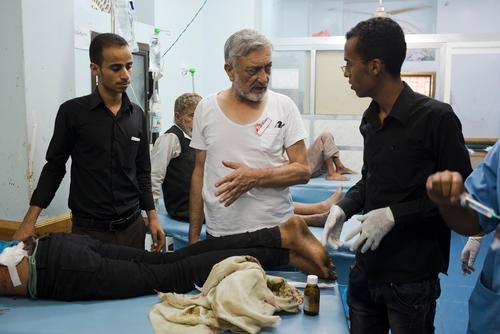
Medical team and Doctor Mahmood Menapal in Al Rawdah hospital are discussing the injury and treatment of Samir al Asib on July 24, 2015 in Taiz, Yemen.
Yemen

“It was clear from our patients’ wounds that the snipers were shooting to kill”

With the conflict between armed groups and airstrikes escalating in Yemen, MSF doctor, Mahmood Menapal, headed for the southwestern province of Taiz for four months. In Taiz, medical staff struggle to keep hospitals running in the face of fighting, bombing raids and desperate shortages of medicine and fuel. Voices from the Field - 24 Nov 2015
 
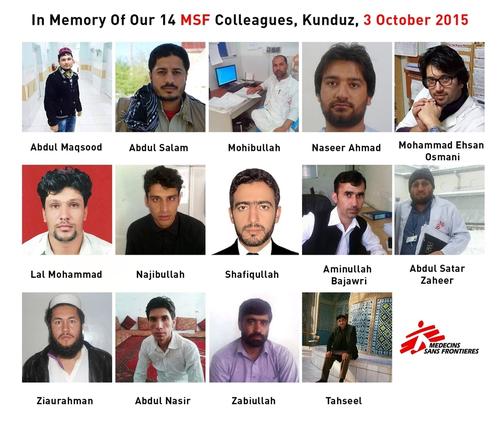
October 3, 2015 will forever remain a black day in MSF’s history. In the early hours of the morning, MSF’s trauma hospital in Kunduz, Afghanistan came under precise and repeated airstrikes. Under attack, our colleagues fought for their lives and for the lives of their patients with extraordinary determination and courage. Fourteen MSF colleagues lost their lives that tragic day.  All of MSF grieves with the victims’ families.  They will be tremendously missed and never forgotten.
Afghanistan

In Memoriam: MSF colleagues killed in the Kunduz Trauma Centre attack

October 3, 2015 will forever remain a black day in MSF’s history. Fourteen MSF colleagues lost their lives that tragic day. All of MSF grieves with the victims’ families. They will be tremendously missed and never forgotten. Project Update - 24 Nov 2015
 
Patients waiting to be attended at the Zombedze clinic, where MSF has decentralised ingrated TB and HIV services, in the Shiselweni region, south of Swaziland.
HIV/AIDS

Countries should take up new WHO ‘test and treat’ guidelines

MSF welcomes progress on getting HIV treatment to more people and urges all affected countries to take up new World Health Organization (WHO) ‘test and treat’ guidelines before next June’s UN High-level Meeting on HIV/AIDS, where donor governments should commit to a funding plan to close the global treatment gaps. Press Release - 24 Nov 2015
 
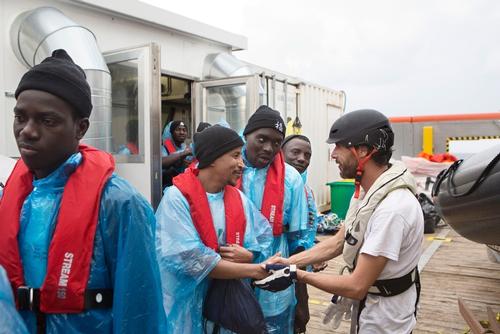
Marco, a logistician with Medecins Sans Frontiers (MSF) says goodbye to refugees and migrants as they disembark the  Bourbon Argos and are transferred to a Norwegian vessel.
Mediterranean migration

“The crossing is more deadly and infinitely more miserable”

The risk of boats capsizing is even higher than before with the sea conditions getting worse. People crossing through the Central Mediterranean in such circumstances are the most vulnerable and those who don't have choice. An interview with Sebastien Stein, Bourbon Argos Emergency Coordinator. Voices from the Field - 24 Nov 2015
Four mothers posing in a corridor of the Hospital in Bili. All four of them are staying in the hospital with their child, that's suffering from a severe case of malaria. Since the beginning of the project in 2016, the pediatric ward already treated more than 4.000 cases of complicated/severe form of malaria.
Médecins Sans Frontières (MSF)

Independent medical humanitarian assistance

We provide medical assistance to people affected by conflict, epidemics, disasters, or exclusion from healthcare. Our teams are made up of tens of thousands of health professionals, logistic and administrative staff - most of them hired locally. Our actions are guided by medical ethics and the principles of independence and impartiality. We are a non-profit, self-governed, member-based organisation.

Learn more