




Ebola disease in DRC: find out how we're responding
Learn more
4635 Results
 
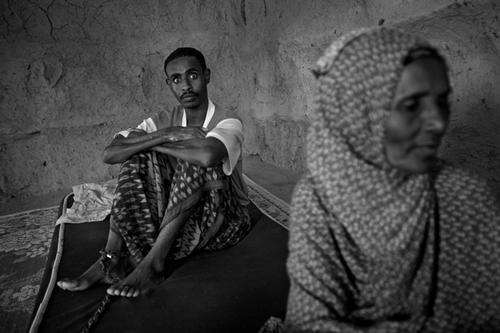
Siyad Abdi Ar, 24, was 16 when he was abused by gunmen. For 2 days they beat and tortured him. His arms have been left permanantly disabled and he cannot control his urine. His mother says that before the attack he was a normal teenager, but has not been the same since. She chains him to stop him from wandering away. They have been in Dadaab refugee camp for 6 months.   Dadaab is 100 km from the Somali border in eastern Kenya. It is the largest refugee camp in the world holding as many as 450,000 people. Most of the inhabitants have fled conflict in southern Somalia. The World Health Organisation says 1 in 3 Somali’s suffer from some kind of mental illness, the result of a war that has left a generation of Somalis who’ve only known fighting, famine, displacement, and loss.
Mental health

Bringing mental healthcare to people who need it

In the refugee camps of Kenya and beyond, psychologists are an integral part of the teams of MSF. Many of the refugees arriving at Dadaab are traumatised by their experiences in Somalia, where violence and drought led to them fleeing their homes. Since 2009, MSF has provided healthcare in Dadaab’s Dagahaley camp, where services on offer include much-needed mental healthcare and counselling. Project Update - 8 Oct 2012
 
Shanti (name changed) is a 38 year old semi-literate woman living in Mumbai. She has been living with HIV and multidrug resistant tuberculosis (MDR-TB) for the past 5 years.

Before coming to MSF, she had undergone TB treatment three times, but, instead of improving, each time her health had worsened.

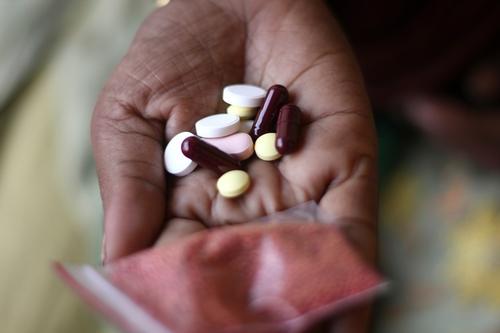
She started her treatment for MDR-TB from MSF Mumbai Project in November, 2010. Given the side effects of anti-Tb medicines and high pill burden, she finds it difficult to continue with the treatment. â??If pill burden is reduced it would be a great relief. It seems that it is the medicines which have become my food now. There are more medicines in my stomach than food. The doctor says that when my weight will increase, the amount of medicines will decrease.â?    

Her husband provides her hope and courage to continue with the treatment . â??If my husband were not there I would have left the treatment long ago. It is his courage and faith that keeps me going.â?
Access to medicines

MSF launches online resource for challenging unwarranted drug patents

A new online resource for civil society and patient groups in developing countries to challenge unwarranted drug patents was launched today by MSF. The Patent Opposition Database comes as many developing countries face dramatically high drug prices because patents block the production of lower-cost generic versions. Press Release - 2 Oct 2012
 
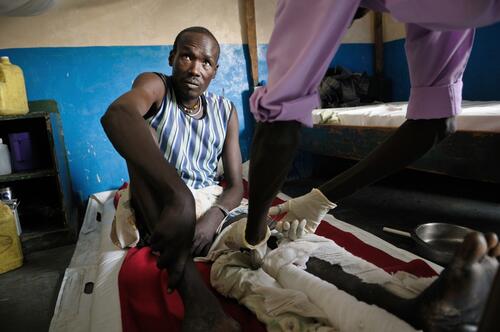
40-year-old Erogen Labarach in the MSF hospital in Pibor. "The bullet entered my leg, and then came out the other side. The place where I was shot was along the Kengen river. I have now been here for three weeks. At first I tried to bind my leg on my own. But when I came here the doctor, she cleaned everything and she dressed my leg properly, as you see it now. And they gave me medicines too." Full testimony available from OCB Cell 3 comms officer...

Jonglei State in South Sudan is in the grip of a cycle of extremely violent inter-communal fighting. Since 2008 MSF has witnessed in increase in intensity of the generations-old cattle-rustling between communities of different ethnicity. Over Christmas and New Year of 2011 a particularly violent attack in the area around Pibor and the outreach location of Lekwongole village displaced tens of thousands and left Lekwongole and some surrounding villages razed to the ground. MSF's hospital in Pibor was looted and the clinic in Lekwongole was largely destroyed. MSF treated 108 trauma victims in the following weeks, many women and children with gunshot wounds. But the consequences of fear and displacement in the bush continued long after, with malaria and malnutrition at very high levels in MSF's hospital.
South Sudan

90,000 deprived of care due to violence

Escalating violence has forced MSF to suspend medical services in two out of three of its facilities in Pibor county in Jonglei state, South Sudan, leaving up to 90,000 people deprived of essential medical care. Due to the insecurity, the populations of Lekwongole and Gumuruk, including all MSF staff and their families, have fled their homes to seek refuge in the bush. Project Update - 1 Oct 2012
 
msf-placeholder
Kenya

Médecins Sans Frontières calls for immediate action

This week, government leaders gather in Geneva for the 63rd UNHCR Executive Committee meeting, while in Dadaab, the world’s largest refugee camp, Somali refugees continue to live in extreme conditions and fear. MSF urges States Parties to the Refugee Convention to engage with the host Government of Kenya and UNHCR to fulfil their responsibilities towards the refugees. Press Release - 1 Oct 2012
 
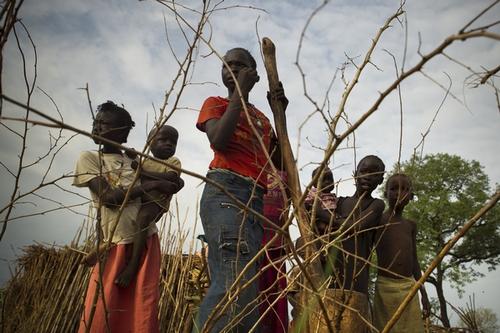
When 12.000 refugees were eventually transferred to Bambasi in July, nearly a quarter of the children under 5 suffered from acute malnutrition. Other refugees would have chosen to return to Sudan.<br/>
After vaccinated the children against measles, MSF opened a treatment center for malnutrition in Bambasi camp and distributes nutritional supplements to the most vulnerable until the situation stabilizes. *** Local Caption *** For over a year, nearly 40,000 Sudanese have fled the bombing of the Sudanese army in Blue Nile region to seek refuge in Ethiopia. About 18,000 of them lived in the camp of Ad-Amazin, about twenty kilometers from the border. End of April 2012, the Ethiopian authorities decided to close the camp, which was considered too close to Sudan, and move the refugees to a new site located near Bambasi in the Benishangul-Gumuz Region, with a capacity of 20,000 people and more than hundred kilometers from the Sudanese border. Humanitarian assistance, particularly food distribution and health care, has been interrupted end of April 2012 by the Ethiopian authorities for more than 2 months following violent protests by the refugees who refused to leave Ad Amazin, where they were exploiting gold.
Ethiopia

MSF assists aid-deprived Sudanese refugees

More than 2,000 white tents line the green hills near the village of Bambasi, in western Ethiopia. Since July, they have been home to 12,000 Sudanese refugees who fled their homeland and are now taking sanctuary from conflict in a camp established by the Ethiopian authorities and the United Nations High Commissioner for Refugees (UNHCR). Project Update - 20 Sep 2012
 
Le 26 juin 2012. Yida, Soudan du sud. Camp de refugies de Yida. // PHOTOS : V. WARTNER/20 MINUTES.<br/>South Sudan, Yida refugee camp.
South Sudan

Making progress in Yida camp

The work of MSF in Yida camp is proving effective. Mortality rates in the camp have been brought down. However, living conditions remain a concern, as does the high prevalence of disease. The main causes of mortality have not changed since early July when the situation reached a critical threshold. André Heller, MSF's head of mission in South Sudan, explains why. Voices from the Field - 18 Sep 2012
 
msf-placeholder
India

Novartis challenges pro-health patent law

Swiss pharmaceutical company Novartis heads to the Indian Supreme Court today in New Delhi, in a final bid to undermine a key public health safeguard in Indian patent law specifically designed to prevent drug companies from abusive patenting practices which keep medicine prices high. If successful, the move would have a devastating impact on access to essential medicines across the developing world, according to MSF, which relies on affordable generic drugs produced in India to carry out its work in 68 countries. Press Release - 11 Sep 2012
 
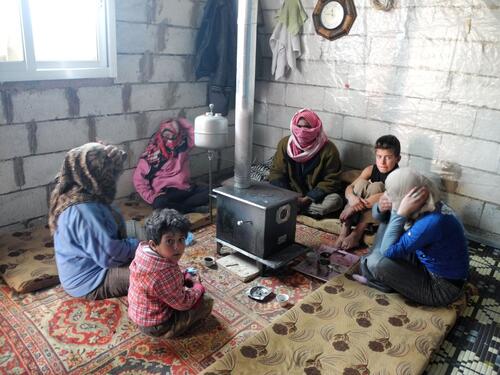
Aarsal, Bekaa. Nine members of a Syrian refugee family are living in a single room, part of a collective shelter where 20 refugee families are living.  Plastic sheeting on the walls is meant to protect them from wind, rain and snow in this mountainous region where temperatures can drop below zero in wintertime.
Lebanon

Fleeing the violence in Syria: Syrian refugees in Lebanon

While Lebanon has absorbed tens of thousands of refugees fleeing the conflict in neighbouring Syria in recent months, many people are living in overcrowded conditions, suffering psychological distress, are fearful for their safety, and are unable to afford medical care, said the international medical humanitarian organisation Médecins Sans Frontières (MSF) in a report released today. Report - 7 Sep 2012
 
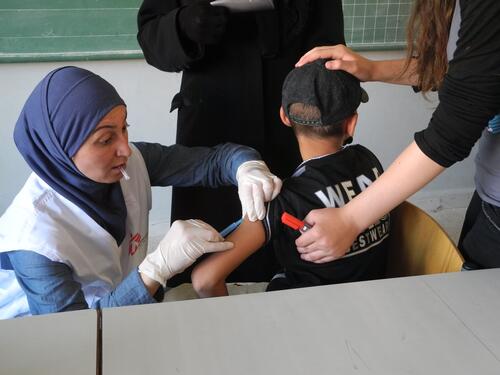
Aarsal, Bekaa, Lebanon. Aarsal Second Primary Public School. MSF nurse giving a vaccine to a refugee Syrian chilld, during a vaccination session organised jointly by MSF and the local association Amel in a school where Syrian children from 7 to 12 years old benefit from courses and activities.
Lebanon

Syrian refugees living in fear and uncertainty

While Lebanon has absorbed tens of thousands of refugees fleeing the conflict in neighbouring Syria, many people are living in overcrowded conditions, suffering psychological distress, are fearful for their safety, and are unable to afford medical care, said MSF in a report released today. Press Release - 7 Sep 2012
 
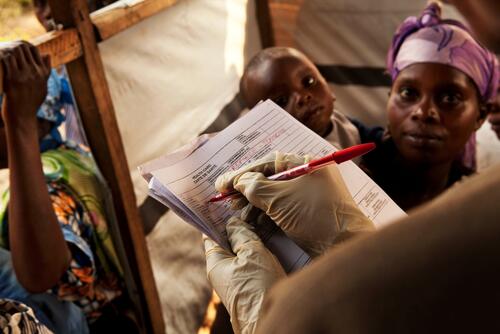
In April 2012, MSF launched an emergency intervention in Minova and Kalungu (South Kivu, DRC) to help the displaced population due to conflict. Thousands of displaced families began arriving to this area from lakeside towns. MSF is supporting two health centers, carrying out nutrition activities and implementing water and sanitation improvements in a temporary displaced persons site.
Democratic Republic of Congo

Multiple conflicts increase humanitarian needs

MSF has expanded its emergency medical programmes in the east of the Democratic Republic of the Congo (DRC) in response to increasing humanitarian needs in the region. An MSF emergency intervention is recently started in the unofficial Muganga I camp 20 km west of the provincial capital Goma, where around 17,500 people have spontaneously settled and are living in inhumane conditions. Project Update - 7 Sep 2012
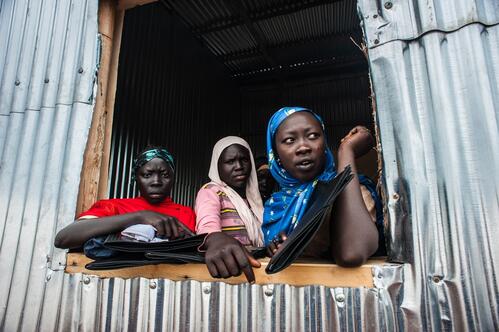
Four mothers posing in a corridor of the Hospital in Bili. All four of them are staying in the hospital with their child, that's suffering from a severe case of malaria. Since the beginning of the project in 2016, the pediatric ward already treated more than 4.000 cases of complicated/severe form of malaria.
Médecins Sans Frontières (MSF)

Independent medical humanitarian assistance

We provide medical assistance to people affected by conflict, epidemics, disasters, or exclusion from healthcare. Our teams are made up of tens of thousands of health professionals, logistic and administrative staff - most of them hired locally. Our actions are guided by medical ethics and the principles of independence and impartiality. We are a non-profit, self-governed, member-based organisation.

Learn more