



Ebola disease in DRC: find out how we're responding
Learn more
4635 Results
 
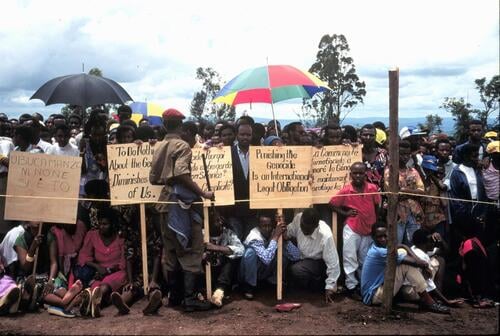
KIGALI, RWANDA, AFRICA, 30.04.95. Tutsi survivors of the genocide at the one year anniversary of the genocide. Beneath umbrellas.
Rwanda

Rwanda, 20 years later: “I am left with a great sadness”

Dr. Jean-Hervé Bradol pays tribute to hundreds of murdered Rwandan MSF colleagues. Voices from the Field - 28 Apr 2014
 
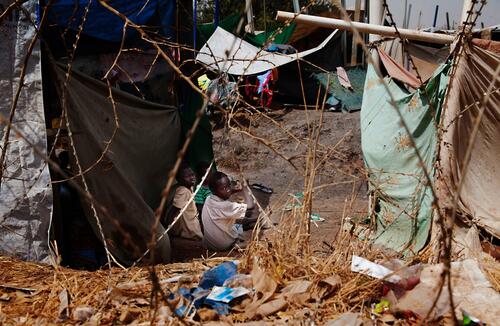
The South Sudanese key strategic town of Malakal came under attack on February 18. The clashes between government and opposition forces forced thousands of people to flee to other locations or to the UN compound in the town. Roughly 21,000 people were crammed into this camp.
South Sudan

MSF condemns unspeakable violence in Bentiu

Accounts of gruesome targeted killings; consequences of the violence leaves thousands in peril Press Release - 28 Apr 2014
 
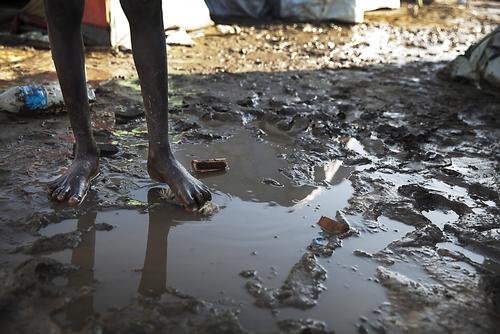
MSF is providing medical care in two camps in Juba, South Sudan, where 40,000 people are seeking refuge from widespread fighting that erupted in mid-December. Over 27,000 people are living in deplorable conditions in Tomping camp. The first rains of the season have left a significant part of the camp flooded and further degraded the poor sanitation conditions.
Malaria

Malaria control in emergencies: time for action

What can be done beyond just waiting for malaria to sweep in and then treating people who become ill, as MSF and other aid organisations are now doing? We now have tools - from weather monitoring to close surveillance of new cases - to predict the onset of a malaria peak and a large proportion of severe cases, so shouldn’t we be taking more aggressive preventive measures? Opinion - 25 Apr 2014
 
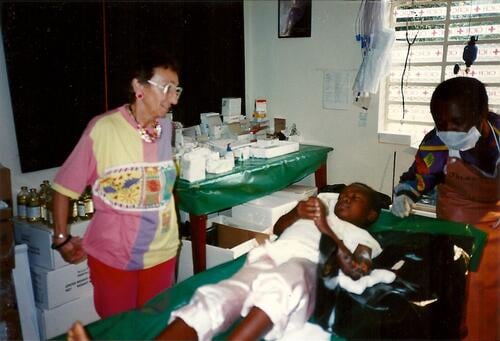
Madeleine Boyer (infirmière anesthésiste). au chevet d'un jeune patient.<br>
Rwanda

Twenty years after the Rwandan genocide: “We don’t talk about things that are hard to recount”

Nurse anesthetist Madeleine Boyer describes recollections of her two missions to Kigali in 1994 Voices from the Field - 25 Apr 2014
 
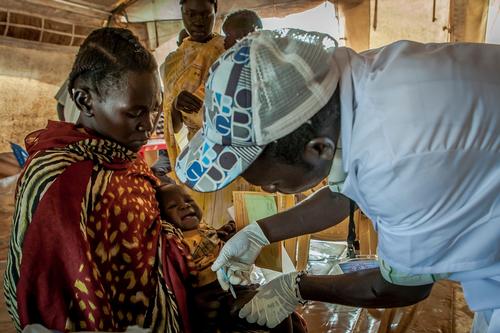
Sudanese refugees began streaming across the border into South Sudan in June 2011 when conflict erupted between the Khartoum government and the rebels of the Sudan People’s Liberation Movement-North (SPLM-N) in Sudan’s South Kordofan State. At the height of the crisis in Yida camp last summer, high mortality rates were reported among young children admitted to MSF’s hospital with respiratory tract infections, such as pneumonia, one of the leading causes of death. MSF determined that vaccinating with the pneumococcal conjugate vaccine (PCV) could result in a substantial mortality reduction in Yida. MSF has been working since September 2012 to procure PCV but faced significant delays due to lengthy negotiations and international legal procurement constraints. MSF was eventually able to obtain the vaccine from GSK at a reduced price, but delays have now pushed the planned vaccination into the logistically challenging rainy season.

The objective is to immunize approximately 5,000 children under the age of 2 against several pathogens, including haemophilus influenza type B and pneumococcus. This is the first time that PCV is being used in South Sudan and one of the first vaccines to be implemented in compliance with the new WHO emergency vaccination recommendations.
Access to medicines

Heat-stable vaccines urgently needed to reach the one in five children missed by immunisation worldwide

MSF study shows a tetanus vaccine remains effective for up to a month when used outside a cold chain. Press Release - 22 Apr 2014
 
Kawargosk camp.
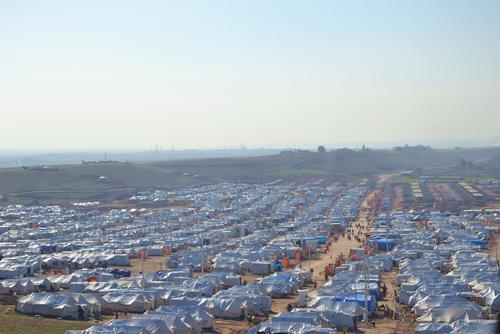
Kurdistan/Iraq - MSF is running a primary health centre in Kawargosk camp hosting Syrian refugees and mobile clinics in another refugees camp in Erbil area.
 *** Local Caption *** With the insecurity and the violence affecting the entire population in Syria, many Syrians have chosen to flee to Iraq. The internal Iraqi political dynamics have created the space for the Kurdish Region Government (KRG) to host the Kurdish population fleeing Syria. In Erbil governorate (Kurdish region of Iraq), MSF is running a primary health centre in Kawargosk refugees camp and mobile clinics in another other camp.
Natural hazards

Optimal Evidence in Difficult Settings: Improving Health Interventions and Decision Making in Disasters

As for any type of health care, decisions about interventions in the context of natural disasters, conflict, and other major healthcare emergencies must be guided by the best possible evidence. Journal article - 22 Apr 2014
 
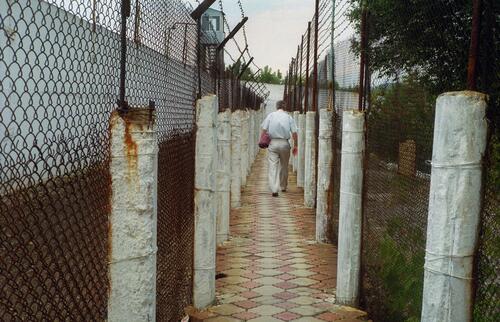
Medical Director of the Colony 3, Dr. Nikolai Gopilo, walking to one of the compounds where prisoners with drug-resistant TB are held. Colony 3 looks like a small village where inmates are allowed to walk freely inside the compound without constrains from the administration. Territory is secured by double fences, armed guard towers, armed guard patrols, and a "pass-system" of entry. Medical and non medical staff work in close proximity with the detainees.

The internal hierarchy of the prisoners, which was inherited from the Soviet regime and exists today in all the republics of the former USSR, is a kind of "caste" system that is defined by a rigid unwritten code, functioning quite independently of the penitentiary administration. The authorities know that the castes exist and are aware of their rules and realities.
Social violence and exclusion

Humanitarian work in prisons: the experience of Médecins Sans Frontières

Humanitarian work in prisons: the experience of Médecins Sans Frontières Journal article - 22 Apr 2014
 
A patient on a balcony of Donka Hospital in the Guinean capital Conakry looks at the Ebola treatment centre run by MSF in the capital. Since late March MSF has been working in the south east of the country and in the capital, helping health authorities tackle the virus, which had not been seen in the West African country before the 2014 outbreak.
Guinea

MSF continues Ebola response

MSF continues Ebola response in Guinea and Liberia Project Update - 22 Apr 2014
 
MSB8064
Uganda

MSF increases its capacity for action to aid refugees from South Sudan

Uganda: MSF increases aid to refugees from South Sudan Project Update - 17 Apr 2014
 
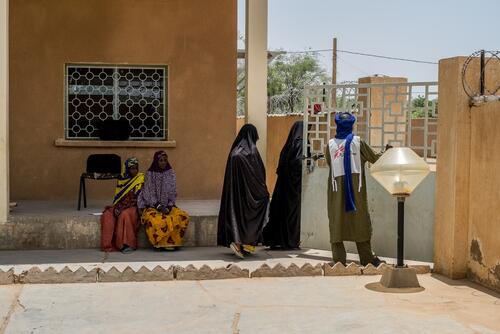
Ansongo hospital, Gao region, in northern Mali. MSF started working in Ansongo in September 2012, nine months after the conflict broke out in the north of the country between the security forces and Tuareg and Islamist groups. Currently, MSF is working at the Ansongo referral hospital, a 31-bed facility, where the organisation carries out OPD, IPD, ANC consultations and assist deliveries.
Mali

“MSF was in Ansongo throughout the crisis, the population appreciates our work”

Interview: MSF in Ansongo throughout the crisis Voices from the Field - 17 Apr 2014
Four mothers posing in a corridor of the Hospital in Bili. All four of them are staying in the hospital with their child, that's suffering from a severe case of malaria. Since the beginning of the project in 2016, the pediatric ward already treated more than 4.000 cases of complicated/severe form of malaria.
Médecins Sans Frontières (MSF)

Independent medical humanitarian assistance

We provide medical assistance to people affected by conflict, epidemics, disasters, or exclusion from healthcare. Our teams are made up of tens of thousands of health professionals, logistic and administrative staff - most of them hired locally. Our actions are guided by medical ethics and the principles of independence and impartiality. We are a non-profit, self-governed, member-based organisation.

Learn more