


Ebola disease in DRC: find out how we're responding
Learn more
8007 Results
 
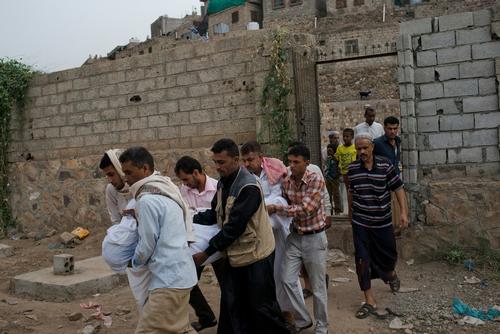
The family of Fakhira carries over her body to a local cemetery, after her house was hit by shelling on July 24, 2015 in Taiz, Yemen.
The Family gave their consent.
Yemen

Healthcare under siege in Taiz

In its new report, MSF reiterates its calls on all warring parties to ensure the protection of civilians and health workers and allow the wounded and sick access to healthcare. Report - 30 Jan 2017
 
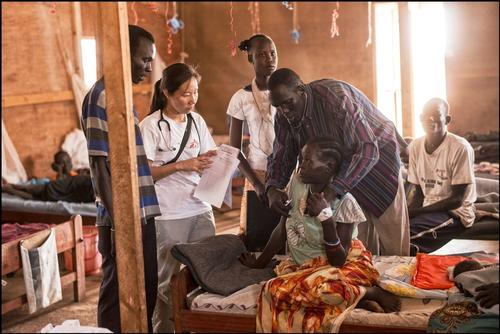
A MSF doctor is doing medical check up in the main ward of the MSF hospital in Mellut togehter with clinical officers and nurses.
South Sudan

MSF closes project in Melut after three years

"MSF's role as first responder was crucial at the start of the emergency. We were able to take care of the displaced population as they arrived at the beginning of 2014," says Marta Cazorla, MSF field coordinator for Melut. Project Update - 30 Jan 2017
 
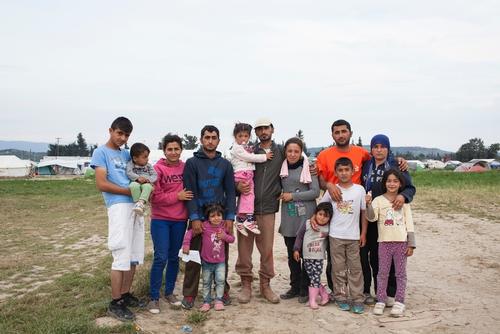
The Topal family,they are  Kurdish and from Aleppo, Syria, inside the Idomeni refugee camp, in Greece, on the border with Macedonia (FYROM), where about 11,000 people live. Medecins Sans Frontieres (MSF) has a distribution point and a medical facility open 24 hours a day.
United States of America

Suspension of US refugee resettlement endangers people fleeing war zones

President Donald J. Trump’s executive order suspending refugee resettlement to the United States is an inhumane act against people fleeing war zones. Statement - 29 Jan 2017
 
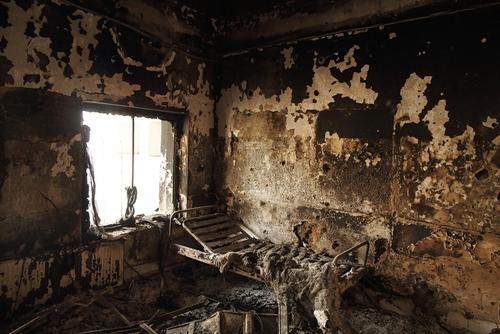
The remains of a bed frame in a room on eastern wing of the main Outpatient Department building.
Website

Attack on Kunduz Trauma Centre

On 3 October 2015, U.S. airstrikes killed 42 people and destroyed the MSF trauma hospital in Kunduz, Afghanistan. As we grieve the loss of our colleagues and patients, we are left with the question: is it still possible to safely provide medical care on the frontline? kunduz.msf.org
 
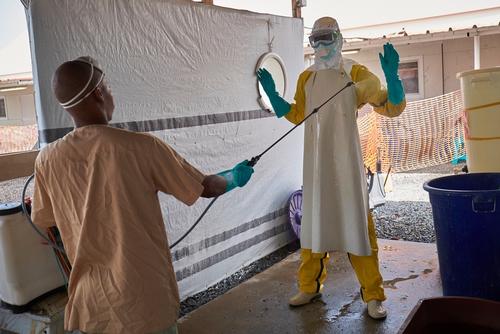
A medical worker is sprayed down after testing a patient for Ebola at the Nongo Ebola Treatment Clinic in Conakry, Guinea on November 26, 2015. 

The clinic is treating the last known Ebola patient in Guinea. A month old baby named Nubia, whose mother died after giving birth on October 27th.
Website

Killer Diseases

People know little about killer diseases. Who contracts them? How can they be fought? What are the prospects for research? Seeking to answer some of these questions, this educational web documentary puts seven of these diseases (antibiotic resistance, Ebola, hepatitis C, malaria, measles, tuberculosis and HIV-AIDS) under the microscope. killer-diseases.org
 
msf-placeholder
Killer diseases

Seven killer diseases under the microscope

One of the outcomes of a partnership of Médecins Sans Frontières (in cooperation with EUP - État d’Urgence Production), DNDi, Institut Pasteur, Fondation Mérieux, Universcience, lNSERM and CANOPE, this web documentary offers a fresh perspective on Killer Diseases. Documentary - 27 Jan 2017
 
During 2016, MSF expanded its activities in the Honduran capital, Tegucigalpa, and its sister city Comayagüela, where it provides mental healthcare for victims of various types of violence, including kidnapping, extortion, assault, threats and other high-impact violent events. MSF’s mental health teams provide individual sessions, group sessions and activities such as psychosocial workshops. “We try to work on the emotions, feelings and thoughts that people experience as a result of what happened to them,” says MSF mental health supervisor Edgard Boquín
Honduras

Mental healthcare for victims of violence

During 2016, MSF expanded its activities in Tegucigalpa and Comayagüela, where it provides mental healthcare for victims of violence. Project Update - 26 Jan 2017
 
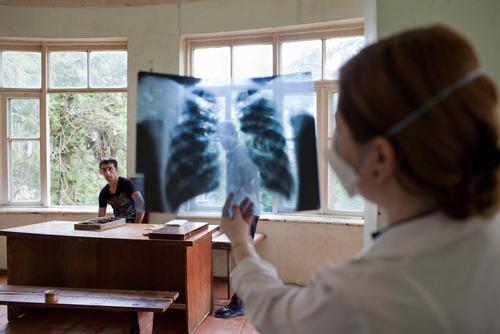
TB doctor Irma Davitadze at work at the Regional Center of Infectious Pathology, AIDS and Tuberculosis in Batumi, a beach resort town on the Black Sea. MSF has worked here since 2014.
Access to medicines

Public health groups welcome agreement for development of promising new TB drug

While deal marks a critical step in the fight against TB, health groups warn that the deal lacks safeguards that would ensure worldwide affordability. Press Release - 26 Jan 2017
 
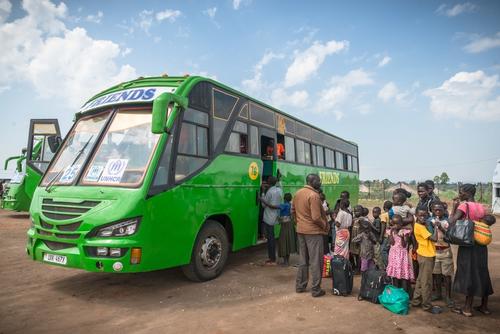
Since the beginning of 2016, more than 400,000 South Sudanese new refugees have arrived in Uganda, usually entering through informal border points or arriving through DRC. The vast majority come from the Central Equatoria State between Juba and the DRC border. The first waves of refugees were fleeing following the clash that erupted in Juba last July between SPLA and SPLA-IO, while the most recent ran away from widespread insecurity around the town of Yei.

Most of the new arrivals have been hosted in the main Bidibidi Refugee Complex, which is approximately 32 km long from north (zone 2) to south (zone 4 Annex) and 20 km long from east (zone 5) to west (zone 4). MSF provides medical care and water supply.
Refugees, IDPs and people on the move

South Sudanese refugees in Northern Uganda

MSF provides medical care inside the refugee complex. Most common pathologies are malaria and diarrhoeas but chronic diseases and mental health are also an issue.
Photo Story - 26 Jan 2017
 
A student of a girls’ school in Port-au-Prince walks by a mural depicting the suppression of women in Haiti. [The graffiti artist is Jerry Rosembert.]
Women's health

The Mexico City Policy endangers women's lives

Unsafe abortion is one of the five main causes of maternal mortality worldwide, together with haemorrhage, eclampsia, sepsis and obstructed labour. Statement - 26 Jan 2017
Four mothers posing in a corridor of the Hospital in Bili. All four of them are staying in the hospital with their child, that's suffering from a severe case of malaria. Since the beginning of the project in 2016, the pediatric ward already treated more than 4.000 cases of complicated/severe form of malaria.
Médecins Sans Frontières (MSF)

Independent medical humanitarian assistance

We provide medical assistance to people affected by conflict, epidemics, disasters, or exclusion from healthcare. Our teams are made up of tens of thousands of health professionals, logistic and administrative staff - most of them hired locally. Our actions are guided by medical ethics and the principles of independence and impartiality. We are a non-profit, self-governed, member-based organisation.

Learn more
