



Ebola disease in DRC: find out how we're responding
Learn more
8000 Results
 
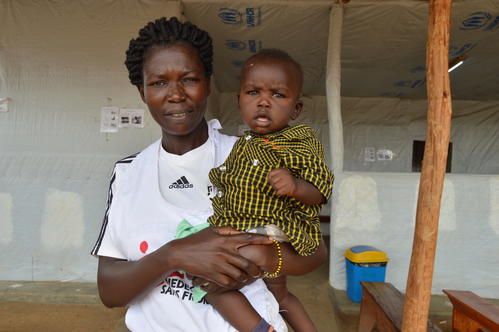
Nola Aniba Tito, 27, is one of the medical translators working in MSF health centre in Ofua 3 zone, in Rhino settlement. Originally from a town in the Equatoria region, she fled violence in South Sudan in July 2016 with her children and started working with MSF in March 2017. As 86% of all South Sudanese refugees in Uganda are women and children, Nola is one of the many female head of households. In this photo she is pictured with her baby, Aaron.
Full testimony from Nola: “I was living with my two children and expecting another child. My husband was in Juba. In my neighborhood, everyone was fleeing because we were seeing child abduction, rape, looting, forced marriage, and killing between tribes almost every day. Schools were attacked and children slaughtered like chicken. If people from the other tribe come, they kill everyone from the other tribe and leave their own tribespeople. Moreover, there was no access to health care, especially after many NGOs left the country.
One day, men knocked on the door of our house and threatened to open it. I was very scared so I didn’t open it, but instead carefully opened the window and saw them holding guns. I cried and shouted so much that neighbors came and the men just left. That’s when I decided to leave my home right away, without any belongings, just with my children and three of my brother’s children, who hasn’t been able to cross into Uganda. Even on the way to Uganda, there is fear of killing and violence and that is why my brother is still in South Sudan.
I was lucky to make it to Uganda. But upon arrival in the camp, we found no water, no food, and no health services. Sometimes we had no water for more than a week. How can we live without any water to use and drink? I also had to walk a very long distance to the hospital outside the camp to deliver my baby, who is now seven months old. We left with nothing, not even a penny to buy food or to pay for transport to hospital. So the start of MSF health service
Uganda

At night, I can’t stop thinking about what is going to happen to me and my children

I was lucky to make it to Uganda. But upon arrival in the refugee settlement, we found no water, no food and no health services. Voices from the Field - 18 May 2017
 
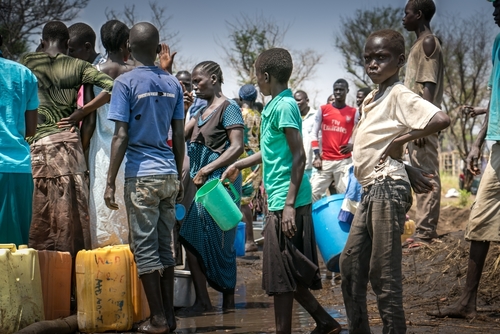
A water truck is stuck in the mud in Palorinya refugee camp, Uganda.

People take the opportunity to get much needed water when a water truck gets stuck in the mud after heavy rain. The impending rainy season will only make the situation worse as vehicles struggle to get around the camp.
Uganda

Over 900,000 South Sudanese refugees are in need of humanitarian aid

Over 630,000 refugees have since arrived in Uganda and thousands continue to arrive every week, bringing the total number of South Sudanese refugees and asylum-seekers to over 900,000. Project Update - 18 May 2017
 
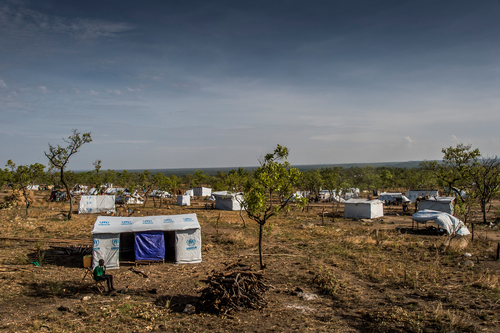
Families newly settled, in the woods of Imvepi.

Des familles nouvellement installées, dans les sous bois de Imvepi.
Uganda

Crisis Update - May 2017

Hundreds of thousands of South Sudanese refugees have fled to northern Uganda since July 2016, making Uganda the largest refugee hosting country in Africa. Crisis Update - 17 May 2017
 
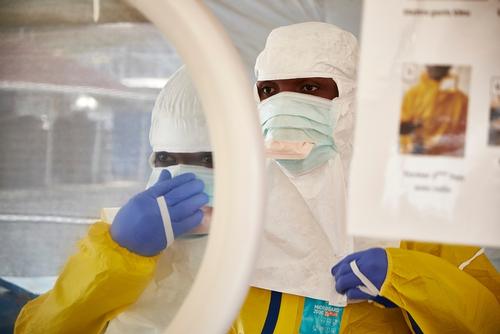
Medical workers put on PPE gear in the changing station at the Nongo Ebola Treatment Clinic in Conakry, Guinea on November 27, 2015. 

The clinic is treating the last known Ebola patient in Guinea. A month old baby named Nubia, whose mother died after giving birth on October 27th.
G20 Health Ministers’ Meeting

Open letter from MSF to the Meeting of the G20 Health Ministers

We call on G20 states to put the welfare of sick and wounded people wherever they live at the core of their concerns. Open Letter - 17 May 2017
 
About 500 residents of Bangassou came to the hospital compound hoping that the fighters would not attack a medical structure. They were regrouped with the displaced people of the mosque and those of the church, Monday evening on the ground of the church of Bangassou.

Environ 500 habitants de Bangassou sont venus se réfugiés dans l’enceinte de l’hôpital espérant que les combattants ne se s’attaqueraient pas à une structure médicale. Ils ont été regroupés avec les déplacés de la mosquée et ceux de l’église lundi soir sur le terrain de l’église de Bangassou.
Central African Republic

"The city of Bangassou has turned into a battlefield; we fear the worst for the civilian population"

"When gunshots started in the Tokoyo neighbourhood... people scattered in all directions, running into the night to find shelter where they could." Voices from the Field - 16 May 2017
 
msf-placeholder
Central African Republic

MSF treats 70 wounded in fighting in Bangassou

MSF is extremely worried about the civilian population of Bangassou. Project Update - 16 May 2017
 
msf-placeholder
Central African Republic

MSF calls for a ceasefire in Bangassou to allow for the deployment of urgent medical aid

Following intense fighting that broke out this morning in Bangassou (Mbomou Province), Médecins Sans Frontières (MSF)/Doctors Without Borders is calling on all parties to agree to a ceasefire in order to access wounded people in urgent need of life-saving medical care. Press Release - 13 May 2017
 
msf-placeholder
Democratic Republic of Congo

Team dispatched following Ebola confirmation

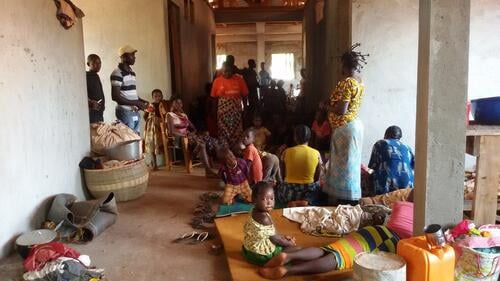
One case of Ebola has been confirmed by the World Health Organisation (WHO) in the Likati health zone of Bas Uele Province in the north of the Democratic Republic of Congo. A total of nine cases, including three deaths are so far being investigated. Project Update - 12 May 2017
 
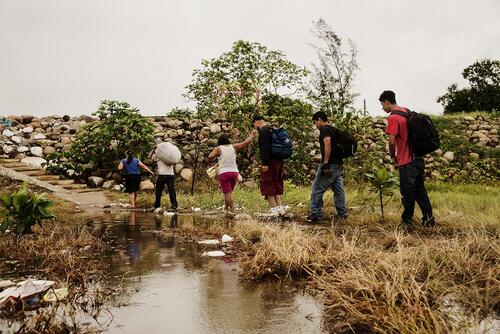
Ciudad Hidalgo is the first town many migrants see when they enter Mexico from Guatemala after crossing the Suchiate river. The train doesn't work from here, so they need to walk for hours.
Central American migration

Forced to flee Central America's Northern Triangle: A Neglected Humanitarian Crisis

For millions of people from Honduras, Guatemala and El Salvador, fear and horrific violence are dominant facets of daily life in which they try flee, heading north. MSF surveyed migrants and refugees making their way through Mexico to learn their reasons for leaving and the level of violence they experienced along the way. Report - 12 May 2017
 
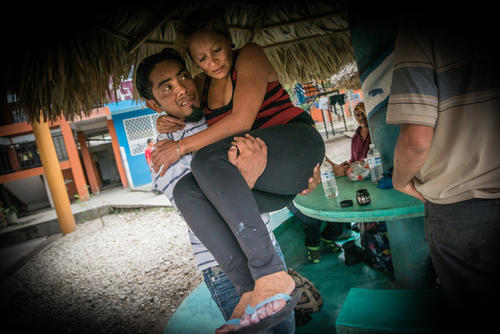
William carries Gloria to the police station where they will report a violent assault, suffered on the route from the Guatemalan border into Mexico.  For Gloria, it´s her first attempt to cross to the US – both her sister and cousin live there.
Her husband William did the route six years ago. Both Gloria and William had to leave Honduras because of death threats from maras (local gangs).
Central American migration

No way to safety for people fleeing extreme violence in Central America’s Northern Triangle

"The unrelenting violence and emotional suffering endured by a significant number of people... is not unlike what is experienced by people in conflict zones." Press Release - 12 May 2017
Four mothers posing in a corridor of the Hospital in Bili. All four of them are staying in the hospital with their child, that's suffering from a severe case of malaria. Since the beginning of the project in 2016, the pediatric ward already treated more than 4.000 cases of complicated/severe form of malaria.
Médecins Sans Frontières (MSF)

Independent medical humanitarian assistance

We provide medical assistance to people affected by conflict, epidemics, disasters, or exclusion from healthcare. Our teams are made up of tens of thousands of health professionals, logistic and administrative staff - most of them hired locally. Our actions are guided by medical ethics and the principles of independence and impartiality. We are a non-profit, self-governed, member-based organisation.

Learn more