



Ebola disease in DRC: find out how we're responding
Learn more
8000 Results
 
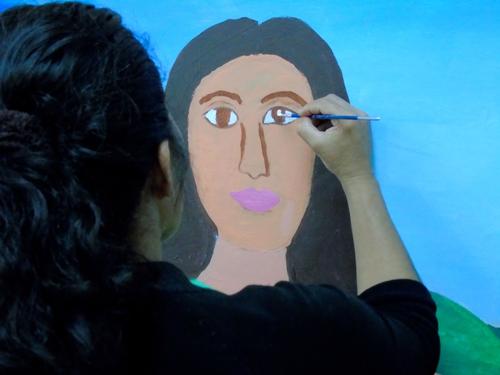
During 2016, MSF expanded its activities in the Honduran capital, Tegucigalpa, and its sister city Comayagüela, where it provides mental healthcare for victims of various types of violence, including kidnapping, extortion, assault, threats and other high-impact violent events. MSF’s mental health teams provide individual sessions, group sessions and activities such as psychosocial workshops. “We try to work on the emotions, feelings and thoughts that people experience as a result of what happened to them,” says MSF mental health supervisor Edgard Boquín
Mental health

Healing minds - MSF and mental health

In a gallery of images, MSF highlights our work in providing people with mental health and psychosocial support after experiencing crisis or conflict. Photo Story - 9 Oct 2017
 
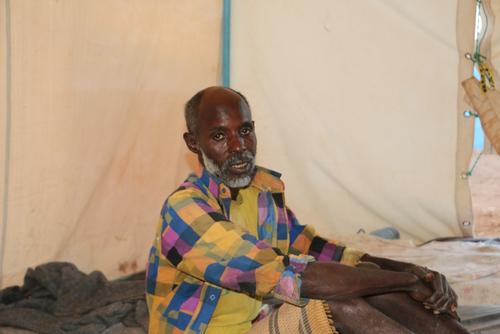
The 45 years old Mr Abdi Wolle Ilmewore was one of the patients treated for AWD at Kebridhar Case Treatment Centre (CTC).  Now he has been recovering from his illness and ready to leave the centre
Ethiopia

Crisis update – September 2017

Three rainy seasons in a row without substantial rains have led to a humanitarian crisis in Ethiopia. People in the Somali region are particularly affected by acute malnutrition and disease outbreaks. Crisis Update - 6 Oct 2017
 
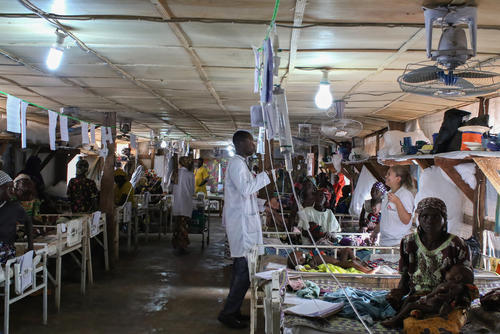
One of the wards inside the ITFC, part of the paediatric unit in Magaria hospital.
Niger

“Treating children as quickly, and as close to home, as possible”

The lean season before the harvest is when the number of cases of malnutrition is at its highest; this can be lethal for young children. Press Release - 6 Oct 2017
 
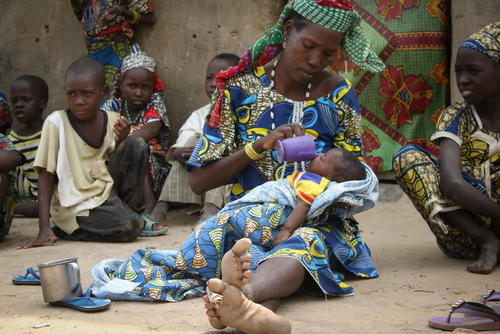
Absatou is giving Fassouma her medicine. Before leaving the hospital, Absatou was given the treatment to be completed at home for Fassouma to be completely healed. Here sitting in front of her house.
Niger

Ten days with Absatou and Fassouma

In September 2017, in Niger, 2,226 children were admitted to Magaria hospital’s paediatric unit. Among them was Fassouma, accompanied by her mother Absatou. We followed them from the observation room in Dantchiao to the paediatric unit in Magaria, and then back to their village of Zazari Foulani. Photo Story - 6 Oct 2017
 
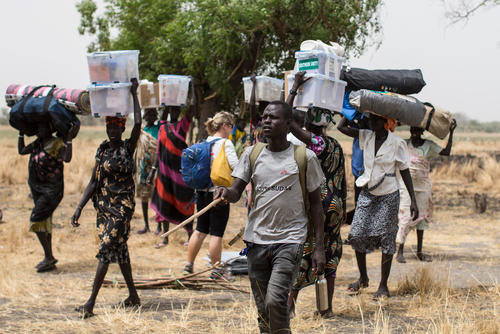
The MSF team prepares to move from one location to the other, Thaker, Leer County, South Sudan, March 21, 2017.
South Sudan

Continuing displacement is the new reality for many along northern frontier

“An older man came and dropped to the ground on his knees... he did not know what to do anymore. He just wept, in the middle of the group, like he had run out of hope.”
Project Update - 6 Oct 2017
 
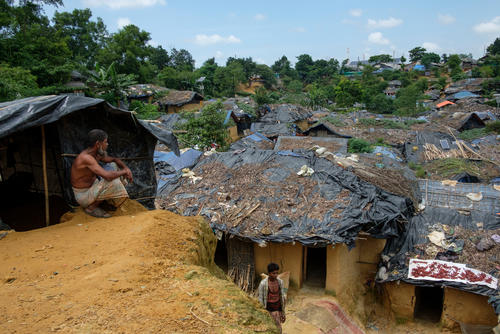
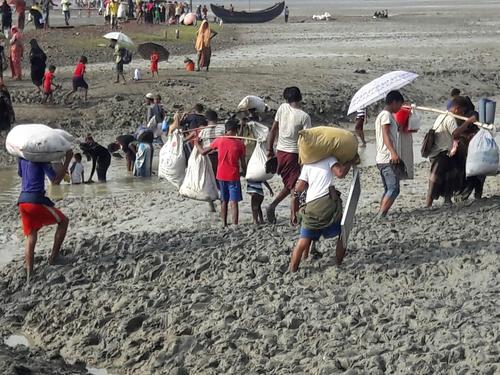
A man looks at the view of Kutupalong Makeshift Settlement,  one of the main pre-existing settlements where some of the 507,000 new arrivals have sought shelter. Kutupalong and Balukhali, the largest two settlements, have effectively merged into one densely populated mega-settlement of nearly 500,000 people, making it one of the largest refugee concentrations in the world. The situation in the camps is so incredibly fragile, especially with regard to shelter, food and water, and sanitation, that one small event could lead to an outbreak that may be the tipping point between a crisis and a catastrophe, MSF says. There is an acute need for a massive humanitarian intervention focusing on food, clean water, shelter, and sanitation, and a solution is needed to reduce the size of these massive, congested camps.
Rohingya refugee crisis

“If this is the better option, the other must have been a living hell”

"I’ve heard the most horrific stories from women who have lost their husbands just trying to get here...you start to understand how harrowing this situation is." Voices from the Field - 6 Oct 2017
 
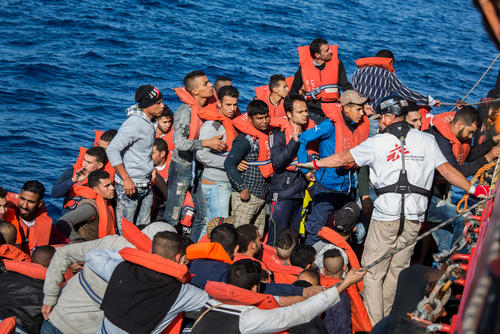
People in a wooden boat are rescued by Vos Prudence, in the Mediterranean Sea off the coast of Libya, on June 9, 2017. MSF vessel Vos Prudence rescued a total of 726 people from the Mediterranean Sea over 2 days on June 8th and 9th, including 52 children.
Mediterranean migration

MSF ends mission of search and rescue boat Prudence

We remain fully engaged to respond to the humanitarian needs of people fleeing violence and will continue to regularly reassess the situation in this volatile and uncertain context. Statement - 5 Oct 2017
 
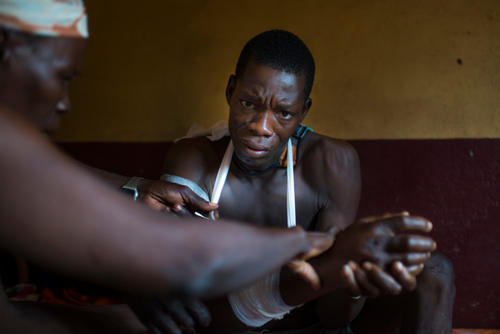
Savien Robert Zoulemati, 25, father of a week-old baby, from Yakidi village, near by Ippy. “Because me don’t have money, we went hunting. We were a group of five. After the hunt, we came back to the camp, fixed dinner and get some rest. I was lying down when heavily armed Peuhls (Fulanis) attacked us. They came by the river to not be noticed and started shooting at us. My four companions escaped and I got the bullets, one broke my arm, the second went through my hip, the third wounded my right leg. They took us by surprise, hence it was difficult to know how many they were. My companions had abandoned me and I was left with no help. I held my broken arm to my chest. It took me a lot of energy to get head back to the village, I vomited and bled, I was tired, worn out. My hunting companions had alerted the village and by the evening, my parents came to look for me and bring me back home on their bicycle. Peuhls attack us because they see us as FPRC and anti-balaka.”
Central African Republic

Crisis update - September 2017

Violence has led to over 600,000 people being internally displaced within CAR; MSF is providing medical assistance in several areas throughout the country. Crisis Update - 3 Oct 2017
 
At least 164,000 people have now crossed into Bangladesh, fleeing violence in Rakhine state, Myanmar that started on 25 August. This massive influx, coming on top of 75,000 people who have arrived since violence began in October 2016, represents one of the largest influxes ever of Rohingyas into Bangladesh.
Rohingya refugee crisis

Rapid influx of Rohingya refugees from Myanmar into Bangladesh

Rohingya arriving in Bangladesh have shared stories with Médecins Sans Frontières about their villages being systematically raided and burnt by Myanmar military and by mob groups targeting Rohingya. Report - 1 Oct 2017
 
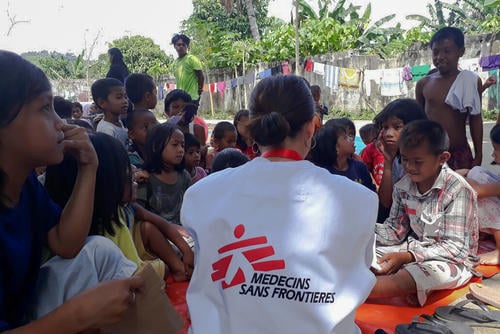
MSF conducts drawing and play sessions with kids at five informal evacuation sites in Iligan City as part of its mental health and psychosocial support (MHPSS) program. 

According to Nur Jannah Barandia, MSF psychosocial worker, it’s important for kids to play and have a sense of normalcy especially in difficult situations.
Philippines

Helping people cope amid conflict in Mindanao

Counselling and water will only get these communities so far, and while Marawi has dropped from international news, the needs of people will last and expand. Voices from the Field - 29 Sep 2017
Four mothers posing in a corridor of the Hospital in Bili. All four of them are staying in the hospital with their child, that's suffering from a severe case of malaria. Since the beginning of the project in 2016, the pediatric ward already treated more than 4.000 cases of complicated/severe form of malaria.
Médecins Sans Frontières (MSF)

Independent medical humanitarian assistance

We provide medical assistance to people affected by conflict, epidemics, disasters, or exclusion from healthcare. Our teams are made up of tens of thousands of health professionals, logistic and administrative staff - most of them hired locally. Our actions are guided by medical ethics and the principles of independence and impartiality. We are a non-profit, self-governed, member-based organisation.

Learn more