




Ebola disease in DRC: find out how we're responding
Learn more
4634 Results
 
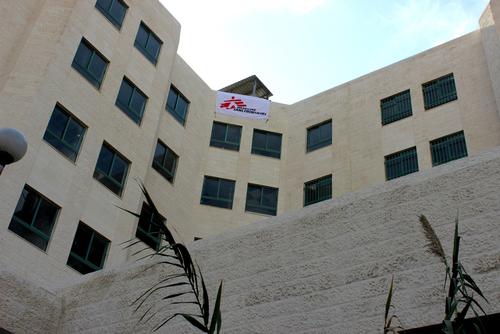
After long months of intensive work, the new Médecins Sans Frontières (MSF) hospital for specialized reconstructive surgery for war victims from the Arab region is almost ready to run. The hospital will be the largest structure of its kind MSF is currently running.
Jordan

New home for MSF specialised reconstructive surgery project set for completion

After months of intensive work, the new Médecins Sans Frontières (MSF) specialized reconstructive surgery hospital for war victims from the Middle East and North Africa region is almost ready to run. It will be the largest hospital for th Project Update - 22 Dec 2014
 
msf-placeholder
Ebola and haemorrhagic fevers

Ebola crisis update - 18th December 2014

The Ebola outbreak in West Africa has claimed 6,387 lives since it was officially declared. Crisis Update - 18 Dec 2014
 
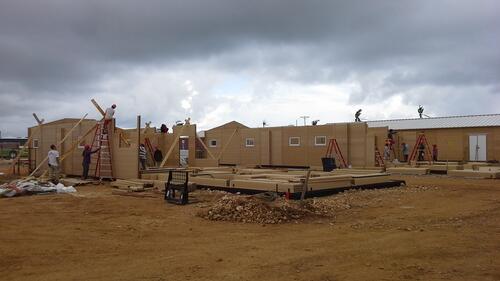
MSF as started building a prefabricated hospital in Guiuan which will take patients out of the tents – unsuitable in the rainy season – until a permanent hospital can be built. The hospital, designed to last up to five years, will provide maternity care and surgery as well as inpatient and outpatient services. It is due for completion in June, when MSF will leave Guiuan, handing the hospital over to the Ministry of Health to run.
Philippines

One year after typhoon Haiyan

MSF raised €32.5m for Typhoon Haiyan emergency response. Here's how we spent it. Report - 18 Dec 2014
 
msf-placeholder
Yemen

MSF provides medical care to IDPs and injured people lacking access in Al-Bayda governorate

The newly formed Yemen Emergency Pool has provided medical consultations and non-food items to IDPs. Project Update - 18 Dec 2014
 
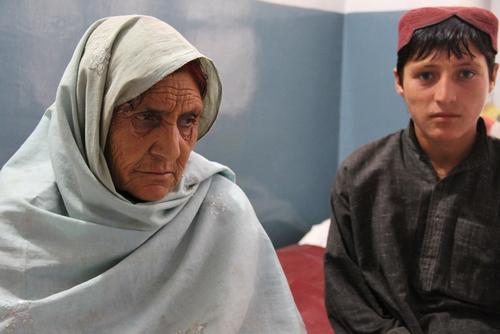
Gul Bibi, 65,( was displaced from her village in Upper Kurram Agency and has been living in Sadda as an IDP for three years) with her grandson.
Pakistan

“No Place to Call Home” for Internally Displaced People

The internally displaced persons in the Federally Administrated Tribal Areas have escaped the violence but are confronted with greater challenges. In the Media - 16 Dec 2014
 
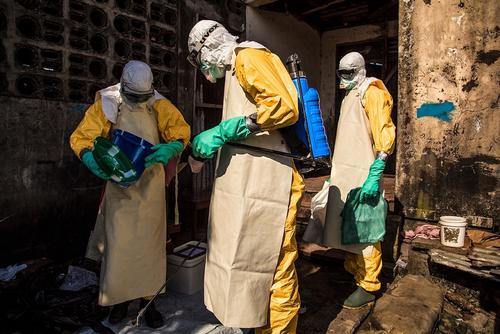
B Sunday Williams is the sprayer of the MSF burial team in Monrovia. He disinfects the hosue before the rest of the team goes inside.
Ebola and haemorrhagic fevers

A day in the life of a chlorine sprayer

The team collecting victims of Ebola – both living and dead – from the community in Monrovia face a challenging task in the fight against Ebola Voices from the Field - 16 Dec 2014
 
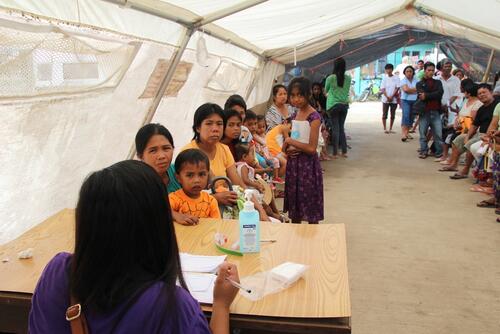
Registration area in the Rural Health Unit (RHU) in Guiuan that MSF is supporting to.
More than one month after the typhoon Haiyan hit in the Philippines, the humanitarian needs seen by MSF teams vary from place to place, and there are still some areas that are under-served by aid. In some areas we are seeing people’s medical needs declining, but in other areas there is still a need for our support. Taking into account the progressive deployment of aid to rural areas and the number of organisations providing primary healthcare, MSF is adapting its activities in the Philippines.

MSF will gradually decrease its activities in areas of Ormoc and Burauen on Leyte island, and in northern Iloilo province on Panay island, starting from the end of December. MSF will however continue working in Tacloban, on Leyte island, and in Guiuan, on Samar island, providing surgery, inpatient care, psychological care and other support until the health system is functioning again at adequate levels.
Philippines

MSF teams reach areas most impacted by typhoon Hagupit and find a population well prepared

Conclude there is no need for an MSF medical intervention Project Update - 11 Dec 2014
 
Deddeh has recovered from Ebola and celebrates her joy. Out of solidarity she decides to stay in the Ebola confirmed area to take care of Elijah, a young boy (3 months) who has lost his mother to Ebola and has been infected himself.
Liberia

Ebola outbreak contained in Lofa County, MSF hands over activities

MSF has decided to withdraw from the area. Crisis Update - 11 Dec 2014
 
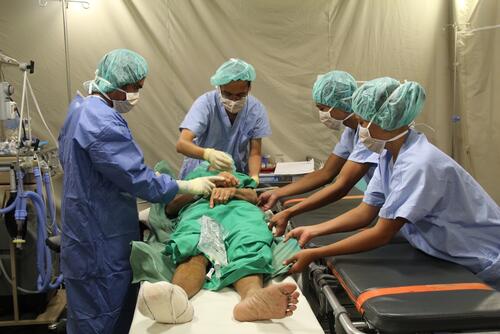
A surgery to amputate the forefoot of a diabetic patient is done in tented operating theatre in Guiuan. The team is transfering the patient to observation ward.

More than one month after the typhoon Haiyan hit in the Philippines, the humanitarian needs seen by MSF teams vary from place to place, and there are still some areas that are under-served by aid. In some areas we are seeing people’s medical needs declining, but in other areas there is still a need for our support. Taking into account the progressive deployment of aid to rural areas and the number of organisations providing primary healthcare, MSF is adapting its activities in the Philippines.

MSF will gradually decrease its activities in areas of Ormoc and Burauen on Leyte island, and in northern Iloilo province on Panay island, starting from the end of December. MSF will however continue working in Tacloban, on Leyte island, and in Guiuan, on Samar island, providing surgery, inpatient care, psychological care and other support until the health system is functioning again at adequate levels.
Philippines

MSF teams reach affected areas of Samar and Masbate

Assess that there is no need for a surgical intervention from MSF Crisis Update - 10 Dec 2014
 
A surgical team consisting of surgeon Mikio SHIOZAWA, anesthesiologist Ikusuke HATSUKARI and nurse Yuko SHIRAKAWA leaves Tokyo International Airport for Manila, the Philippines, on the afternoon of Saturday, 6 December, 2014. They will stand by in Manila and be prepared to move in case the typhoon causes casualties. MSF has organised two helicopters that can quickly transport the team to Palo in Leyte Province, where MSF has a field project, or to another location. Yuko says, "We are closely monitoring the situation. If the typhoon strikes the country, we will react as fast as we can to reach the population in need."
Philippines

Typhoon Hagupit weakens, MSF teams to assess Samar

The level of damage does not appear to be as severe as first feared. Crisis Update - 8 Dec 2014
Four mothers posing in a corridor of the Hospital in Bili. All four of them are staying in the hospital with their child, that's suffering from a severe case of malaria. Since the beginning of the project in 2016, the pediatric ward already treated more than 4.000 cases of complicated/severe form of malaria.
Médecins Sans Frontières (MSF)

Independent medical humanitarian assistance

We provide medical assistance to people affected by conflict, epidemics, disasters, or exclusion from healthcare. Our teams are made up of tens of thousands of health professionals, logistic and administrative staff - most of them hired locally. Our actions are guided by medical ethics and the principles of independence and impartiality. We are a non-profit, self-governed, member-based organisation.

Learn more