Ebola disease in DRC: find out how we're responding
Learn more
8000 Results
 
MSF’s President Joanne Liu meets a ten year old girl at Kutupalong Health Facility, who has just started making a miraculous recovery from tetanus, after her third week in hospital. Doctors had not expected the young Rohingya girl to survive.  'Tetanus is a disease that has been eliminated throughout most parts of the world by vaccination.' But not in North Western Myanmar, the home of this girl's family, where they recently fled from.

MSF’s President Joanne Liu reflected about why she was drawn to the little girl, as her father proudly helped her walk around the facility: “Tetanus can have such a high case fatality rate that seeing someone who survived and was walking, it’s always, I would say a victory over so this is why I thought it was quite amazing to see her walking around in the clinic.” 

[Left to right: Doctor Nina Goldman, MSF President Dr Joanne Liu and Nurse Activities Manager Jacqueline Murekezi meet with a tetanus survivor]
Rohingya refugee crisis

“The scars of this atrocity will run generations deep”

MSF International President Dr Joanne Liu recently returned from a visit to Bangladesh, where she saw the Rohingya crisis unfolding firsthand. On 23 October 2017, Dr Liu attended a Pledging Conference in Geneva, organised by OCHA, IOM and UNHCR and co-hosted by the European Union and Kuwait, to discuss the plight of refugees sheltering in informal settlements in Cox’s Bazar. Speech - 30 Oct 2017
 
msf-placeholder
Syria

Thousands could die if Syrian-Iraq Kurdistan border closes to humanitarian aid

MSF calls on all parties to ensure continued access, without let or hindrance, for the delivery of humanitarian aid across borders. Statement - 28 Oct 2017
 
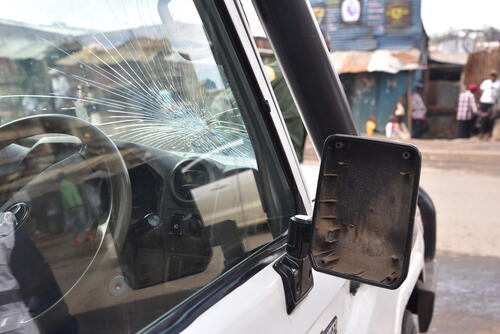
Shattered side mirror and cracked windshield of an MSF ambulance after it was attacked by protestors.
Kenya

MSF calls for safe access to wounded by medical teams

“I call on all communities to provide and ensure unconditional and safe access to those affected and to medical teams." Project Update - 26 Oct 2017
 
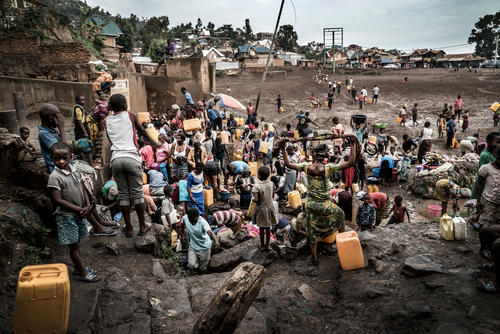
People fetch water in the Funu district of Bukavu early on a Sunday morning. 
In Bukavu most people still don´t have access to running water. Many rely on wa-ter from lake Kivu or surrounding rivers and streams.
Democratic Republic of Congo

One of the most severe cholera epidemics in years continues

One of the main reasons why cholera has increased in such a way this year is the drought that has affected the country. Project Update - 25 Oct 2017
 
Gloria Chipasula, 11 years old, HIV and TB positive patient.
Malawi

Daily struggles of the most vulnerable

Photo Story - 25 Oct 2017
 
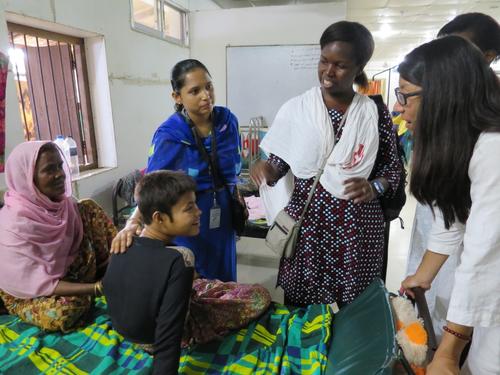
(left to right) An MSF carer sits with a young girl, who’s believed to be about 15 years, and is currently being looked after at MSF’s maternity ward at Kutupalong Clinic, Cox’s Bazar. The teenager was found severely injured, and lost, after crossing the border from Myanmar. Here she meets with MSF’s Nurse Supervisor Lucky Shamsun Naher Begun, Nurse Activities Manager Jacqueline Murekezi and MSF’s President Joanne Liu, while she is taken on a tour of the facility.
Rohingya refugee crisis

“People are in survival mode”

“This pledging conference should be a wake-up call. It is our chance to mobilise and avert a second catastrophe to restore the dignity of a population in great need.” Speech - 23 Oct 2017
 
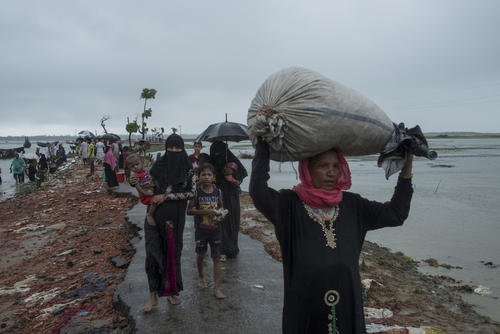
People in the rain at a border crossing on the Naf river, near Teknaf, September 19.
Rohingya refugee crisis

Voices from the violence

Since 25 August over 600,000 Rohingyas have fled targeted violence in Myanmar and sought safety across the border in Bangladesh. This brings the total of Rohingyas in Bangladesh to nearly a million refugees. The new arrivals have shared horrific stories with Médecins Sans Frontières about their villages being raided and burned and of widespread violence against civilians. In the first three weeks alone, MSF treated over 250 newly arrived patients with violence-related injuries. Their injuries included bullet wounds, severe burns, blast wounds, stab wounds and sexual violence. Photo Story - 22 Oct 2017
 
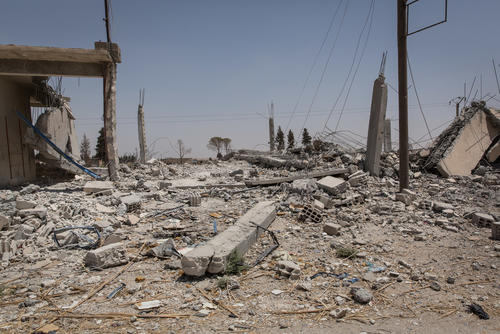
JulY 2017 - Syria - Raqqa - Eastern Quarter. The streets destroyed successively by Islamic State and by the heavy armed interventions of the Syrian Democratic Forces (SDF) and the international coalition.  

Jullet 2017 - Syrie - Raqqa - Quartier est - Les rues détruites successivement par L'Etat Islamique et par les interventions lourdement armées des Forces démocratiques syriennes (FDS) avec la coalition internationale.
Syria

Update on situation and humanitarian needs after Raqqa offensive

The battle for Raqqa ended on 17 October, and people left the city under frightening circumstances as the offensive drew closer. Project Update - 20 Oct 2017
 
msf-placeholder
Syria

Crisis update - October 2017

MSF supports more than 70 medical structures – from hospitals to small health posts – located across Syria. Crisis Update - 20 Oct 2017
 
Innocente, 33 years old, is a Doctor in a Hospital 45 km away from Tamatave, where MSF is supporting the local hospital.

“For five days, I was really tired; I had aches, headaches and chest pain. I thought I was suffering from angina. On 5 October, I had an alarming symptom: I started spitting blood. As I had done training about pneumonic plague with some colleagues, I went to Tamatave’s hospital to do some tests. I was clearly a suspect case, and then they confirmed that I was infected by the plague. I got an injection and stayed at the hospital. My family was panicked. From the second day, the symptoms began to disappear: swollen glands, headaches etc… As I was feeling better, I began to help the medical staff here even though I was still recovering. There were a lot of patients, a lot of plague cases the first week of the epidemic. Now, it has slowed down. The medical staff told me to take two weeks off to rest. I don’t know if my family is ready for me to come back home. They say they are but I can feel that they’re still afraid of me. So I stay away to leave my family in peace. I’m feeling positive. I don’t want to live with this secret: I had the plague and I was cured.”
Madagascar

MSF provides support in tackling plague outbreak

The plague is understandably a scary disease, but quick, hands-on action can drastically lower the number of fatalities and bring the outbreak to an end. Project Update - 19 Oct 2017
Four mothers posing in a corridor of the Hospital in Bili. All four of them are staying in the hospital with their child, that's suffering from a severe case of malaria. Since the beginning of the project in 2016, the pediatric ward already treated more than 4.000 cases of complicated/severe form of malaria.
Médecins Sans Frontières (MSF)

Independent medical humanitarian assistance

We provide medical assistance to people affected by conflict, epidemics, disasters, or exclusion from healthcare. Our teams are made up of tens of thousands of health professionals, logistic and administrative staff - most of them hired locally. Our actions are guided by medical ethics and the principles of independence and impartiality. We are a non-profit, self-governed, member-based organisation.

Learn more