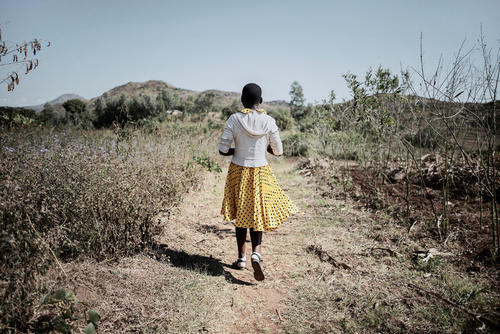
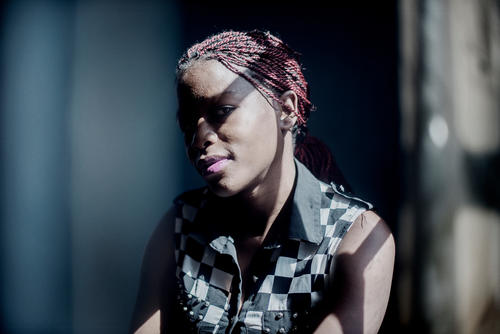
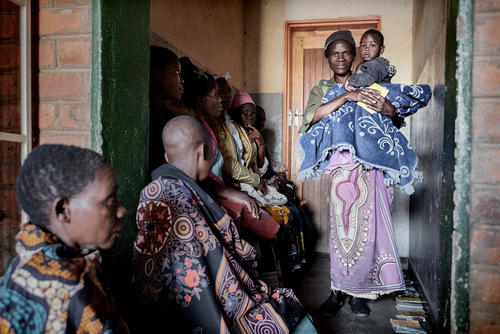
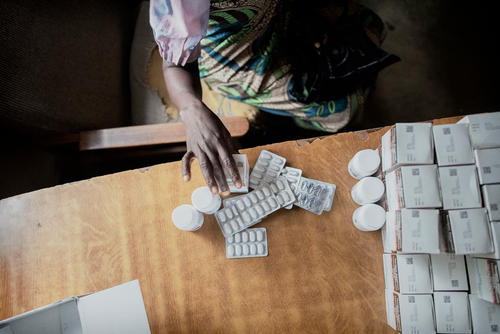
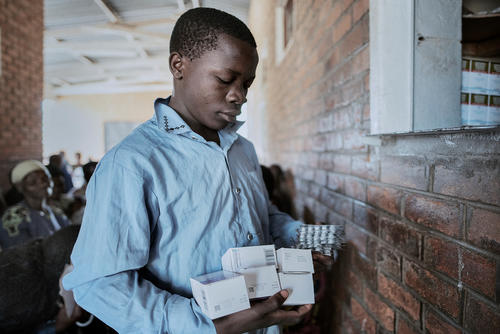
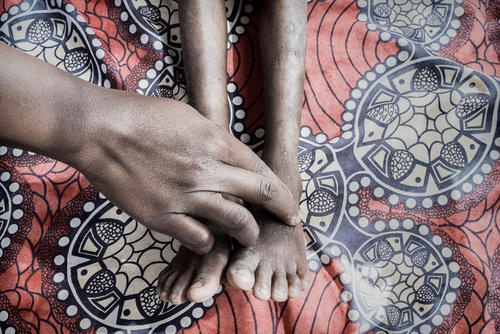
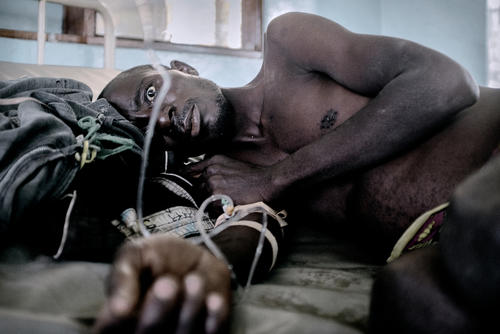
Gloria Chipasula, 11 years old, HIV and TB positive patient.
© Luca Sola

Daily struggles of the most vulnerable

Gloria Chipasula, 11 years old, HIV and TB positive patient.
© Luca Sola
Ebola disease in DRC: find out how we're responding
Learn more

Malawi was heavily affected by the HIV epidemic in the late ’90s and now has one of the most successful and innovative HIV programmes in southeast Africa. HIV prevalence has dropped from 15.2 per cent in 2003 (UNAIDS) to 10.6 per cent in 2016 (MPHIA). By mid-2017, 714,691 people living with HIV were taking lifelong antiretroviral treatment.

Yet HIV is the leading cause of death among adults in Malawi and 28,000 new cases are expected each year. MSF has been involved in the HIV response for years and today works in Chiradzulu and Nsanje, two districts in the Southern Region. We support the health ministry in meeting the health needs of particularly vulnerable people: children, adolescents and women living with HIV, severely ill people failing first-line antiretroviral treatment, and female sex workers.
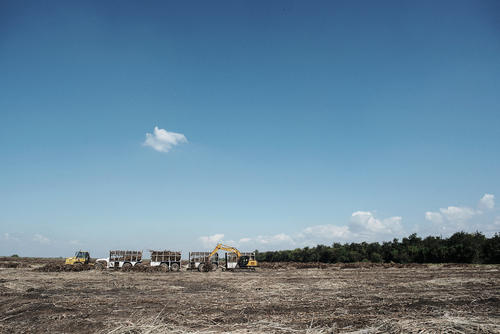
Sugar plantation's seasonal workers are among the clients of the local sex workers. Sex workers from this area travel to Nchalo, Nsanje town as well as Mozambique according to the regions’ seasonal economic activities.

Sex workers’ are 5.4 times (95% CI; 4.7 – 6.1) more at risk of contracting HIV than their counterparts in the general population, according to MSF routine data collection, recording that 41,4% (414 out of 999) of sex workers were  HIV positive on enrolment in Nsanje sex worker program.
Seasonal sugar plantation workers are among the clients of Malawi’s sex workers, who are 5.4 times more at risk of contracting HIV than the general population. MSF, in partnership with the Ministry of Health, runs a programme aimed at developing a model of care for female sex workers.
Luca Sola
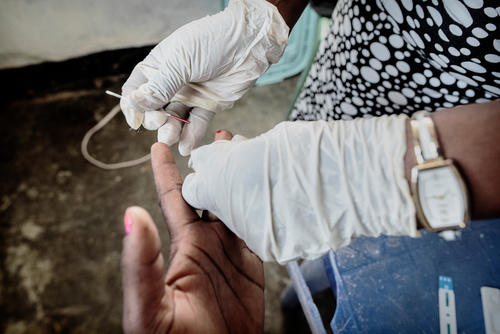
Mundidelanji Bonongwe, 30yo, from Ndogo village, , Thyolo district receives an HIV test. Mundidelanji identifies as a sexworker and is attending MSF’s sex worker clinic at Bangula Trading Center

The national prevalence of HIV among women who engage in commercial or transactional sex in Malawi is estimated at 73% (NAC, 2012).

Sex workers are 5.4 times more at risk of contracting HIV than their counterparts in the general population. MSF data collected showed that  41% of sex workers enrolled in the program were HIV positive. Sex workers in Malawi often face violence, criminalisation and exclusion from essential reproductive healthcare, including prevention of HIV, Sexually Transmitted Infections (STIs) and unwanted pregnancy. 


Started in May 2013, the ‘sex worker programme’ in Nsanje is an MSF and Ministry of Health partnership which aims to develop a model of care for women who identify as sex workers, who are considered as a group at high risk of contracting HIV. 
The programme runs outreach clinics in five pre-identified sites, including Bangula Trading centre. Sex workers from this area travel to Nchalo, Nsanje town as well as Mozambique according to the regions’ seasonal economic activities.

Women are mobilised to attend mobile clinics that rotate between five different sites and provide a standard package of sexual and reproductive health services. The package includes HIV testing, viral load monitoring, counselling; TB screening & referrals; testing & treatment for sexually transmitted infections (STIs), family planning, condom and lubricant distribution, and referrals for termination of pregnancy. Women who test positive with HIV are navigated to a local clinic to register and start treatment.)
Mundidelanji, a 30-year-old sex worker from Ndogo village, Thyolo district, receives an HIV test at MSF’s clinic at Bangula Trading Centre. More than 1,000 sex workers are enrolled in the programme in Nsanje.
Luca Sola
Anna Laison, 16 years old, from Ntipasonje Village is an MSF patient (HIV and TBC positive). 


How do you feel living with HIV?
At first, it was difficult to accept that I have HIV. So I was living with stress and sometime I was mad with my mother, and sometime people could mock me saying am a patient. But now I accepted my status and I don’t complain.

Do you think peoples face changed when they look at you?
Yes some people look changed when they look at me. 

What is the main constraint for someone living with HIV?
The only constraint I face on day to day life is discrimination. People sometimes discriminate you because you have HIV. They will not let you participate some activities and this has been happening to me.

Is there anything you don’t do because you have HIV?
YES, during the wedding ceremonies the organisers do not put me in bridal party just because am HIV. Sometimes it is hard to play with friends they discriminate me.

What changed in your life since you know you have HIV?
Nothing has changed.

Greatest regret – I don’t have any regret
Greatest hope – I will finish my school and get a job.
Anna Laison, 16, is HIV-positive. She lives in Chiradzulu, where MSF has worked with the Ministry of Health to support HIV patients for 18 years. A four-year handover process is underway and MSF now focuses on hard-to-reach groups, including adolescents with HIV and patients in need of second- or third-line antiretroviral treatment.
Luca Sola
Debora Njala, 18 years old, from Chiradzulu (HIV and TBC positive) seats in a consulting room in Mbulumbuzi Health Centre as she waits for a consultation with an MSF mentor.


Do you know how you get HIV?
Yes, I got it from my parents. Through mother to child.

How do you feel living with HIV?
I feel ok because I accepted that am HIV positive. With the counseling I received from counsellors I realized that being HIV positive is not the end of everything. 

How do you feel living with HIV?
I feel ok, with the medication everything is fine.

What is the main constraint for someone living with HIV?
For my case the great constraint is not be able to study in boarding school because I always think on how I will be taking my drugs and if my friends know that am taking ARVs how are they going to think about me.

Is there anything you don’t do because you have HIV?
YES going and spend much time away from home, i always think how will manage to take drugs and for this reason I do not travel frequently, am always home.
What changed in your life since you know you have HIV?
Nothing changed.

Greatest regret – sometimes I feel that am different with my friends, I have to visit the hospital frequently and this sometimes give me headache.

Greatest hope – I know that one day I will achieve my dream of becoming a journalist. With proper medication I will achieve my dream and the future is bright.
Debora Njala, 18, has been HIV-positive all her life, as she was infected through mother-to-child transmission. She also has tuberculosis. Here, she waits for her consultation with an MSF mentor at the Mbulumbuzi Health Centre in Chiradzulu.
Luca Sola
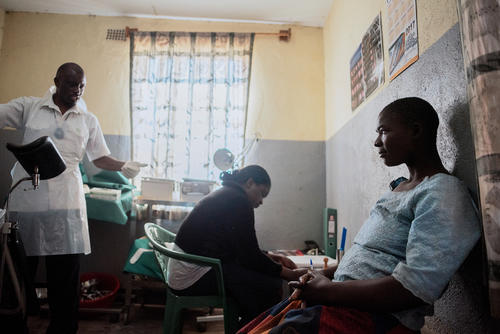
Women sitting in Milepa Health Centre waiting room to be screened for cervical cancer.
Women at Milepa Health Centre, Chiradzulu waiting to be screened for cervical cancer. Malawi has one of the highest rates of cervical cancer in the world, yet only 10 to 20 per cent of women receive early screenings, and no preventive vaccinations or treatments exist. In collaboration with the Malawi Ministry of Health, local and international partners, an integrated approach is being developed for women aged 9 to 49 years in urban Blantyre and Chiradzulu districts. Starting with strengthened screenings and early treatment for pre-cancerous lesions, the project will soon include Human papillomavirus vaccinations and treatment for cervical cancer.
Luca Sola
Selena Bishop from Ng'ombe village, undergoes her her monthly consultation at Sorgin Health Centre, Nsanje. Serena is HIV positive and has come to collect her ARV refill. The clinican has recommended a malnutrition assessment.
Selena undergoes her monthly consultation at Sorgin Health Centre, Nsanje. Serena is HIV positive and has come to collect her antiretroviral refill. Through the ‘Nsanje HIV TB District Support’ model, MSF is assisting the severely underfunded district health service in strengthening its coordination and improving HIV and TB services. Health staff in Nsanje hospital and 14 health centres are mentored and trained, and essential hospital services, including laboratories and pharmacies, are being reinforced to improve standards and ensure the continuous supply of essential drugs.
© Luca Sola
Alfred Nema, 18 years old, from Ntweya village is an MSF patient (HIV and TBC positive).


How do you feel living with HIV? 
I don’t feel comfortable especially when am alone, sometime back people used to mock me about the my status.

Do you think people’s look changed when they look about you?
People feel sad about my status.

What is the main constraint for someone living with HIV?
To me going to hospital monthly to collect drugs is constraint and also mixing with older people waiting for drugs gives me headache.

Is there anything you don’t do because you have HIV?
I do anything.

What changed in your life since you know you have HIV?
Nothing really changed but sometimes am stressed when I think about my status and I don’t feel comfortable and I spend much of my time worrying about my future.

Greatest regret-having HIV without knowing where I got the it from, it makes me sad.
Greatest hope- I heard that sometime back a lot of people had to opportunity to receive treatment and now a days drugs are available it gives me hope and I see the bright future.
Alfred, 18, is an MSF patient. He is HIV- and TB-positive.
Luca Sola
Gloria Chipasula, 11 years old, HIV and TB positive patient.
Luca Sola
MSF cervical cancer nurse Nellie (C) consulting client Liness Kumbombwe (R), 23 years old, from Khanje village in Milepa Health Centre.
MSF cervical cancer nurse Nellie with 23-year-old Liness (right) during a consultation at Milepa Health Centre.
Luca Sola
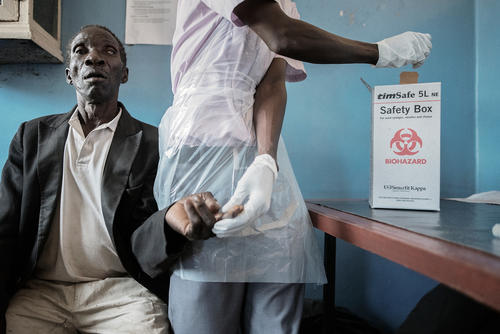
MSF nurse Stonald Shanda provides an HIV test to Seleman Samu, 62 years old from Balaka village in the HIV testing and counselling room in Nsanje district hospital. 

Seleman, 62 years, comes from a remote village and is clinically unwell. “I went for an HIV test at a health centre because I frequently fall sick. They found me with HIV. But I don’t believe the results are true. So I came to the hospital, I think they will tell me the truth.”

A second test confirmed that Seleman is HIV positive but he is still not convinced by the results.
MSF nurse Stonald tests Seleman, 62, for HIV at Nsanje district hospital. Seleman tested positive at a health centre but didn’t believe the results. He came to the hospital for a second test, which confirmed that he is HIV positive. He is still not convinced by the results.
Luca Sola
Emmanuel who is from Nsamera Mozambique arrived at Nsanje district hospital with advanced HIV and related opportunistic infections cryptococcal meningitis and TB. He underwent a lumbar puncture to evacuate fluid creating pressure in the spinal column and brain caused by cryptococcal meningitis. 

Emmanuel says: “I was refereed here from Ndamera health center due to coughing and stomachache. I waited for two days because I was told that the right doctor to help me was not around.

“I tested HIV positive at Ndamera last year but the doctor did not explain well the way forward, so I didn’t start medication. I haven’t started taking ARVs yet because I have just been admitted. My hands and legs feel numb.”

In 2016, an MSF survey of 1183 admissions in hospital over six months revealed that HIV inpatients accounted for 26 % of all admissions in male and female wards, and HIV deaths made up 54 % of all deaths.  Over 80% of HIV admissions arrived in advanced stages of the disease (defined as a CD4 count
Emmanuel who is from Nsamera Mozambique arrived at Nsanje district hospital with advanced HIV and related opportunistic infections cryptococcal meningitis and TB. In 2016, nearly 30 per cent of patients treated for HIV arrived at the hospital in such severe stages of immune failure that they died within 48 hours of admission.
Luca Sola