


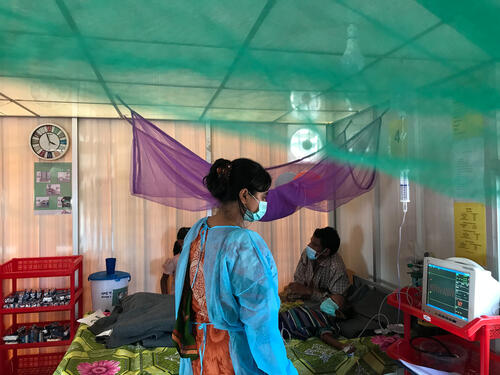

Ebola disease in DRC: find out how we're responding
Learn more
8000 Results
 
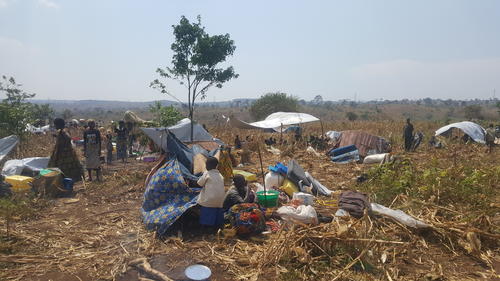
Marutatu settlement (part of Kyangwali) currently cannot cope with the influx of refugees. New arrivals already made vulnerable by their flight and the violence experienced back in Ituri end up sleeping in the open air, exposed to the rains that have started, with inadequate access to water and food, in appalling hygiene and sanitation conditions. Health authorities recently confirmed a cholera outbreak in the region, with over 1000 severe cases, including 30 fatalities since mid-February. MSF runs 2 Cholera treatment centers, supports health centers and implement water and sanitation activities to help control the outbreak, waiting from the national authorities to get a greenlight to perform cholera vaccination.
Democratic Republic of Congo

Violence in Ituri province forces tens of thousands from their homes

“New arrivals tell us of attacks at night, and a small number have deep cuts and wounds. Many arrive traumatized and exhausted, with sick children” Project Update - 28 Feb 2018
 
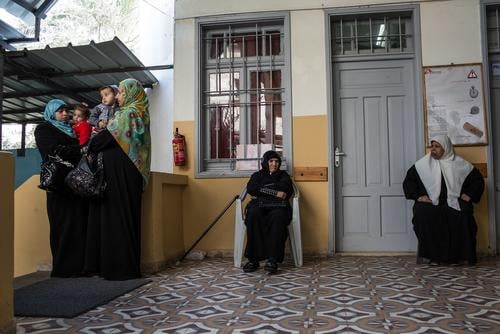
Dans le patiot de la clinique MSF de Gaza City, les femmes attendent leur tour.
Palestine

Gazans’ wounds bear witness to their living conditions

“Everything you earn here, you end up losing.” Project Update - 26 Feb 2018
 
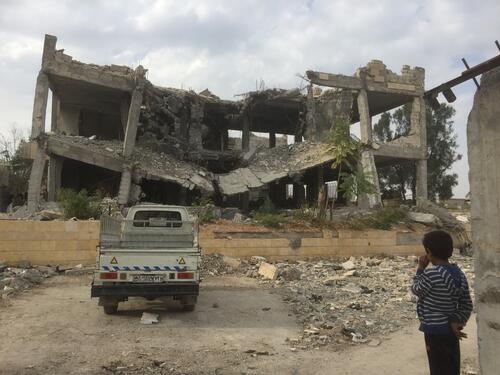
Bombed former ISIS magistrates court.
Syria

"We need your help to stop the bombing"

Medics in Syria that MSF supports tell us of what they're seeing during the conflict. Voices from the Field - 24 Feb 2018
 
msf-placeholder
Syria

Doctors and nurses collapsing as medical response in East Ghouta reaches its limits

MSF calls for an immediate ceasefire to enable the basic human act of helping the sick and wounded. Press Release - 24 Feb 2018
 
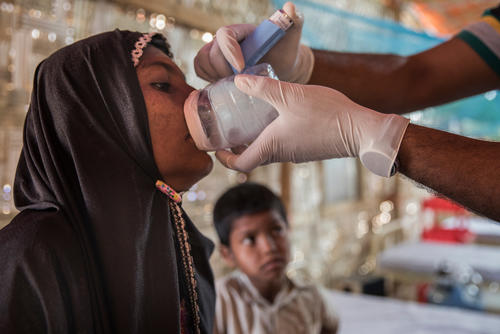
Rohingya refugees, who suffer from diphtheria, are being treated at an MSF clinic near Cox's Bazar, Bangladesh.
Bangladesh

“We had to learn around the clock how to treat diphtheria”

“When diphtheria broke out in December in Bangladesh’s Cox’s Bazar district, the MSF team in Balukhali was completely overwhelmed." Voices from the Field - 22 Feb 2018
 
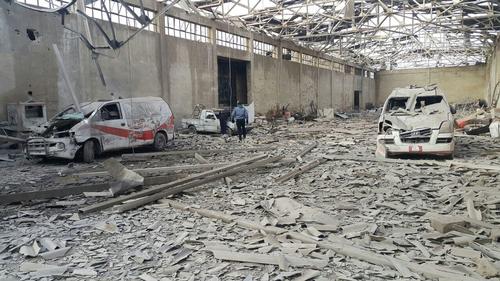
The last two functional ambulances in Al-Marj neighbourhood (in the East Ghouta besieged area near Damascus) were destroyed beyond repair in an aerial bomb attack on Monday 05 December 2016. They were parked in the hospital’s warehouse/garage, very near to the makeshift hospital’s location. Two hospital cars, used to transporting supplies and medical personnel, were also destroyed in the blast. The lack of ambulances will have an impact on the ability to quickly treat wounded when there is bombing or shelling in the area, but above all it will affect the capacity to refer the most sick patients to larger secondary referral hospitals. The makeshift hospital in Al-Marj is not equipped for complex or long-term in-patient hospital care, and this could have a big impact on the ability to refer patients for appropriate secondary care.
Syria

Extraordinary mass-casualty influxes in East Ghouta as hospitals run short of life-saving medicines

“We make a plea to those in and around East Ghouta with medical supplies to urgently grant access to those stocks to the medics in East Ghouta – lives depend on it.” Press Release - 21 Feb 2018
 
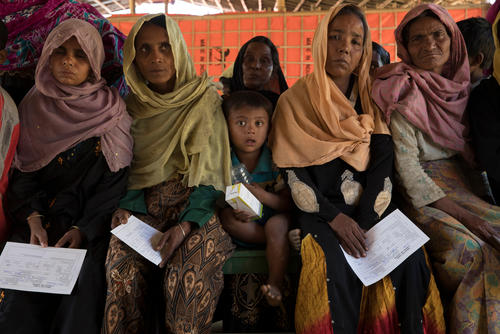
Patients wait for a consultation at MSF's primary health centre in Jamtoli.
Bangladesh

Rohingya exodus - six months into the humanitarian crisis

Nearly 700,000 Rohingya refugees have arrived in Cox's Bazar district in southeastern Bangladesh since late August 2017 after fleeing targeted violence in Rakhine state, Myanmar. Photo Story - 20 Feb 2018
 
Chests of drawers and gas tanks litter the floor at the emergency entrance in the center of the building, its view looking out toward the hospital's front gate.
War and conflict

Humanitarian Wars? - Interview with Rony Brauman

Rony Brauman has just published “Guerres humanitaires? Mensonges et intox” (which could be loosely translated as "Humanitarian Wars? Lies and Brainwashing"). This book, a collection of interviews co-authored with Régis Meyran, explores a number of recent armed interventions that have all shared the goal of saving lives. msf-crash.org - 19 Feb 2018
 
Humaira, a 25-year-old Rohingya woman, was found by MSF teams in her tent in Jamtoli makeshift settlement living in a state of shock. When violence broke out in her hometown in Myanmar’s Rakhine state, Humaira lost her husband and was forced to flee despite her very advanced pregnancy. It was October 2017. She walked for days through the forest with her seven-year-old son, Mohamed Faisal. Then, while aboard a boat heading towards Bangladesh, she went into labor. Ruzina, a baby girl, was born. Humaira has not been able to breastfeed her during these past months, and the child is malnourished.
In this photograph, Humaira is in a ward at MSF’s primary healthcare centre in Jamtoli.
Rohingya refugee crisis

Journey of death and life

More than 688,000 Rohingya refugees have arrived in Cox's Bazar, a district in southeast Bangladesh, since late August 2017, after fleeing violence in Rakhine State, Myanmar. They joined several other thousands who had made the same journey in previous crises. Voices from the Field - 19 Feb 2018
 
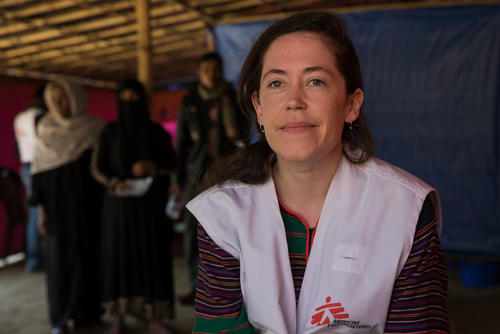
Kate Nolan, MSF emergency coordinator in Bangladesh responding to the Rohingya refugee crisis.
Bangladesh

The crisis is not over - Rohingya refugees are still arriving

The numbers of people arriving now are not massive, like in the beginning of the crisis, but we still see a few hundred reaching the country every week after crossing the Naf river. Voices from the Field - 19 Feb 2018
Four mothers posing in a corridor of the Hospital in Bili. All four of them are staying in the hospital with their child, that's suffering from a severe case of malaria. Since the beginning of the project in 2016, the pediatric ward already treated more than 4.000 cases of complicated/severe form of malaria.
Médecins Sans Frontières (MSF)

Independent medical humanitarian assistance

We provide medical assistance to people affected by conflict, epidemics, disasters, or exclusion from healthcare. Our teams are made up of tens of thousands of health professionals, logistic and administrative staff - most of them hired locally. Our actions are guided by medical ethics and the principles of independence and impartiality. We are a non-profit, self-governed, member-based organisation.

Learn more