




Ebola disease in DRC: find out how we're responding
Learn more
7999 Results
 
msf-placeholder

Privacy notice

This privacy notice sets out how MSF International collects, uses and stores personal data via our international website (“Website”) www.msf.org.
 
msf-placeholder
MSF RSS Feed

RSS

RSS is an acronym for Really Simple Syndication or Rich Site Summary. It is an XML-based method for distributing the latest news and information from a website that can be easily read by a variety of news readers or aggregators.
 
Improvised kitchen in Bambari general hospital. In Bambari, MSF supports the paediatric and maternity wards and supports the surgery national team. In February, the UN stabilisation mission, MINUSCA, declared Bambari a “city without armed groups”, strengthening the perception of it as a safe area for those fleeing violence elsewhere in the country. Currently, 50 percent of Bambari’s residents (113.800 people in total) have been displaced from their homes in other parts of Central African Republic. Of the 55,869 displaced people, 10,300 have arrived in Bambari since mid-March. Most are living in nine camps which ring the city but several moved in the hospital compound, where they feel safer.
Central African Republic

Ongoing fears of outbursts of violence in Bambari hamper access to healthcare

Interview with former head of mission Paul Brockman about recent outbursts of violence in Bambari, CAR, and their impact on the local population. Voices from the Field - 26 Jun 2018
 
Phole Khoromana, MSF health promotion officer, during mobilization activities. The MSF team drives along rural roads to tell women in the surrounding villages to come to MSF health talks. The team works in rural communities where the nearest health center is more than 5 km away.
How we work

Discover how we deliver medical humanitarian assistance

Our teams conduct independent evaluations and assess how best we can help reduce suffering and save lives of people caught in crises. Improving our medical and humanitarian practice is part and parcel of our ongoing activity and our work is underpinned by a solid network of supply and logistics.
 
Veronika Polcova, MSF MDR-TB Doctor, is consulting Samuel, 66, suspected to be TB infected. Matsapha, Manzini Region, Swaziland.
Eswatini

MSF hands over its Manzini project, while continuing activities in Shiselweni

As a mark of the project's success and the great gains made in the fight against HIV/AIDS and TB in Swaziland, MSF is handing over its Manzini project to the Ministry of Health at the end of June 2018. Statement - 25 Jun 2018
 
MSF health promotion officer, Chidinma Ugonna, educating the public about Lassa fever in Iboko market, Izzi local government area, Ebonyi state, Nigeria. MSF teams have built and maintained a remarkably high level of community acceptance in Ebonyi state and have a good relationship with the people. There is still a lot of stigma for Lassa fever survivors and our teams try to use every means available to let people know that those who have been treated and cured for Lassa fever are no longer contagious.
Get in touch

Contact us

Contact MSF sections and branch offices around the world.
 
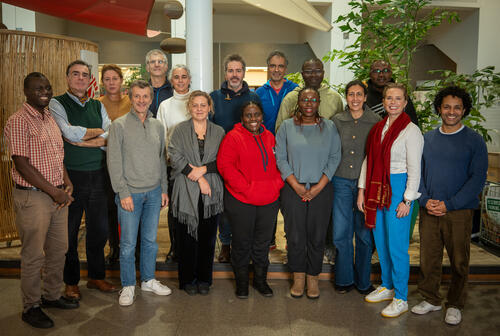
Left to right:
Erastus Cheti, Eric Stobbaerts, Dr. Isabelle Defourny, Yves McGale, Marc Dubois, Dr. Micaela Serafini, Paula Gil, Christopher Lockyear, Bhelakazi Mdelalose, Dr. Saleem Kassam, Dr. Teresa Bonyo, Dr. Ali Ouattara, Katrin Kisswani, Sam Bumicho, Ingrid Johansen and Dr. Javid Abdelmoneim.
How we're run

The International Board

The International Board (IB) is the board of MSF International. It acts on behalf of and is accountable to the International General Assembly (IGA). As the highest associative governance body of MSF, the IGA delegates duties to the Board, as defined in the Statutes of the association. Discover the current members of the International Board.
 
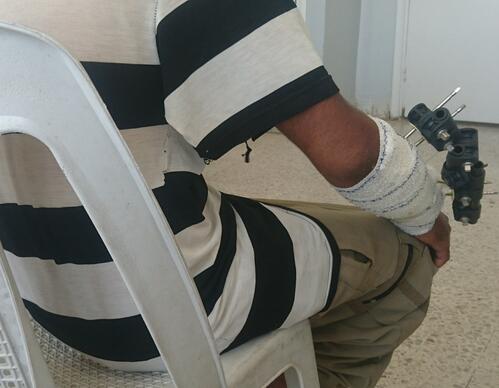
Survivor of an airstrike in al-Dashisha area, in north east Syria, receiving treatment at an MSF hospital in Hassakeh governorate. The airstrike that injured them killed 14 others.
After a period of relative calm, airstrikes on the Islamic State group in Der ez-Zor and Hassakeh governorates intensified in June 2018. As a result, and over a period of ten days in early June, 17 people arrived to the MSF hospital with injuries related to airstrikes, compared to 7 between January and June.
For those who survived the airstrikes and reached the MSF hospital, they had to travel for hours. The meandering frontlines between armed groups can turn a mere one-hour journey into a six hour trek, as people often have to take detours and travel through rural parts of the governorates to avoid checkpoints. In parallel, the few remaining and functioning health centers in the region are either private and very expensive, or they lack specialized teams.
Syria

MSF Hassakeh hospital seeing an increase in casualties of airstrikes in northeast Syria

Between 4 and 14 June, MSF-supported hospital in Hassakeh received 17 survivors of airstrikes, including 6 children and 3 women. Project Update - 21 Jun 2018
 
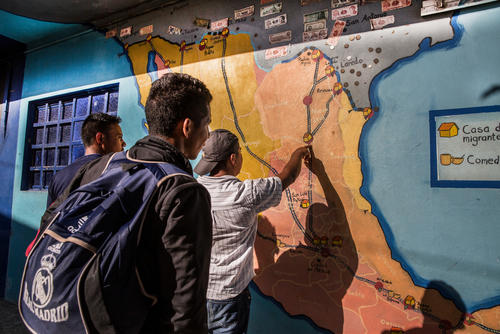
Migrants also use the shelters to gather information on routes to continue on their way through Mexico.
Mexico

An unsafe country for thousands of refugees fleeing violence in Central America

Migrants and refugees fleeing danger in Central America are trapped and exposed to more violence in Mexico due to ever tighter and more callous United States border control policies, said Médecins Sans Frontières (MSF) on World Refugee Day. Press Release - 20 Jun 2018
 
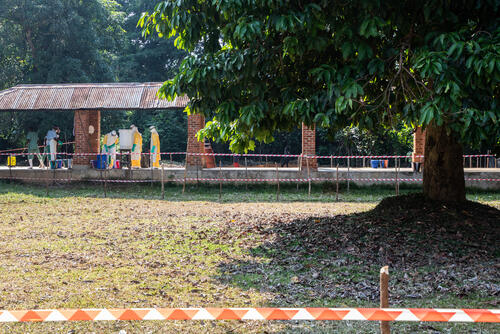
View of the hospital of Bikoro, where MSF has set up an Ebola treatment center (ETC)
DRC Ebola outbreaks

Ebola update June 2018

Since the Ebola epidemic in Democratic Republic of Congo (DRC) was declared on 8 May 2018, over 60 people who presented symptoms of haemorrhagic fever, including 38 confirmed Ebola cases and 28 deaths (of whom 14 were confirmed as Ebola)*, have been notified by the national health authorities in the Equateur region, in the west of the country, where the outbreak started. 24 patients (confirmed Ebola cases) have recovered from the disease and been discharged from treatment centres. Crisis Update - 19 Jun 2018
Four mothers posing in a corridor of the Hospital in Bili. All four of them are staying in the hospital with their child, that's suffering from a severe case of malaria. Since the beginning of the project in 2016, the pediatric ward already treated more than 4.000 cases of complicated/severe form of malaria.
Médecins Sans Frontières (MSF)

Independent medical humanitarian assistance

We provide medical assistance to people affected by conflict, epidemics, disasters, or exclusion from healthcare. Our teams are made up of tens of thousands of health professionals, logistic and administrative staff - most of them hired locally. Our actions are guided by medical ethics and the principles of independence and impartiality. We are a non-profit, self-governed, member-based organisation.

Learn more