



Ebola disease in DRC: find out how we're responding
Learn more
7996 Results
 
Portrait Alpha Diallo Watsan DRC
DRC Ebola outbreaks

Ebola in DRC: Cutting the chains of transmission

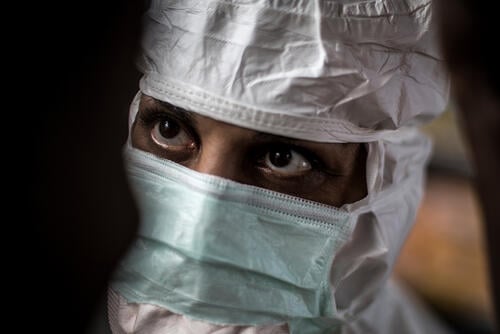
To run Ebola treatment centres, our teams rely on experienced staff to share their expertise in North Kivu, Democratic Republic of Congo, in the fight against this deadly disease. One of them is Alpha Diallo from Guinea who works as an expert in water and sanitation, also known as WatSan. Voices from the Field - 19 Nov 2018
 
دعم خدمات الإسعاف في السلفادور
El Salvador

Additional ambulances increase access to healthcare

With two additional vehicles, one of which is equipped to provide medical treatment, MSF is increasing its support of the Comandos de Salvamento ambulance service and the communities it serves in Soyapango, a town close to the capital, San Salvador. Project Update - 16 Nov 2018
 
Bilya, a 20-year-old noma patient from a village near the border with Niger, waited for almost four years before his first surgery. 

Bilya thinks he first contracted noma when he was one year old. 

Outside his village, people would run away when they saw his face. "They didn’t see me as a human being," says Bilya. 

Sokoto, Nigeria.
13 April, 2017.
Noma

The neglected disease that destroys faces and lives

Noma, a neglected and little-known non-contagious disease, mostly affects children under five living in poverty. Nigeria’s Sokoto Noma Hospital, supported by MSF, is one of the few in the world fully dedicated to treating this deadly bacterial disease. Project Update - 15 Nov 2018
 
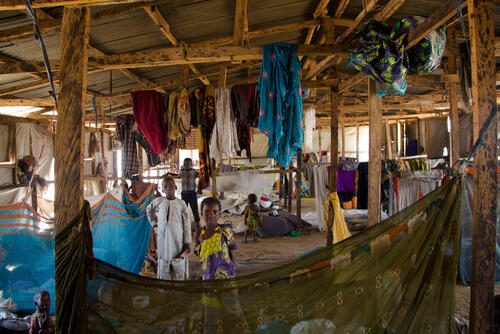
5,000 still displaced in MSF-supported Batangafo Hospital
Central African Republic

More than 5,000 people sheltering in MSF-supported Batangafo hospital after violent clashes

Fighting between two armed groups in Batangafo, in northern Central African Republic, in late October drove more than 10,000 people to seek shelter in Batangafo hospital, where 5,000 still remain. Project Update - 14 Nov 2018
 
Portrait of Odia at her home in Conakry, Guinea on March 18, 2016. 

"I learnt in 2005 that I was HIV positive when I for a medical checkup. But the first time, it was my father who received the results from my tests and he did not tell me what they were. I returned to the hospital again with a friend of my mother and was tested again. That’s when I learnt I was HIV positive. I was stigmatised by my Aunty at first, today though I don't face problems. I am a counsellor in an MSF treatment centres for those who come for HIV tests."

MSF launched a HIV testing campaign in Conakry with the support of health authorities moving throughout several neighbourhoods throughout 2016.

In Guinea, only one in four people living with HIV are on life-saving antiretroviral treatment. Lack of voluntary HIV testing, estimated at only 5% from the latest study dating from 2012, hampers the necessary increase of people on ART.
Access to medicines

HIV and TB treatment at risk as countries gradually lose Global Fund support

MSF calls on the Board of the Global Fund to Fight AIDS, TB and Malaria to make urgent changes to prevent drug stock-outs and quality issues with HIV and tuberculosis medicines for countries gradually losing donor support. Press Release - 13 Nov 2018
 
Chan and Ngor are identical twins, just 1 day old. Sadly, their mother passed away during child birth so now they are being cared for at the MSF Hospital in Malakal PoC. The boys are healthy but face an uncertain future as the country is in the midst of a bitter civil war.
South Sudan

Innovation: How ultrasound is saving lives in South Sudan

Stephen is a midwife from South Sudan, working with MSF in Malakal camp to provide care to people displaced by conflict. In this blog post, he explains how new kit and training in "point-of-care" ultrasound scans are helping midwives like him make lifesaving diagnoses. blogs.msf.org - 12 Nov 2018
 
Maryam, aged four, plays in the courtyard of the noma hospital. 

She arrived at Sokoto Noma Hospital with her mother from Borno state and was first admitted in March 2016. 

She has already undergone four reconstructive operations, including a skin graft taken from her chest to replace tissue destroyed by noma. 

Sokoto, Nigeria.
2 November 2016.
Website

Noma, a neglected disease

MSF website dedicated to noma, a disfiguring, neglected disease that affects mostly children under five living in poverty. Learn about the disease, people who have it, and what MSF is doing to support them in Sokoto Noma Hospital in Nigeria. noma.msf.org/
 
A baby in the New Born Unit (NBU) of Peshawar Women Hospital. The NBU is equipped with warmers, cardiovascular supports in the form of oxygen, intravenous fluids and phototherapy for neonatal jaundice.
Pakistan

Increasing newborn babies' chances of survival

MSF supports maternal and child healthcare services and awareness-raising activities in Peshawar and other areas of Pakistan, which has the highest rate of newborn mortality in the world. Project Update - 8 Nov 2018
 
SF’s Dr Punidha examines X-ray results in the emergency room of Sinuni general hospital in Sinjar.
Iraq

Rehabilitated hospital improves access to healthcare in Sinjar district

MSF has started activities in Sinuni, the most densely populated town in Sinjar district, where access to healthcare has been drastically compromised by severe damage to medical infrastructure, the displacement of health professionals, and ongoing insecurity in parts of the governorate. Press Release - 8 Nov 2018
 
Yemen, gouvernorat de Saada, Haydan, mars 2018. A l'intérieur de l'école de Haydan, bombardée en 2016 par la coalition internationale dirigée par l'Arabie Saoudite.


Saada governorate in Yemen, Haydan, March 2018. Inside Haydan school, bombarded in 2016 by the international coalition led by Saudi Arabia.
Yemen

Influx of war wounded as fighting intensifies in Hodeidah, Hajjah, Saada and Taiz

As fighting intensifies in Hodeidah and other parts of the country, MSF is extremely concerned for patients and staff at its health facilities, as well as for the thousands of people who live near frontlines. Press Release - 7 Nov 2018
Four mothers posing in a corridor of the Hospital in Bili. All four of them are staying in the hospital with their child, that's suffering from a severe case of malaria. Since the beginning of the project in 2016, the pediatric ward already treated more than 4.000 cases of complicated/severe form of malaria.
Médecins Sans Frontières (MSF)

Independent medical humanitarian assistance

We provide medical assistance to people affected by conflict, epidemics, disasters, or exclusion from healthcare. Our teams are made up of tens of thousands of health professionals, logistic and administrative staff - most of them hired locally. Our actions are guided by medical ethics and the principles of independence and impartiality. We are a non-profit, self-governed, member-based organisation.

Learn more