



Ebola disease in DRC: find out how we're responding
Learn more
8006 Results
 
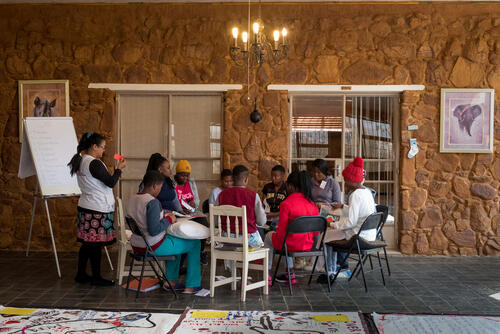
A sexual assault survivor working on her body map during MSF's Body Mapping workshop, Rustenburg, June 2018. 
MSF facilitated a 2-day Body Mapping workshop attended by adolescent survivors of sexual violence from across the Rustenburg area. In Rustenburg, South Africa, a 2016 MSF survey revealed that 1 in 4 women between the age of 18-49 has been raped in her lifetime. As part of MSF's comprehensive sexual violence project in Rustenburg, Body Mapping is used to help survivors of sexual violence identify the internal and external scars and hardships that they are living with and working through. Body Maps comprise a life-size outline of the body, which the survivor "maps" with their experiences and emotions.
South Africa

The mental healthcare lottery faced by victims of sexual violence

Yolanda Hanning, mental health manager for MSF’s Rustenburg project, presents the challenges victims of sexual violence in South Africa face in accessing mental healthcare and how MSF is working to change that. Voices from the Field - 17 Dec 2018
 
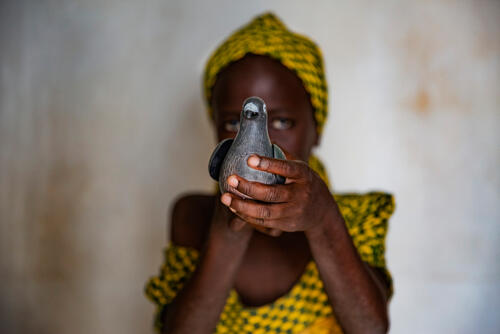
Aïcha 
Aïcha is nine-years-old. She fled to Niger by crossing through the jungle. She experienced hunger when she was fleeing. In Niger, Aïcha stopped playing and was always sitting alone. She found it hard to eat and was losing weight. She had nightmares which woke her up.
Niger

Diffa’s young minds damaged by the conflict

Children account for about 70 per cent of the 250,000 people who have sought refuge in Diffa, Niger, fleeing conflict in the Lake Chad region. MSF is running a mental health and psychosocial support programme for children and adolescents in Diffa, to help them to overcome the trauma they have experienced. Project Update - 14 Dec 2018
 
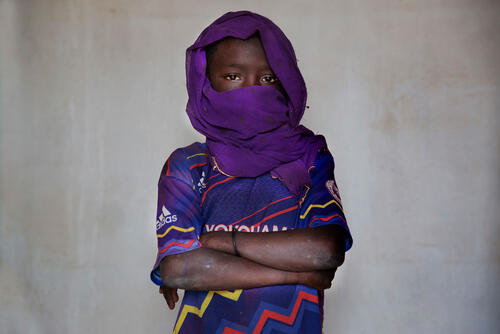
Anas 
Twelve-year-old Anas and his parents left Nigeria four years ago. Anas’ parents were small traders and the family lived well, but they had to give everything up due to the conflict. Anas witnessed several murders when his village was attacked.
Niger

Lives haunted by violence

Since late 2014, the region of Diffa in southern Niger has been caught in armed conflict, forcing 250,000 people from their homes, over two-thirds of them children. Halisa, Mohammed, Asan, Aïcha, Mariam and Issa, participants in the mental health programme that MSF runs in Diffa, share their stories. Voices from the Field - 14 Dec 2018
 
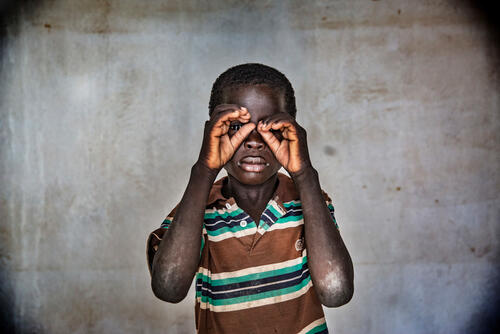
Issa
Ten-year-old Issa was kidnapped by an armed group when his village was attacked. He spent several months in captivity and saw another boy killed.
Mental health

“It takes a lot to bring these children back to something approaching a normal life”

Interview with Cristina Carreño, MSF mental health advisor, on the role of mental healthcare for children in MSF’s programmes for victims of violence, conflict or natural disasters, and notably for displaced populations. Interview - 13 Dec 2018
 
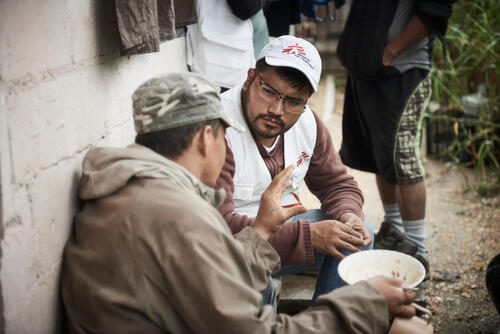
At the Casa del Migrante in Coatzacoalcos, Veracruz, an MSF team provides medical care and mental health care to hundreds of migrants and refugees who arrive daily in this city located in southern Mexico, known for being a place of passage where travelers usually take a break before continuing their journey aboard “La Bestia”, the freight train that connects the southern and northern borders of the Mexican republic.
Central American migration

US asylum restrictions are deepening Mexican border crisis

Current and proposed policies to severely restrict the ability to seek asylum in the United States have created an administrative limbo that leaves Central American asylum seekers in Mexico exposed to further violence. Press Release - 13 Dec 2018
 
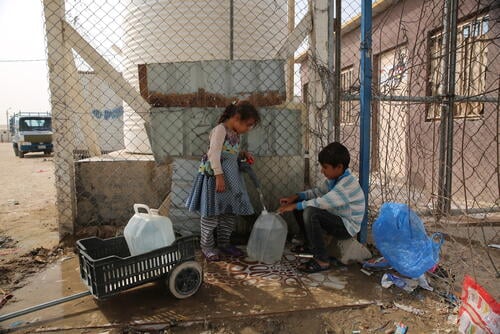
Thousands of Iraqis who fled IS’s iron grip and the US-led coalition’s bombing campaigns, they have all but lost hope in their country’s future. Their story is a testament to the fact that, while the Islamic State group has been crushed militarily, peace and prosperity remain a distant dream for many Iraqis.
Iraq

Iraq’s displaced see no hope on the horizon

Iraqis who fled the Islamic State group’s iron grip and the US-led coalition’s bombing campaigns have all but lost hope in the future. Their story is testament to the fact that, while the Islamic State group appears to have been defeated militarily, peace and prosperity remain a distant dream for many Iraqis. Voices from the Field - 12 Dec 2018
 
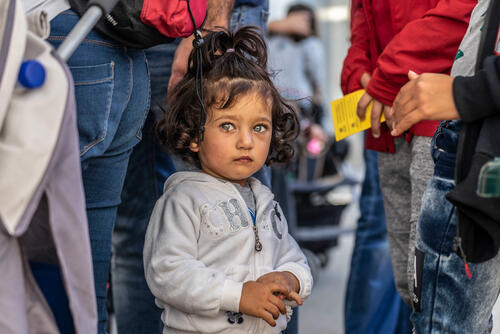
In October 2018, MSF teams in collaboration with MoH andHellenic Center for Disease Control & Prevention (KEELPNO) vaccinated 200 children living in VIAL camp on Chios island against measles, mumps, and rubella (MMR) as well as Polio for those who weren't already vaccinated. 
 
In March 2018, MSF mobile units began holding daily visits to the VIAL camp offering primary health care, sexual and reproductive healthcare (ante-/postnatal care; gynecology; family planning), and mental healthcare (individual clinical psychological care sessions). In July 2018, MSF set up a permanent clinic outside VIAL Camp. A social worker complements the support offered to patients at both the local hospital and the camp, linking patients as well to legal aid actors locally and in Athens. Patients in need of psychiatric treatment are referred to a local NGO since the waiting time at the local hospital’s can be as long as three months.  In addition, an outreach team is regularly deployed to the camp providing health advice, promoting MSF's activities, and referring patients to our clinic.
Refugees, IDPs and people on the move

"Migration is not a crime. Saving lives is not a crime"

Speech given by MSF International President Dr Joanne Liu at the Global Compact of Migration conference in Marrakesh, Morocco, on refugees and migration. Speech - 11 Dec 2018
 
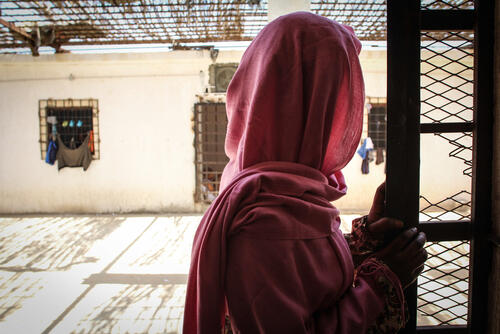
A woman in detention centre.
Her testimony: “We were abandoned at sea. People lost hope. Why did we let people die at sea? They have all the means to rescue us. We are all humans. If we try to go to Europe, it’s to have a better life. People will keep continuing taking journey by sea. There are people who are escaping war, others are escaping poverty; people should be rescued and later on each individual case is looked at. We are not in Libya to stay here, we want to go to Europe. We are not criminals”.
Libya

Open letter to the UN on the fate of refugees trapped in dangerous Libya

Open letter from MSF to Ghassan Salamé, Special Representative and Head of the UN Support Mission in Libya, on the situation of the refugees and migrants forcibly disembarked from the Nivin merchant ship and still at risk in Libya Open Letter - 10 Dec 2018
 
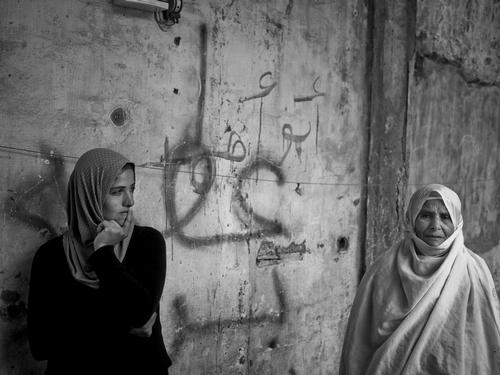
Majdal Anjar, Bekaa Valley, Lebanon. November 7, 2013.
Syrian refugees living on the grounds of a former prison now occupied by several Syrian refugee families on the outskirts of the village of Majdal Anjar, in Lebanon's Bekaa Valley.

(Photo by Moises Saman/MAGNUM)
Lebanon

MSF in Lebanon: Then and Now

Then and Now is the unfolding story of Médecins Sans Frontières (MSF) in Lebanon, first presented as a multimedia exhibition in Beirut on 10-13 December 2018 to commemorate the 42-year relationship between MSF and Lebanon Photo Story - 7 Dec 2018
 
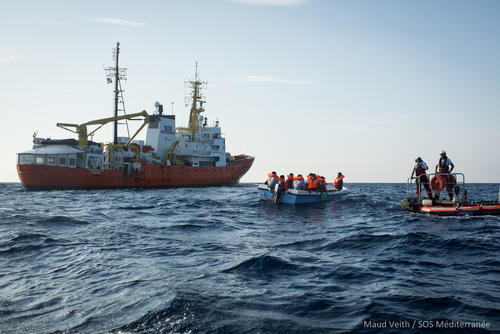
Central Mediterranean – 23 September, 2018 – Over the past 72 hours, Aquarius assisted two boats in distress and now has more than 60 survivors on board, several of whom are psychologically distressed and fatigued from their journeys at sea and experiences in Libya. 
SOS Mediterrannee and MSF are reeling from the announcement by the Panama Maritime Authority it has been forced to revoke the registration of the Aquarius under blatant economic and political pressure from the Italian government.
“Five years after the Lampedusa tragedy, when European leaders said ‘never again’ and Italy launched its first large scale search and rescue operation, people are still risking their lives to escape from Libya . News from the Panama Maritime Authority arrived to the Aquarius while its teams were engaged in an active search and rescue operation in the Central Mediterranean.
Mediterranean migration

Aquarius forced to end operations as Europe condemns people to drown

As people continuing to flee by sea along the world’s deadliest migration route, not only has Europe failed to provide search and rescue capacity - it has actively sabotaged others’ attempts to save lives. Press Release - 6 Dec 2018
Four mothers posing in a corridor of the Hospital in Bili. All four of them are staying in the hospital with their child, that's suffering from a severe case of malaria. Since the beginning of the project in 2016, the pediatric ward already treated more than 4.000 cases of complicated/severe form of malaria.
Médecins Sans Frontières (MSF)

Independent medical humanitarian assistance

We provide medical assistance to people affected by conflict, epidemics, disasters, or exclusion from healthcare. Our teams are made up of tens of thousands of health professionals, logistic and administrative staff - most of them hired locally. Our actions are guided by medical ethics and the principles of independence and impartiality. We are a non-profit, self-governed, member-based organisation.

Learn more