



Ebola disease in DRC: find out how we're responding
Learn more
7999 Results
 
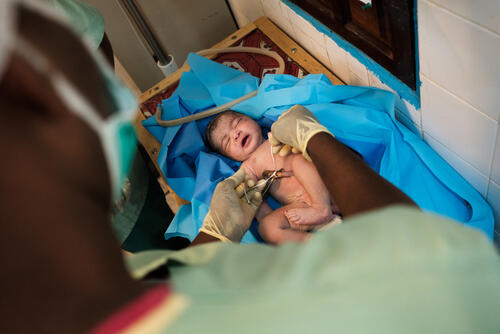
Surgical staff with a newborn baby moments after a successful emergency caesarean section at a Médecins Sans Frontières (MSF) surgical facility in Bassikounou in the Hodh ech Chargui region of Mauritania on 12 August 2018. Located in Southeastern Mauritania, Bassikounou is the staging point for MSF operations in the Mbera refugee camp and the surrounding area.
Mauritania

MSF Mbéra health programmes handed over to ALIMA

Six years after the launch of an emergency intervention in Bassikounou, southeastern Mauritania, to respond to the needs of refugees fleeing conflict in Mali, MSF has handed over our activities to ALIMA. Project Update - 14 Jan 2019
 
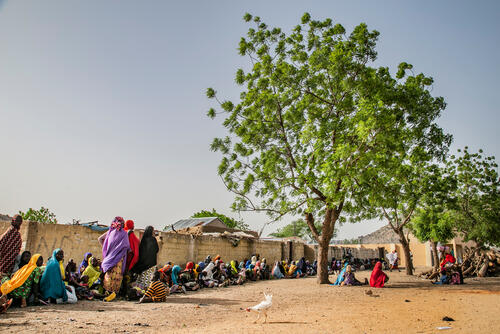
Displaced people wait for a distribution of non-food items (NFIs) in Pulka town.
Nigeria

Crisis update: Borno and Yobe states, January 2019

Despite a massive deployment of aid in Borno state since 2016, the humanitarian response remains insufficient, many urgent needs remain unmet and hundreds of thousands of people remain heavily dependent on aid for survival, both in the state capital Maiduguri and in isolated enclaves in the countryside controlled by the military. Crisis Update - 14 Jan 2019
 
Halyna Uvarenko, 56, an MSF patient with multidrug-resistant TB (MDR-TB), walks in the forest around the Zhytomyr Regional TB Dispensary where she is receiving treatment. Halyna is from Morozivka village, Brusyliv district in Zhytomyr region. She was diagnosed with MDR-TB in August 2018 and has been on treatment in the ward since then. She is preparing to switch to ambulatory care. Halyna's husband died of TB earlier this year. In 2018, MSF started providing treatment for drug-resistant tuberculosis (DR-TB) to patients in Zhytomyr Oblast, in partnership with the Zhytomyr Regional TB Dispensary. Zhytomyr region has one of the highest rates of TB in Ukraine.
Ukraine

A long and painful journey

Médecins Sans Frontières (MSF) helps patients in Ukraine navigate the difficulties of treatment for drug-resistant tuberculosis. msf.exposure.co - 13 Jan 2019
 
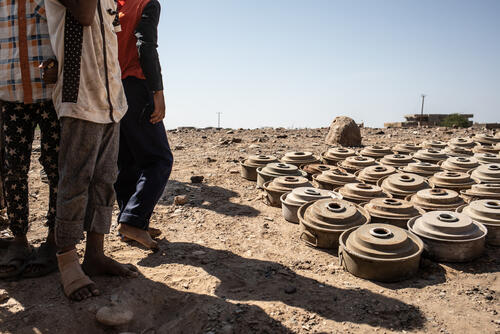
Yemen, Mawza, 13 December 2018 – Defused landmines. Mawza is located in Taiz governorate, a 45 minutes-drive to the east of Mocha city. This is a very poor and rural area, people are depending on their land to eat and to earn money. The area was taken over from Ansar Allah’s control by forces loyal to President Hadi, supported by the Saudi and Emirati-led coalition, in the beginning of 2018. Fighting damaged the fields and thus, the livelihood of the 13,000 inhabitants of Mawza. While military troops were withdrawing, thousands of landmines and improvised explosive devices (IED) were planted in the area. Between August and December, MSF teams in Mocha received around 150 people injured by landmines or IED, mainly children playing in the fields. Landmines and IEDs are defused by military forces. Local NGOs are in charge of locating these devices.
Yemen

Trapped by landmines

Landmines and explosive devices urgently need clearing from civilian areas in southwest Yemen – not only places where people live, but also agricultural land. Project Update - 10 Jan 2019
 
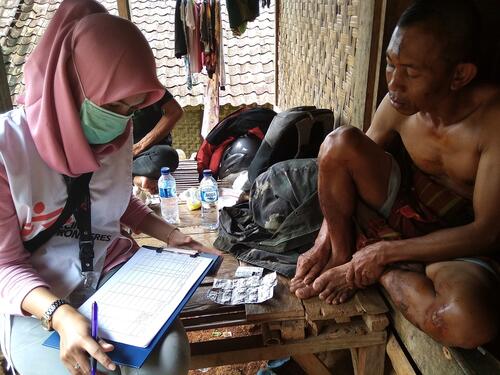
The MSF team visited one of the survivors in an evacuation camp at Susukan Kampong, Sukarame Village, Carita Sub district. Here they met a 13-year-old adolescent who is also a beneficiary of the MSF adolescent health project in Banten.
Indonesia

Update on response to Sunda Strait tsunami

Updates from MSF's teams in Indonesia, following the tsunami that hit Sunda Strait late on 22 December 2018. Crisis Update - 9 Jan 2019
 
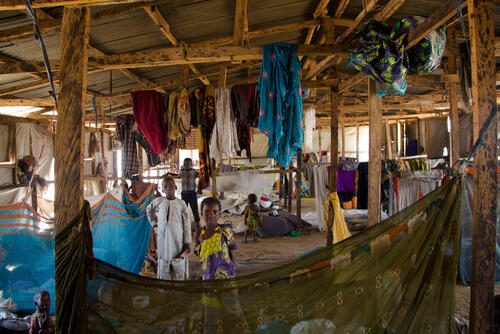
Constant influx of newly arrived people have left IDPs living in overcrowded communal shelters (60 to 70 people) or camping in the open under trees. They can stay there for several months before being allocated a personal shelter for their family.
Nigeria

“All I have in this world are the clothes on my back”

People continue to be displaced by violence in northeast Nigeria, where MSF has been providing lifesaving medical care since 2014. Many are dependent on aid to survive, and there is often not enough to go around. Project Update - 8 Jan 2019
 
msf-placeholder

Privacy Notice for Candidates

We have a strong ethical and legal responsibility regarding the collection and processing of personal data; we are duty-bound to protect the privacy of all people who entrust their personal information to us. This includes candidates’ personal data.
 
Dr Patrick Indradjaja with Elis' family in Cigondang village, Indonesia
Indonesia

"Thank God, my family is safe!"

Elis, a 30-year-old mother who is seven-months pregnant and was treated by MSF, recounts her experience of the tsunami that hit her family’s home on the coast of Sunda Strait, Indonesia, on 22 December 2018. Voices from the Field - 3 Jan 2019
 
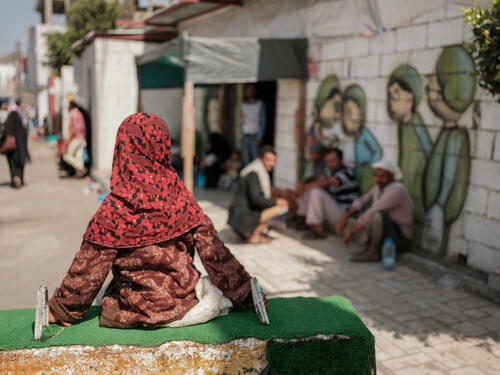
A girl is seen seated on an anti-vehicle concrete barrier built in front of the “Mother and Child” Hospital run by MSF, while some men are sitting outside the entrance of the Cholera treatment unit. Taiz Houban. Yemen
Yemen

A week in Yemen

As the conflict in Yemen enters its fourth year, MSF has put together a series of seven short videos that illustrate the devastating situation – through the eyes of our staff and patients. Campaign - 31 Dec 2018
 
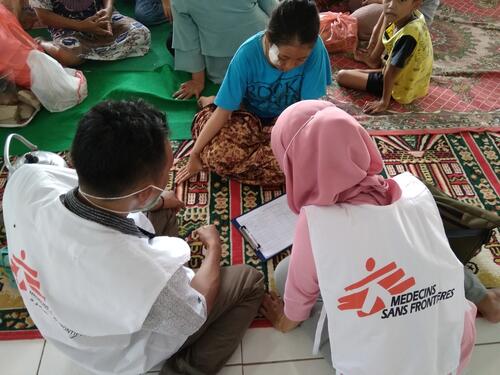
Dina Afiryanti, an MSF midwife, is interviewing one of the community members of Carita Sub district, in Pandeglang. This is one of the areas in Banten Province, Indonesia that has been affected by the tsunami that hit the Sunda Strait on 22 December, around 9:30 pm local time.
Indonesia

MSF supports health centres tending to Sunda Strait tsunami victims in Indonesia

MSF teams responded to the influx of patients as injured people were brought to the health centres in Pandeglang district on the morning of 23 December 2018. Crisis Update - 24 Dec 2018
Four mothers posing in a corridor of the Hospital in Bili. All four of them are staying in the hospital with their child, that's suffering from a severe case of malaria. Since the beginning of the project in 2016, the pediatric ward already treated more than 4.000 cases of complicated/severe form of malaria.
Médecins Sans Frontières (MSF)

Independent medical humanitarian assistance

We provide medical assistance to people affected by conflict, epidemics, disasters, or exclusion from healthcare. Our teams are made up of tens of thousands of health professionals, logistic and administrative staff - most of them hired locally. Our actions are guided by medical ethics and the principles of independence and impartiality. We are a non-profit, self-governed, member-based organisation.

Learn more