Ebola disease in DRC: find out how we're responding
Learn more
8000 Results
 
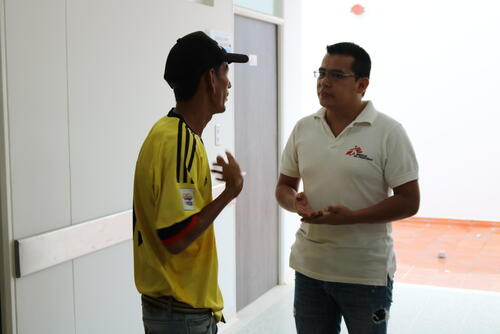
MSF provides primary health care, family planning, mental health care, and information on social services for venezuelan migrants and colombians returning from Venezuela in the border departments of Colombia.
Colombia

Assisting Venezuelan migrants in Colombia

The crisis in Venezuela has forced a million Venezuelans to flee to Colombia, where the healthcare system is struggling to cope with the new arrivals. MSF is providing healthcare to Venezuelans and Colombians living in the departments along the border. Project Update - 17 Apr 2019
 
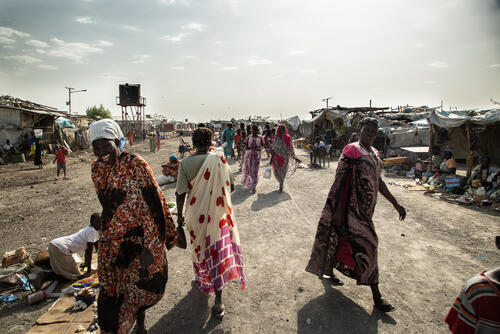
Women walk down a market street in the Protection of Civilians site in the northern town of Malakal, South Sudan.
South Sudan

There’s a lot to be done to address the uncountable health needs

Africa's newest country, South Sudan, is still feeling the effects from violence since 2013, including a decimated health system where there are few local medical staff and people can walk up to 7 days to a hospital, explains Endashaw Mengistu. Voices from the Field - 16 Apr 2019
 
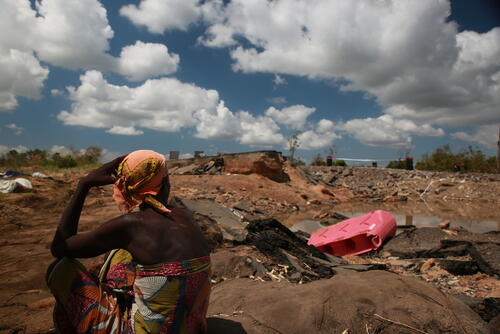
Destructions of the road between Nhamatanda and Tica.
Cyclone Idai & Southern Africa flooding

From emergency to recovery: Mozambique one month after Cyclone Idai

One month since Cyclone Idai tore through Beira and surrounding towns in Mozambique, life is starting to return to normal in many areas - but thousands still face challenges with clean water, food, shelter and avoiding cholera. Project Update - 12 Apr 2019
 
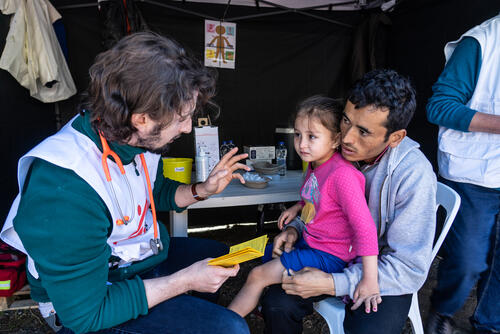
MSF medical doctor, Stefanos Tsallas vaccinates a child from refugee camp against pneumonia
Access to medicines

Humanitarian mechanism for vaccines used for first time in Europe to counter high prices

MSF has used a new humanitarian mechanism for vaccines to provide affordable pneumonia vaccinations to refugee children in Greece, to protect them against deadly pneumonia . Press Release - 12 Apr 2019
 
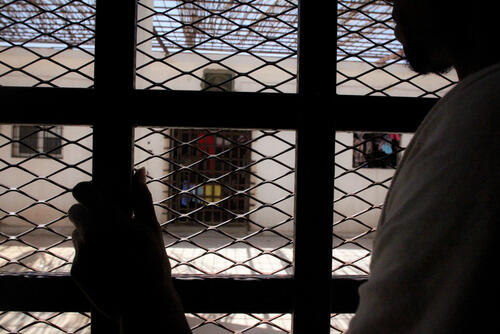
A shipwreck survivor in detention centre.
His testimony : “The sun was really strong and the boat started to deflate. All the babies died. How can we stay so many hours in the water without being rescued? People started to drink salty water. Why they left us die at sea?”
Libya

Trapped refugees must be released and granted safety from Tripoli fighting

Fighting that has broken out in Tripoli, Libya, over the last week, has trapped and further endangered the lives of refugees and migrants who are being held in detention centres. We call for their immediate release to a place of safety. Project Update - 11 Apr 2019
 
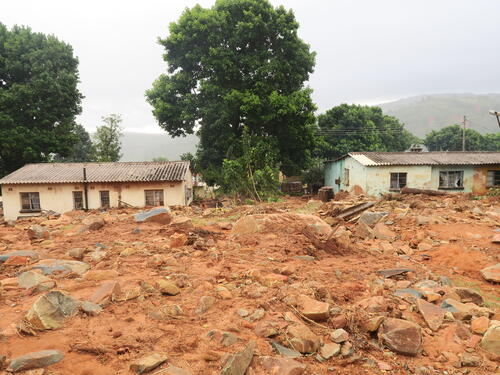
The remains of Ngangu village in Chimanimani, eastern Zimbabwe where many people were affected by cyclone Idai. MSF is working with the Ministry of Health and Child Care and partners to provide medical assistance where needed including treating trauma & providing medication for those who lost theirs in floods. Many residents lost their medications in the floods, in addition to their homes and livelihoods.
Cyclone Idai & Southern Africa flooding

Chimanimani: A community in distress after Cyclone Idai

Nearly a month since Cyclone Idai tore through parts of Manicaland province, Zimbabwe, communities around Chimanimani are still struggling to come to terms with with the destruction the cyclone caused. MSF teams are there to help. Project Update - 10 Apr 2019
 
Saif is nine years old. He injured his leg at school. He is being treated at MSF’s post-operative care facility, in East Mosul. This is his testimony: 
“A year and a half ago, my family and I left my village because it had become too dangerous to live there. With my three brothers and my mother, we went to live in a camp for displaced people. Life in the camp was not easy, but I was still happy because I got to go to school. Then one day, another boy at school through a big rock at me and it broke my leg. First, my mum took me to a hospital in Qayyarah. The doctors there operated on me twice. Then they sent me here, to this hospital in Mosul [the MSF post-operative hospital]. That was almost a month ago. I have had two more operations since I arrived here. My leg is getting better, but very slowly. The doctors tell me it is taking longer because I have bacteria in my body. And these bacteria make it harder for my leg to become normal again. The bacteria can hurt other people too, so the doctors put me in this isolation room and I have to wear a green gown when I go outside. But I like this hospital. I spend a lot of time with the nurses. We draw together and they are teaching me the alphabet; I already know how to write all the letters. It helps make the time pass by faster. When I am bored, I call my brothers on my mum’s phone and show them all the games I get to play here. But still, I am impatient to go back to school. I don’t know how long I’ll stay here; it depends on when my leg is healed.”
Iraq

A year of post-operative care in Mosul

In the aftermath of the battle of Mosul, Iraq, war-wounded people, including children, needed reliable post-operative care. In response, MSF established a post-operative care facility in the city a year ago. These are the patient stories and the challenges we face. Project Update - 10 Apr 2019
 
Alaa al-Share’

Worked with MSF: since 2014
Worked as nurse: 13 years 

	Why did you choose nursing?
Nursing is not just a day-to-day job. Being a nurse means being a teacher, an advocate, a care-giver, critical thinker and innovator. It means treating patients and colleagues with dignity.


	What does it mean to be a nurse?
“Being a nurse means sleepless nights, vital signs, and long hours by the bed side. It means working hard to provide high quality care to all patients and treating them with dignity. Nurses are the heart and soul of the healthcare system.” 


	What motivates you to come to work every day, and to Irbid NCDs project?
“What motivates me to come to work every day is the ability to help people, and contribute to any improvement in their health condition. Working with MSF in the non-communicable diseases project gave me the chance to help refugees, learn about their suffering and see their smiles when their examination results are satisfactory. It is a reason enough to wake up every morning to hurry to work. Every single detail about a patient story can make a difference in a nurse’s life.”


	Do you act as a nurse in your home just like in work?
I am also a nurse at home. I always try to promote a healthy lifestyle for my family. I cannot disconnect from this reality, I act as a nurse wherever I am, and I am proud to be one.”
Child health

“Children with chronic diseases need our attention”

While children with chronic diseases – such as heart disease, diabetes, asthma, and epilepsy – are not the majority of MSF's paediatric patients, the needs of these children equally need attention and treatment. Interview - 9 Apr 2019
 
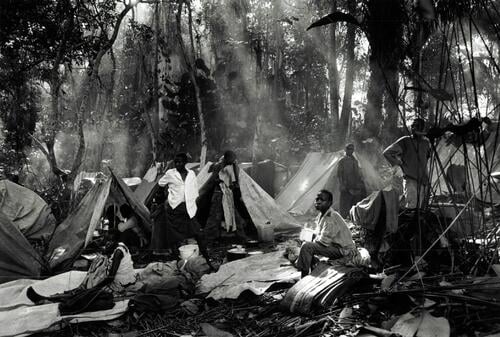
At the village of Biaro. The Zairian Red Cross are present (brought here by the rebels of Kabila, who want to make sure the bodies are burried as fast as possible, fearing typhus epidemic) and make a count of all the orphans: above 1000 children. They are lined up along the railway tracks.Tens of thousands of Rwandan Hutu refugees, (they all come from the refugee camps of Goma and Bukavu), fleeing the Zairian rebels of Laurent- Desire Kabila, for the last 5 months, hiding in the bush, exhausted, famished, and all waiting to return home, to Rwanda, are today in the midst of a new nightmare. They had taken residence in camps in 1994, when they fled their country in fear of retribution for the massacres of hundreds of thousands of Rwandan Tutsi by Hutu extremists. The presence of Hutu nettled Zairian Tutsi, who joined forces with Kabila, a longtime Mobutu foe, and  launched the insurgency. The fighting forced most of the Rwandan refugees to go home in Autumn 96, but about 350.000 of them have been marooned in tough eastern Zaire, fighting terrain. They are dying at an alarming rate. They need food, water ans safe passage home. But no one has made the refugees a priority. The Zairian rebels of Kabila who seized Kisangani, Zaire'sthird city, had ordered the Rwandan Hutu Refugees, who were in this region's camps, to move back south.
Rwanda

Rwandan genocide 25 years on: MSF caught in spiral of extreme violence from Rwanda to Zaire

Twenty-five years after the Rwandan genocide, MSF takes a look back at the events before, during, and after one of the most horrific events in human history, outlining what our teams witnessed on the ground in Rwanda and Zaire (now DRC). Voices from the Field - 5 Apr 2019
Four mothers posing in a corridor of the Hospital in Bili. All four of them are staying in the hospital with their child, that's suffering from a severe case of malaria. Since the beginning of the project in 2016, the pediatric ward already treated more than 4.000 cases of complicated/severe form of malaria.
Médecins Sans Frontières (MSF)

Independent medical humanitarian assistance

We provide medical assistance to people affected by conflict, epidemics, disasters, or exclusion from healthcare. Our teams are made up of tens of thousands of health professionals, logistic and administrative staff - most of them hired locally. Our actions are guided by medical ethics and the principles of independence and impartiality. We are a non-profit, self-governed, member-based organisation.

Learn more