


Ebola disease in DRC: find out how we're responding
Learn more
8000 Results
 
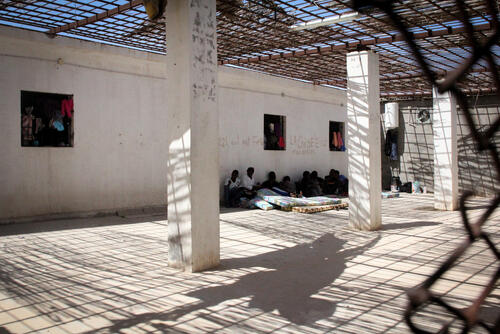
General view of detention centre

On September 2nd, 276 people were brought by the Libyan coast guard to Khoms (120 km east of Tripoli). They were then transferred to detention center where MSF works. Reportedly, they were in two rubber coats, one stopped due to engine failure, while the other boat continued to navigate for several hours before deflating and sinking. Survivors told MSF teams that over a hundred people died in the shipwreck.
Libya

Time running out for evacuations of trapped refugees in Tripoli amid shooting

On 23 April, reports surfaced of a violent incident in a Tripoli detention centre, where trapped migrants are being held. MSF has found evidence that multiple people were shot, and urges for all migrants' immediate evacuation. Press Release - 26 Apr 2019
 
msf-placeholder

Methodology

Methodology - 25 Apr 2019
 
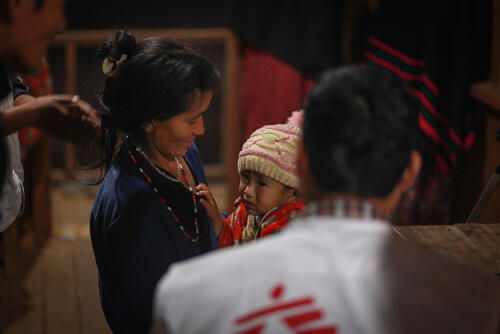
A mother and her child speak speak to a doctor from MSF's mobile clinic in Hay Khun village, Naga.
Myanmar

Bringing healthcare to remote communities in Naga

Naga is one of the most remote parts of Myanmar, and with mountainous terrain, and few established road networks, many in Naga struggle to access healthcare. Travelling usually with motorcycles, MSF's mobile clinics reach the remote villages once or twice a month.
Photo Story - 25 Apr 2019
 
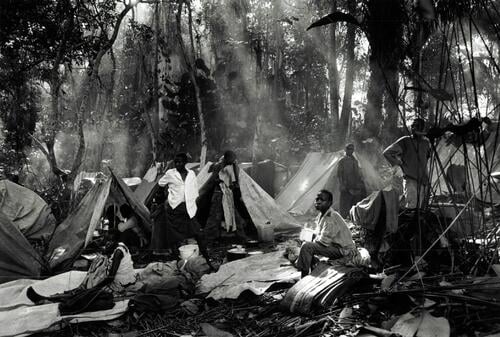
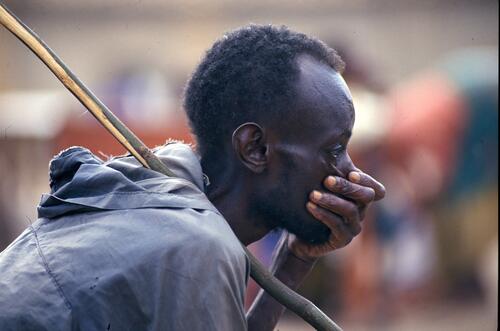
At the village of Biaro. The Zairian Red Cross are present (brought here by the rebels of Kabila, who want to make sure the bodies are burried as fast as possible, fearing typhus epidemic) and make a count of all the orphans: above 1000 children. They are lined up along the railway tracks.Tens of thousands of Rwandan Hutu refugees, (they all come from the refugee camps of Goma and Bukavu), fleeing the Zairian rebels of Laurent- Desire Kabila, for the last 5 months, hiding in the bush, exhausted, famished, and all waiting to return home, to Rwanda, are today in the midst of a new nightmare. They had taken residence in camps in 1994, when they fled their country in fear of retribution for the massacres of hundreds of thousands of Rwandan Tutsi by Hutu extremists. The presence of Hutu nettled Zairian Tutsi, who joined forces with Kabila, a longtime Mobutu foe, and  launched the insurgency. The fighting forced most of the Rwandan refugees to go home in Autumn 96, but about 350.000 of them have been marooned in tough eastern Zaire, fighting terrain. They are dying at an alarming rate. They need food, water ans safe passage home. But no one has made the refugees a priority. The Zairian rebels of Kabila who seized Kisangani, Zaire'sthird city, had ordered the Rwandan Hutu Refugees, who were in this region's camps, to move back south.
MSF Speaking Out

The Hunting and Killing of Rwandan Refugees in Zaire-Congo: 1996-1997 (PDF, 6 MB)

https://www.msf.org/sites/default/files/2026-04/VA_The%20Hunting%20and%20Killing%20of%20Rwandan%20Refugees%20in%20Zaire.pdf - 25 Apr 2019
 
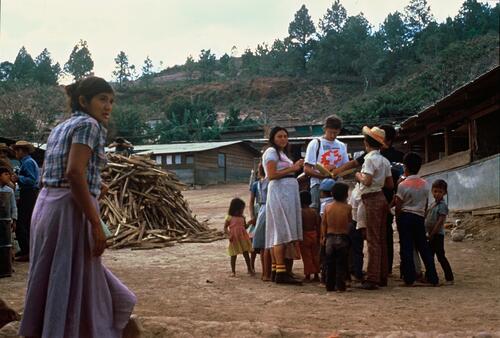
Consultation. En plus de l'assistance medicale aux refugies salvadoriens, MSF est intervenu en Honduras pour des missions d'urgence suite a des catastrophes naturelles (cyclones, ouragans).
MSF Speaking Out

Salvadoran Refugee Camps in Honduras 1988 (PDF, 2 MB)

https://www.msf.org/sites/default/files/2026-04/VA_Salvadoran_Refugee.pdf - 25 Apr 2019
 
Exode.
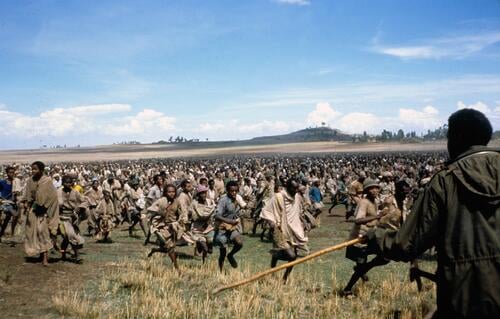
Au printemps 1984, la pluie ne tombe pas dans le nord du pays, la famine guette. Les équipes MSF tirent la sonnette d'alarme: il faut absolument apporter de la nourriture à Korem. Il faudra plusieurs mois pour que la gravité de la situation soit enfin reconnue, pour que le gouvernement lance un appel à l'aide internationale et parle de famine. Pour la première fois de son histoire, MSF envoie de façon massive de la nourriture, des médicaments, des tentes, des couvertures. Pour le gouvernement éthiopien, cette famine devient une arme providentielle pour redessiner la géographie humaine du pays. A Korem, la propagande officielle incite aux départs "volontaires" vers le sud. Certains s'en vont, les autres restent, sans imaginer l'enfer qui leur est réservé en représailles : la nourriture est désormais réservée à certains, l'aide alimentaire détournée vers le sud.
MSF Speaking Out

Famine and forced relocations in Ethiopia 1984-1986

https://www.msf.org/sites/default/files/2026-04/VA_Famine_and_Forced_Relocations_in_Ethiopia_1984-1986.pdf - 25 Apr 2019
 
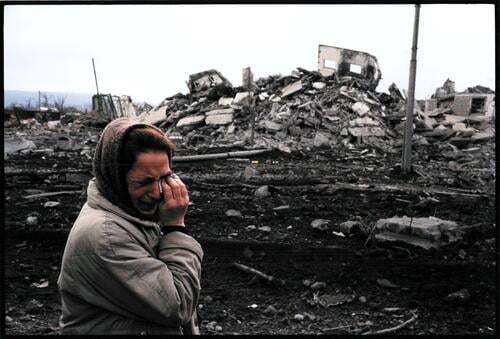
Grozny. A Grozny MSF a conduit des activites de soutien aux structures sanitaires tchechenes, en approvisionnant en medicaments et en materiel medical l’hopital de la ville (maternite) et en realisant des travaux de rehabilitation et d’amelioration des structures.
MSF Speaking Out

War crimes and politics of terror in Chechnya 1994-2004 (PDF, 20 MB)

https://www.msf.org/sites/default/files/2026-04/VA_Tchetchenie.pdf - 25 Apr 2019
 
A survivor of Gitarama in Ruhango, Rwanda, July 1994
MSF Speaking Out

Genocide of Rwandan Tutsi 1994 (PDF, 3.8 MB)

https://www.msf.org/sites/msf.org/files/2019-04/MSF%20Speaking%20Out%20Rwandan%20Tutsi%20Genocide%201994_0.pdf - 25 Apr 2019
 
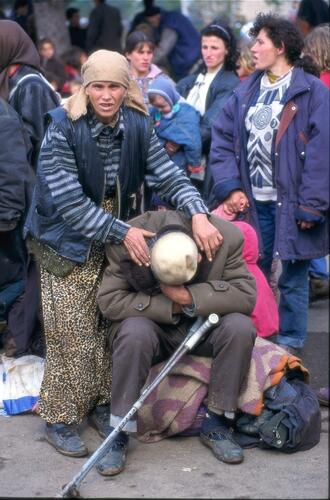
Refugees from Kosovo in Albania, April-June 1999.
MSF Speaking Out

Violence against Kosovar Albanians, nato’s intervention 1998-1999 (PDF, 11.3 MB)

https://www.msf.org/sites/default/files/2026-04/VA_Violence_against_Kosovar_Albanians_NATOs_Intervention 1998-1999.pdf - 25 Apr 2019
 
July 1995
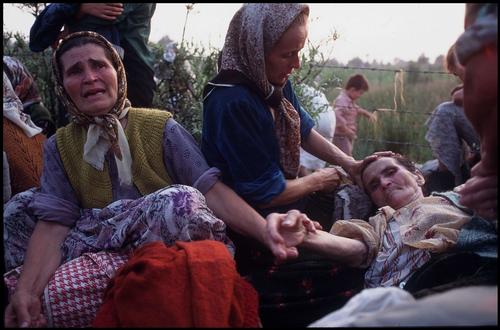
Tuzla: Refugees from the Srebrenica enclave (women, children and elderly), just one day after it's fall.
Juillet 1995
Tuzla: Arriv e des r fugiers (femmes , enfants et vieillards) de l'enclave de Srebrenica le lendemain de sa chute.
MSF Speaking Out

MSF and Srebrenica 1993 - 2003 (PDF, 5.8 MB)

https://www.msf.org/sites/msf.org/files/2019-04/MSF%20Speaking%20Out%20Srebrenica%201993-2003_1.pdf - 25 Apr 2019
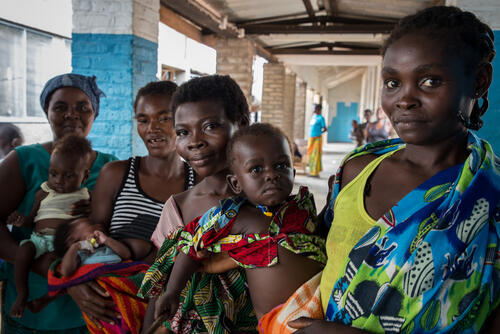
Four mothers posing in a corridor of the Hospital in Bili. All four of them are staying in the hospital with their child, that's suffering from a severe case of malaria. Since the beginning of the project in 2016, the pediatric ward already treated more than 4.000 cases of complicated/severe form of malaria.
Médecins Sans Frontières (MSF)

Independent medical humanitarian assistance

We provide medical assistance to people affected by conflict, epidemics, disasters, or exclusion from healthcare. Our teams are made up of tens of thousands of health professionals, logistic and administrative staff - most of them hired locally. Our actions are guided by medical ethics and the principles of independence and impartiality. We are a non-profit, self-governed, member-based organisation.

Learn more