



Ebola disease in DRC: find out how we're responding
Learn more
8000 Results
 
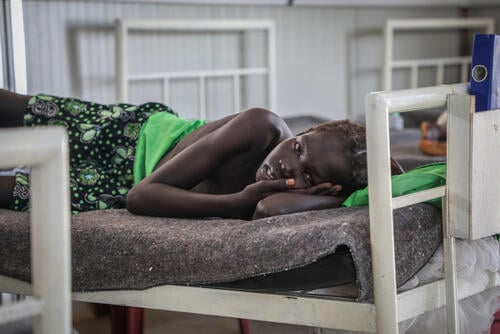
Arnal Lual, 13, and her brother-in- law, Paulino Deng, are from Majbong. Arnal was bitten on the leg when she stepped on a Puff Adder while playing outside her neighbour’s house in the evening. They came to the hospital in a vehicle , but it got stuck in the mud on the road for an hour and a half. Arnal was in pain and her leg continued to swell. They ended up walking for two hours to reach the Agok hospital. There, she received antivenom and had several operations.
Snakebite

WHO launches strategy to cut snakebite deaths and disabilities in half

Médecins Sans Frontières welcomes the release of the long-anticipated World Health Organization (WHO) strategy on the prevention and control of snakebite envenoming, aiming to cut in half the number of snakebite deaths and cases of disability by 2030. Press Release - 23 May 2019
 
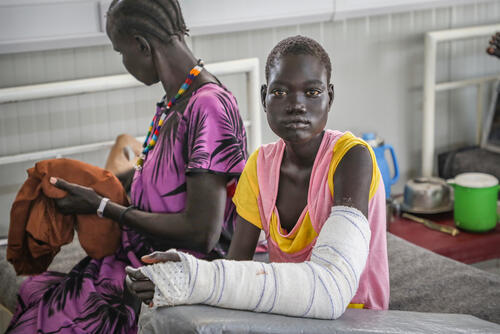
Aguek Deng, 14, and her mother Achol Ngor are from Mabunny, near Agok market. Aguek was bitten on the arm by a snake while she was sleeping on the floor under a mosquito net. She cried out, but her mother didn’t know why. She is mentally disabled and hasn’t spoken since she was little. When they came to the Agok hospital the swelling had spread to her shoulder. She was given antivenom and then operated on.
Snakebite

Antivenom, not frogs, needed to cure snakebite

MSF teams in Agok, South Sudan, are having to find new ways to treat people bitten by snakes, after a key antivenom stopped production. For the victims of snakebite, it is a race against time, distance and overcoming traditional methods to cure snake envenoming. Project Update - 21 May 2019
 
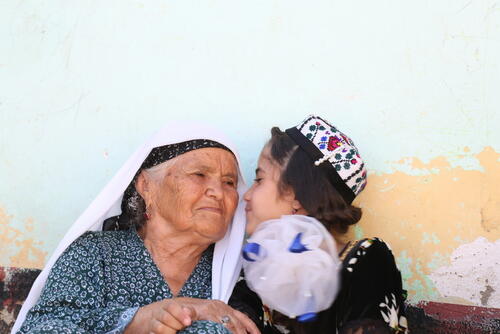
For patients on the standard regimens of care TB treatment can last between 20 and 24 months, or longer. Mahina completed 22 months of treatment, which included 10 months of injections. Now that she is cured she enjoys spending time with her family, pictured here with her grandmother.
Tuberculosis

Breaking the cycle: Paediatric DR-TB detection, care and treatment in Tajikistan

Tajikistan has one of the highest burdens of multidrug-resistant tuberculosisin the world. Children aged under 15 years are particularly vulnerable to TB. Paediatric TB is not ignored in Tajikistan. The Ministry of Health and Social Protection of the Population (MoH) and partners have been developing strategies to advance detection and treatment for this high-risk but neglected group. Report - 17 May 2019
 
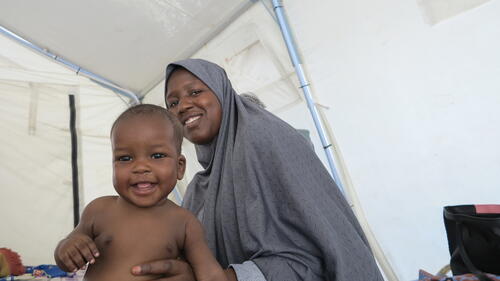
Hajara Adamu fled Damasak, about 150 kilometers to Maiduguri back in 2011. She started a new life. Seven years later, she holds her 5months son Abubakar Abdullahi at the State Specialist Hospital. Abubakar was brought in when he showed measles-like symptoms. Since November 2018, (MSF) has treated over 2922 children for the potentially life-threatening disease.
Nigeria

“I have not seen such high numbers of measles cases”

Maiduguri, in Borno State, northeastern Nigeria, is experiencing a severe measles outbreak, with thousands of children admitted to MSF treatment units in hospitals. The outbreak of the highly infectious disease has spread because of low vaccination coverage rates. Project Update - 17 May 2019
 
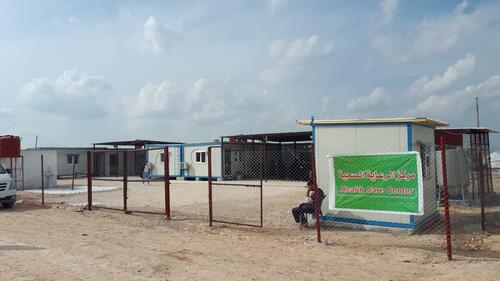
In March 12, the MSF healthcare center was fully functional and already receiving patients. Al Hol camp, Al Hassakeh Governorate
Syria

Women and children continue to suffer in northeast Syria’s Al Hol camp

Vulnerable people, mostly women and children, are living in overcrowded and substandard conditions in Al Hol camp, northeastern Syria, where a humanitarian crisis has unfolded and the needs of people in the camp remain unmet. Press Release - 16 May 2019
 
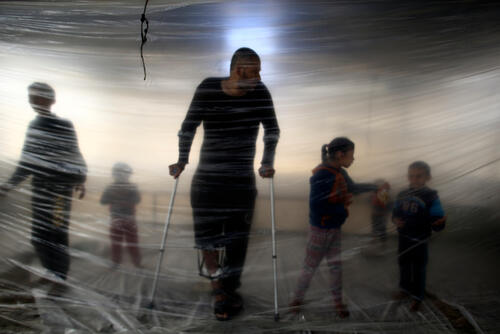
Ahmed, 38, a Palestinian shot and wounded by the Israeli army on 14 May 2018.
Palestine

Gaza, one year after the protests’ bloodiest day

On 14 May 2018, the Israeli army shot more than 1,300 Palestinians. A year later, many of those injured are still struggling with the devastating consequences of their wounds. Project Update - 14 May 2019
 
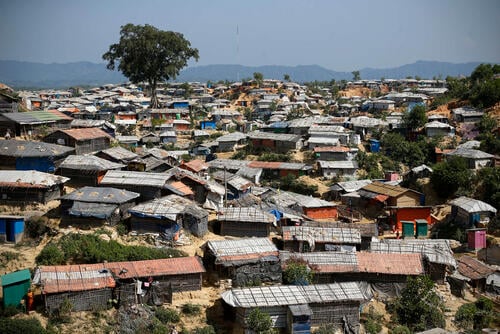
A solitary big tree in an huts landscape.
Rohingya refugee crisis

Crisis update - May 2019

May 2019 update on activities in Cox's Bazar district, Bangladesh, providing care for Rohingya refugees who have fled Myanmar. Crisis Update - 14 May 2019
 
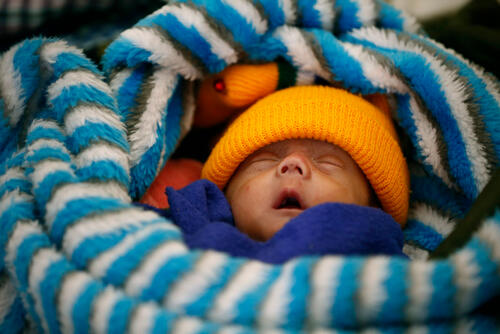
“Miguelito” was born prematurely at 31 weeks and weighed about 1kg. He also presented a series of neonatal complications including sepsis, acute respiratory diseases and fetal distress. MSF immediately took care of the baby guaranteeing him oxygen, antibiotic therapies, blood transfusions and "kangaroo" therapy, which involved not only the mother but the whole family.
Rohingya refugee crisis

Saving lives that have just begun in Cox’s Bazar

An MSF neonatology team works to save mothers and newborns caught up in the Rohingya refugee crisis Project Update - 13 May 2019
 
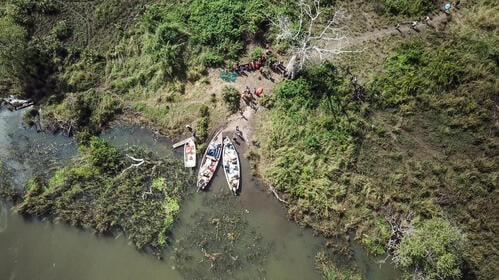
Boat with NFI items arrives at Chibuabuabua, Savane, in Dondo District with NFI items.
Mozambique

Update on MSF emergency response to Cyclones Idai and Kenneth

Learn about the situation in Mozambique, two weeks after Cyclone Kenneth hit the north of a country still recovering from the devastation wreaked by Cyclone Idai. Crisis Update - 13 May 2019
 
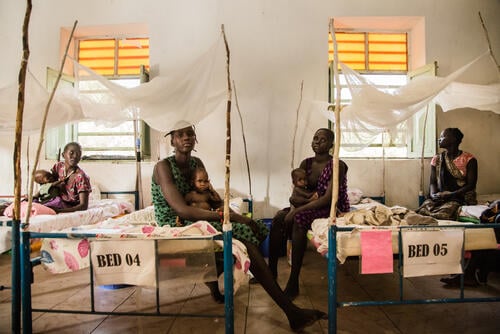
Women sit with their children in the paediatric ward of MSF´s hospital in Ulang, in northeastern South Sudan.
South Sudan

New hospital in Ulang for people affected by violence and neglect

MSF has set up a 30-bed hospital and referral system for 100,000 or so people affected by recurrent outbreaks of different kinds of violence in South Sudan’s Upper Nile region Project Update - 10 May 2019
Four mothers posing in a corridor of the Hospital in Bili. All four of them are staying in the hospital with their child, that's suffering from a severe case of malaria. Since the beginning of the project in 2016, the pediatric ward already treated more than 4.000 cases of complicated/severe form of malaria.
Médecins Sans Frontières (MSF)

Independent medical humanitarian assistance

We provide medical assistance to people affected by conflict, epidemics, disasters, or exclusion from healthcare. Our teams are made up of tens of thousands of health professionals, logistic and administrative staff - most of them hired locally. Our actions are guided by medical ethics and the principles of independence and impartiality. We are a non-profit, self-governed, member-based organisation.

Learn more