



Ebola disease in DRC: find out how we're responding
Learn more
8000 Results
 
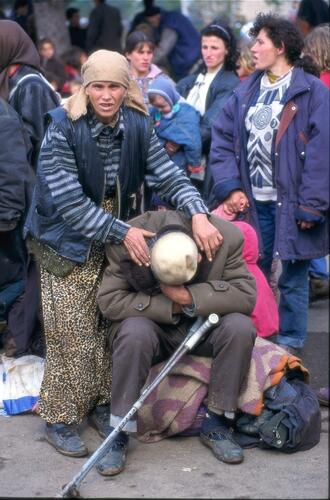
Refugees from Kosovo in Albania, April-June 1999.
MSF Speaking Out

Violence against Kosovar Albanians, NATO's intervention 1998-1999

The ‘Violence against Kosovar Albanians NATO’s intervention 1998-1999’ case study describes the constraints and dilemmas faced by Médecins Sans Frontières teams when witnessing the process of terror and expulsion they described as the ‘deportation’ of Kosovar Albanians by Serb forces. Speaking Out Case Studies - 16 Jun 2019
 
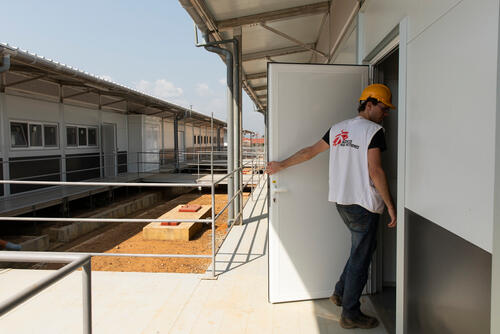
Kenema hospital during the end of the first of four construction phases. Pictures are taken after the main building structures have been built.

Medical Communication Advisor Gijs Van Gassen inspecting one of the modular buildings at the hospital.
Sierra Leone

New hospital to counter high maternal and child mortality rates

On 6 March 2019, Médecins Sans Frontières (MSF) welcomed the first patients in its new 63-bed hospital in Hangha town, Kenema district, southeast Sierra Leone. Project Update - 14 Jun 2019
 
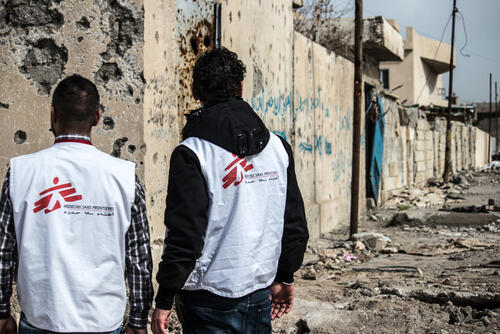
In March 2018, Doctors Without Borders/ Médecins Sans Frontières (MSF) sent an assessment team to Mosul’s old city in northern Iraq. The old city experienced intense shelling, aerial bombing and attacks with improvised explosive devices (IED) during the conflict. Much of the old city is still inaccessible due to the destruction and presence of IEDs, unexploded ordinance (UXO) and booby traps. 

The MSF assessment team visited two primary healthcare centres (PHCCs) and donated medical supplies such as painkillers, antibiotics, dressing materials and tablets for sterilizing water. The assessment found the PHCCs were under-resourced and struggled to provide healthcare due to the lack of medication, water and electricity. One of the doctors said: “If we don't have water or electricity, we cannot do anything…most of the cases we cannot treat. We can only treat the simple cases and the complicated cases we refer.”

MSF currently runs a maternity and paediatrics hospital in west Mosul, and a post-operative and surgical unit for war-wounded patients in east Mosul. Following the assessment in the old city, MSF distributed 550 hygiene kits to families. The kits included items such as soap, toothbrushes, towels and water containers and will help families stay clean and prevent the spread of diseases.
Iraq

MSF in Iraq Annual Report 2018

Report on MSF's activities in Iraq during 2018. Report - 14 Jun 2019
 
Knocking door to door

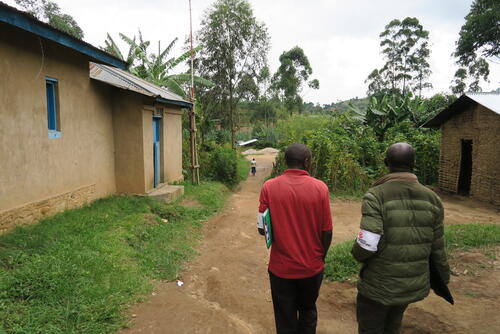
“My aunt bleeds regularly from the nose, but I am too afraid to take her to the health centre. I am afraid that she will be forced into an Ebola Treatment Center”, says a villager visited by Diallo, who knocks each day on the doors in Vukeme neighborhood in Lubero, to placate fears spread within the communities. “We need to rebuild trust with the communities, and this takes time”, explains Diallo.

“We stay with these families for half an hour and inform them about Ebola and the comprehensive healthcare they can receive at Lubero-cité health center”.

Since Ebola claimed some victims in this health zone early 2019, many rumours have been spread. Some sick people stopped going to professional health centers, because they were afraid of a killer disease they did not know. Diallo reassures them that many infectious diseases are treated in Lubero, but not Ebola. Ebola-suspected patients are transferred to Butembo hospital, where they can be tested and benefit from specialised care.

“We stay with the families for about half an hour, but information sessions can last up to more than one hour, when we visit groups made of people who are influential in their communities. We need to make sure that the correct information is given to those who need healthcare.”
Democratic Republic of Congo

Restoring trust among communities fearful of Ebola

In the midst of the Ebola outbreak in eastern Democratic Republic of Congo, MSF teams are finding ways to restore the trust of a community fearful of the disease and mistrustful of those responding to it. Project Update - 13 Jun 2019
 
Community Care Giver Nonhlanhla Ngema delivers anti-retrovirals (ARVs) to Busisiwe  and Sibongile, both members of her Community ART Group (CAG) in Sunnydale, Eshowe, KwaZulu-Natal. Medecins Sans Frontieres (MSF) has been piloting CAGs as a model of care for stable HIV+ patients in rural districts of southern Africa, where HIV prevalence is at its highest. CAG members meet once every two months to review their health and arrange for collection of their ARVs without having to sit in long queues at clinics.
HIV/AIDS

HIV project in South Africa reaches 90-90-90 target one year ahead of deadline

A year before the UNAIDS 90-90-90 HIV testing and treatment deadline, an MSF survey has found that, in working with the community, the targets have been achieved in one MSF project with a high HIV prevalence. Press Release - 12 Jun 2019
 
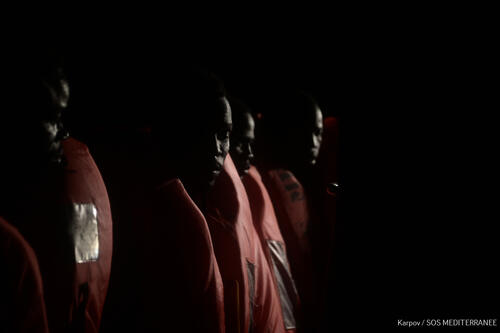
After an extremely busy night on the Central Mediterranean, starting late on June 9 and into the early hours of June 10, the Aquarius has 630 people on board from six different operations. The rescue of two rubber boats turned critical when one boat broke apart in the darkness, leaving over 40 people in the water. After rescuing 230 people from these boats, the Aquarius then took 400 more people on board at the request of the Italian Maritime Rescue Coordination Centre (IMRCC), who had been rescued by Italian navy and coastguard ships on 9 June. 

Over the next days, the Aquarius was embroiled in a political stand-off at sea over the fate of the people rescued in the Mediterranean. Although the rescue and transfers of the 630 people were initiated and coordinated by IMRCC, the Italian authorities denied Aquarius authorisation to bring them ashore in the closest port of safety in Italy. Malta, which had the nearest safe port, also refused to allow the Aquarius to disembark, citing Italy’s coordination role and responsibility.  Eventually, on 11 June, the Spanish government intervened and offered to let the Aquarius disembark in Valencia, 1,300 kilometres away. Despite MSF’s concerns about the humanitarian and medical impact of the sea journey to Valencia, the Italian authorities instructed Aquarius on 12 June to transfer 524 people back to Italian ships and embark with the remaining 106 rescued on a four-day journey to Spain. On June 17, one week after they had been rescued, all 630 people were disembarked in Valencia, Spain.
Mediterranean migration

European policies continue to claim lives on the Mediterranean Sea

A year on from Italy's decision to close its ports to search and rescue in the Mediterranean, people still attempt the crossing, with thousands dying, stranded at sea or illegally returned to Libya, exposing heartless European migration policies. Press Release - 12 Jun 2019
 
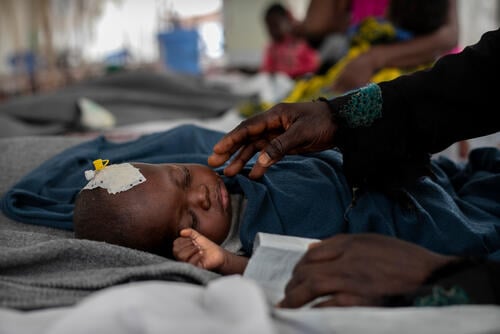
A mother looks after her child hospitalized at the MSF measles treatment center in Mayi-Munene, Kamwesha (Kasai).
Democratic Republic of Congo

Massive mobilisation urgently needed to curb fast-spreading measles outbreak

The Democratic Republic of Congo is currently tackling a measles outbreak which is likely to be the country's deadliest since 2012. MSF teams are responding, but more resources are urgently needed from national and international partners to curb the spread of the contagious disease. Press Release - 11 Jun 2019
 
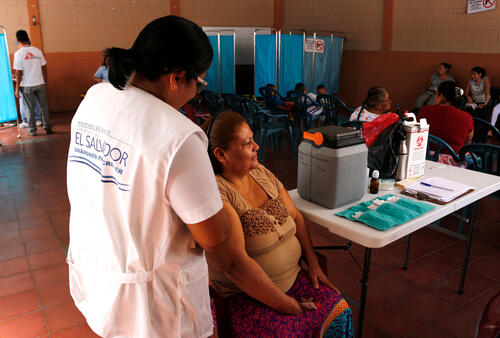
Personnel of the Ministry of Health (Minsal) was able, thanks to the presence of Doctors Without Borders (MSF), to cross the invisible borders imposed by the situation of violence that hinders access to health in some neighborhoods in the capital.
El Salvador

Behind the wheel – driving ambulances in El Salvador’s red zones

In the "red zones" of El Salvador - areas that are controlled by gangs and marked by violence - access to medical care is not easy for residents. So MSF goes to them with an ambulance driven by trained nurses. Voices from the Field - 7 Jun 2019
 
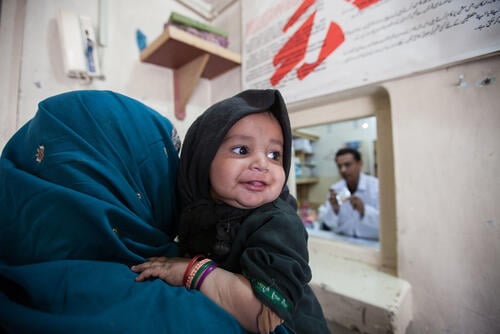
A woman collects medicine from the MSF pharmacy at MSF’s mother and child health centre in Kuchlak, Balochistan.
Pakistan

Witnessing poor mother and child healthcare in Balochistan

In Pakistan's southwest Balochistan province, poor healthcare practices - such as feeding newborns green tea - often result in illness and death for babies and children. Read more about the MSF teams providing care and trying to improve knowledge in the community. Project Update - 6 Jun 2019
 
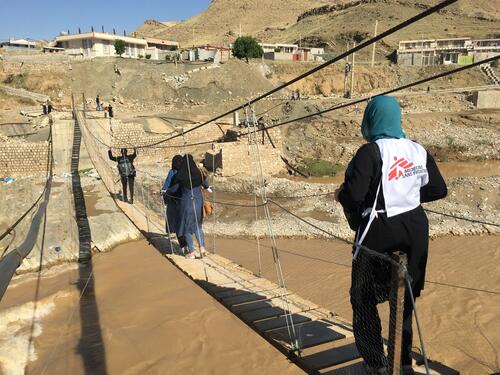
MSF Medical Team crossing Kyan Abad rope bridge to deploy a mobile clinic in Paran Parvis village on the ride side of Kashkan River.
Iran

Providing health care to vulnerable people in Lorestan after floods in Iran

Two months since violent flash floods stormed areas along the Kashkan River, in Lorestan province, west Iran, life is starting to return to normal. In Pol-e Dokhtar town, most of the sludge and rubble have been cleaned out while reconstruction of a few houses and shops are beginning in this devastated area. Project Update - 6 Jun 2019
Four mothers posing in a corridor of the Hospital in Bili. All four of them are staying in the hospital with their child, that's suffering from a severe case of malaria. Since the beginning of the project in 2016, the pediatric ward already treated more than 4.000 cases of complicated/severe form of malaria.
Médecins Sans Frontières (MSF)

Independent medical humanitarian assistance

We provide medical assistance to people affected by conflict, epidemics, disasters, or exclusion from healthcare. Our teams are made up of tens of thousands of health professionals, logistic and administrative staff - most of them hired locally. Our actions are guided by medical ethics and the principles of independence and impartiality. We are a non-profit, self-governed, member-based organisation.

Learn more