



Ebola disease in DRC: find out how we're responding
Learn more
8000 Results
 
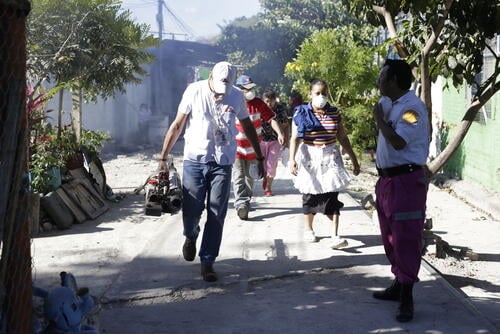
Activities such as water disinfection, fumigation to reduce the presence of mosquitoes, cleaning days or first aid courses are some of the activities carried out by the new Health Committee, in which MSF also participates.
El Salvador

La Peralta: a community organised by health

La Peralta, a community in the capital of El Salvador, has been affected by violence, which has hindered access to health services. MSF teams began making regular visits to the neighbourhood and the community has organised a health committee, which has managed to get healthcare activities starting again. Project Update - 27 Jun 2019
 
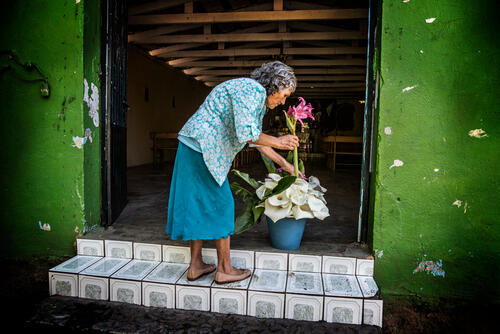
ENG - The visits of the parish priests are also suspended. Despite this, women continue to maintain the church adorned and unpolluted.

ESP - Las visitas de los párrocos también se suspenden. Pese a ello, las mujeres siguen manteniendo la iglesia adornada e impoluta.
Mexico

Life amidst the violence: the strong women of Guerrero

Guerrero is one of Mexico’s most violent states, fought over by myriad criminal gangs, police and military authorities. Many rural communities have been isolated by the violence. But the women in this state are strong. MSF teams discovered this while running a mobile clinic in the region, providing medical and mental healthcare. Voices from the Field - 27 Jun 2019
 
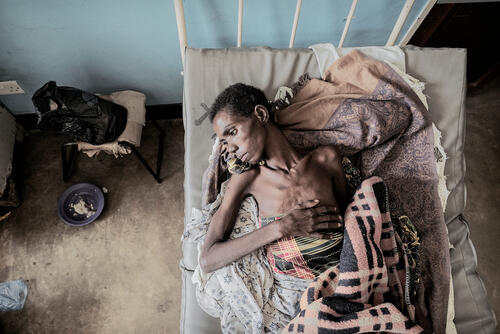
Nsanje, Malawi: Chrissy Kamanga, 37 years, a mother of three daughters was referred to Nsanje district hospital with late stage AIDS. He has advanced HIV with opportunistic infections TB and cryptococcal meningitis. She couldn’t talk or walk but is feeling better now. She has been on antiretrovirals for five years. Chrissy is an expert client at Tengani health center under Partners in Hope, a local nongovernmental organization. She helps in tracing patients who drop out of treatment.

Chrissy’s husband Wisted Simbi, 44 years is caring for Chrissy. He says: “here I support my wife’s sister to shift, feed, wash or take her to the bath room. We relieve each other of these daily duties. My wife complained of backache and headache. We went to Tengani health centre and they referred us here. By this time, she couldn’t walk or talk. They welcomed us well and all the tests were done.”

In 2016, an MSF survey of 1183 admissions in hospital over six months revealed that HIV inpatients accounted for 26 % of all admissions in male and female wards, and HIV deaths made up 54 % of all deaths.  Over 80% of HIV admissions arrived in advanced stages of the disease (defined as a CD4 count
Access to medicines

Gilead fails to keep promise on access to lifesaving drug for people living with HIV

Inaction by US pharmaceutical corporation Gilead to follow through on its so-called ‘access initiative’ leaves people unable to access a vital drug to treat a deadly co-infection for HIV. Press Release - 27 Jun 2019
 
Dhi Sufal district is located at the south of Ibb governorate, in borders with Taiz governorate. In addition to MSF supported hospital, and due to the increase of the cholera cases in the area. MSF started Cholera treatment centre at the same district. MSF cholera treatment centre is receiving patients from Ibb, Taiz, and other IDPs from Hodeidah as well. Since Jan 2019, MSF has received 5466 of patients, between moderate and severe cases and has been working since the opening on 2017.
Yemen

The indirect consequences of war for people in Yemen

More than four years since the start of the war in Yemen, the indirect consequences of the conflict on ordinary Yemenis are high. Among them, people struggle to reach medical care and hospitals in time, which can have serious repercussions on their health. Project Update - 25 Jun 2019
 
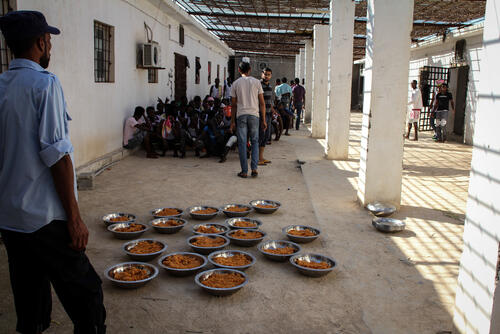
Refugees and migrants detained in this detention centre get rice or pasta for lunch and dinner. For breakfast people receive bread with some cheese. Meals often have to be shared by many people. Food is prepared in-house and is served in large metal bowls to be shared by five to 10 people.
Libya

“Healthwise, it was a disaster” in Libya’s Zintan and Gharyan detention centres

MSF staff who were recently granted access to two detention centres in Libya found a catastrophic medical situation among the people detained there. Project Update - 21 Jun 2019
 
Following the massacre in the village of Ogossagou, MSF provided home care and psychosocial counselling.
Mali

Violence in central Mali has reached unprecedented levels

Interview with Patrick Irenge, MSF’s medical coordinator in Bamako, Mali, since September 2017 on the current situation, the impact of violence on the population and how MSF is responding. Interview - 20 Jun 2019
 
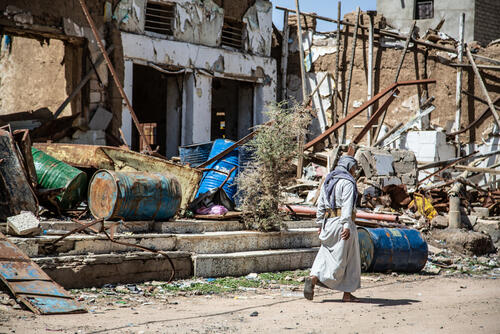
Yemen, Saada city, 22 April 2019 - A man walking in front of destroyed buildings near the old city of Saada.
Yemen

Aerial bombardments in Sa'ada

Video report on life in Sa'ada, the most bombed governorate of Yemen. With almost a quarter of all recorded coalition air raids since March 2015, the MSF hospital that was bombed in 2015 and reopened in April 2018 had admitted more than 1,500 patients by the end of the year. Project Update - 20 Jun 2019
 
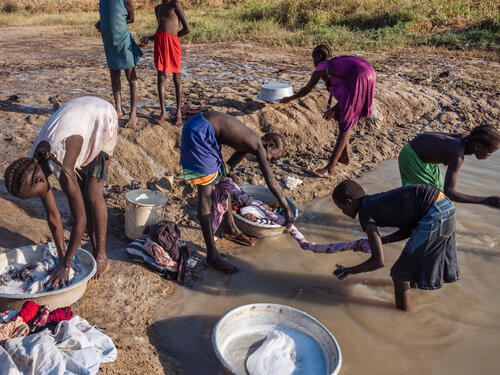
Bentiu, South Sudan, 2018. People wash clothes in the river in the buffer zone in Bentiu PoC (Protection of Civilians) site.
South Sudan

Life inside or outside a displacement camp

MSF patients and staff describe life in South Sudan’s Protection of Civilians sites, where relative safety comes at the expense of exposure to life-threatening diseases and undignified living conditions. Project Update - 20 Jun 2019
 
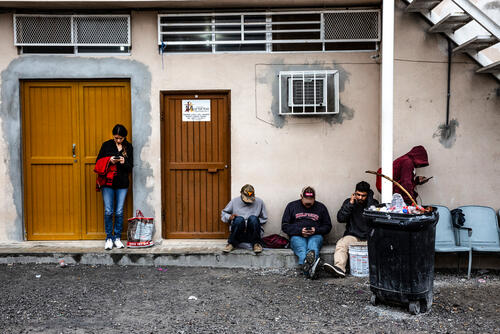
Most people in the shelters, where they wait to cross into the US, do not take to the streets due to the risk of imminent kidnapping. Migrants and refugees are exposed to risks of violence at the northern Mexican border.
Mexico

Mass arrests drive migrants underground and cut them off from medical care

MSF teams have witnessed an increase in mass arrests and raids on groups of migrants on Mexico’s southern border, with alarming consequences. Press Release - 19 Jun 2019
 
Adephine speaks in slow, hushed tones. She tugs at her mother, Elisabeth, sliding behind her as soon as the gathering of people at this remote Médecins Sans Frontières health clinic in Tanzania swells.
A refugee camp can limit people’s movement, but it can do little to dash the hopes and aspirations of a 12-year-old girl from breaking through its dim and bleak confines.
Adephine often lets her imagination fly outside the Nduta refugee camp, in north-western Tanzania, where she has been living since January 2017, when her mother fled violence in Burundi. In a place far away from the camp, she dreams of becoming a doctor one day. As she says this, she grows in confidence, and her eyes stare you straight in the face.
In the camp, she receives lessons in English, French, basic mathematics and science, but says, with a touch of gloom, “we often get punished in the school, and I don’t like it”.
It’s not only these daily chastening experiences that threaten to dampen the spirit of children like Adephine, but the grinding toil of living in a place where rationing is the norm can snuff out any lingering traces of ambition.

Adephine’s father, and her two siblings, only joined the family in the camp later, when registrations had stopped. “My husband is not registered, and so he cannot receive assistance”, says Adephine’s mother, Elisabeth. “We share the food we receive among us”.
A small patch of land around their modest two-room abode in the camp provides for a few green vegetables and beans.
“But this is not enough”, says Elisabeth.
Over 230,000 Burundians, spread across three camps in Tanzania, will remain dependent on much-needed humanitarian assistance until longer-term solutions are found. But, for now, they desperately need support. This little-spoken crisis continues to be dismally funded, revealing major gaps in the humanitarian response.

Limited food, poor living conditions and weak wastewater management are a recipe for disease outbreaks. The Nduta refugee camp, where MSF is the main healthcare provider, recently witnessed a peak in diarrhoea cases, but MSF teams were able to swiftly respond and staunch the spread of the disease.

Back in the health clinic, Adephine is playing with a strip of capsule. “When we are sick, we can have treatment”, says her mother, Elisabeth. But she wishes they had more variety in the food they received in the camp.

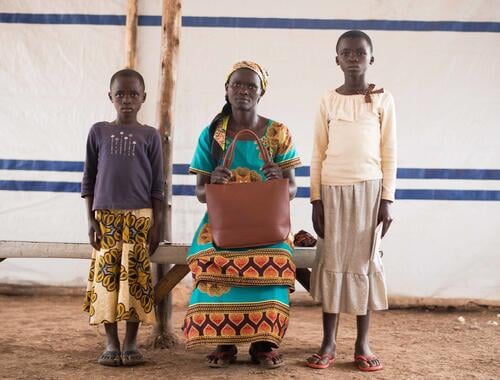
Sitting together, Adephine, her younger sister, Rachel, and Elisabeth appear composed. What the future holds for them remains shrouded in uncertainty. But with those dreams that take one far away, there is always that smallest of relief to take flight, even briefly, and escape the biting reality of the camp.
Refugees, IDPs and people on the move

Refugees around the world: Stories of survival

For World Refugee Day, we take a look at the stories of survival of people forced to flee from home. There are now 70.8 million people displaced around the world. MSF teams provide care to refugees in a number of countries. Voices from the Field - 19 Jun 2019
Four mothers posing in a corridor of the Hospital in Bili. All four of them are staying in the hospital with their child, that's suffering from a severe case of malaria. Since the beginning of the project in 2016, the pediatric ward already treated more than 4.000 cases of complicated/severe form of malaria.
Médecins Sans Frontières (MSF)

Independent medical humanitarian assistance

We provide medical assistance to people affected by conflict, epidemics, disasters, or exclusion from healthcare. Our teams are made up of tens of thousands of health professionals, logistic and administrative staff - most of them hired locally. Our actions are guided by medical ethics and the principles of independence and impartiality. We are a non-profit, self-governed, member-based organisation.

Learn more