



Ebola disease in DRC: find out how we're responding
Learn more
8000 Results
 
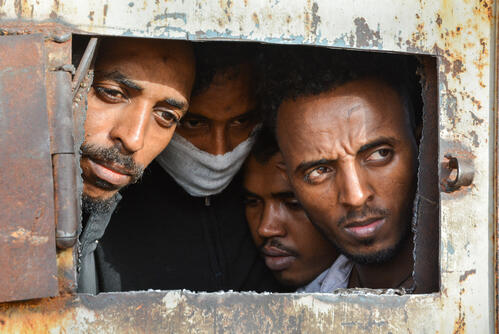
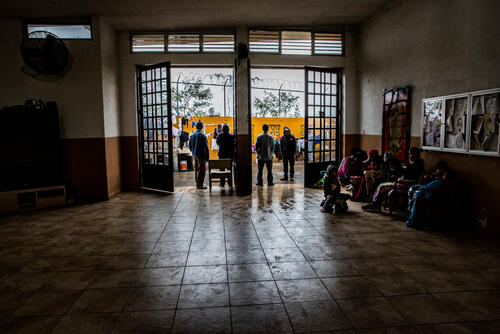
Refugees in Zintan DC at the gate of the main warehouse where 700 of them were detained. 
A tuberculosis outbreak has likely been raging for several months in the detention centre and some wear masks for fear of contamination. 
The main warehouse was emptied in June 2019, and the remaining people distributed among the other buildings within the detention centre compound.
Libya

Out of sight, out of mind: refugees in Libya's detention centres

Up to 6,000 refugees and migrants are being held in horrendous conditions in Libya’s detention centres, in an increasingly perilous situation as the country descends into conflict. Photo Story - 12 Jul 2019
 
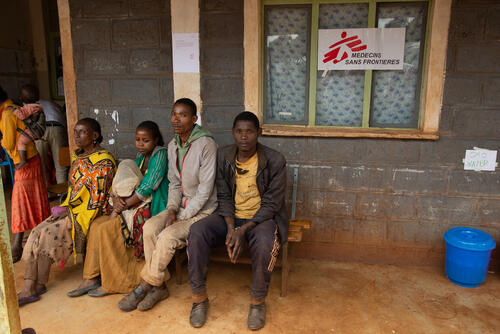
Patients wait their turn at the entrance of the MSF-supported health centre in Banko Gotiti, in the Gedeo area of southern Ethiopia.
Ethiopia

The constant cycle of displacement

Thousands of people have shuttled back and forth between the Gedeo and Guji areas of southern Ethiopia. Displacement camps have closed, but many are unable to return home, and are surviving in difficult conditions. MSF is providing assistance. Project Update - 12 Jul 2019
 
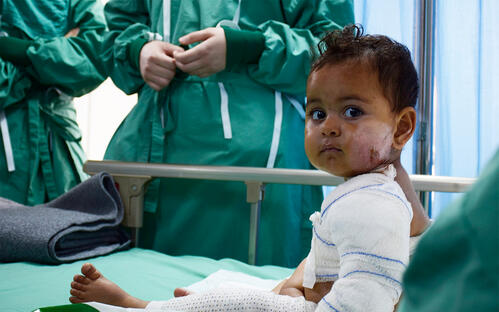
Bushra Mohammed, one year and 4 months old, was hospitalized in the burns unit at MSF Hospital in Qayyarah twenty days ago. 12% percent of her body had burn wounds. After two skin grafts (a surgical operation in which healthy skin is transplanted to the burn site), Bushra needs to stay in the hospital for several more days. Doctors prefer to monitor her recovery process due to her young age and the severity of her wounds.
“We are from Qayyarah, we came to this hospital because it is the nearest hospital and we knew MSF was working here. Before the last war with the Islamic State group (IS), there were other hospitals, the General and Jumhouri hospitals, but they were shelled and destroyed.” 
“It was 8:00 pm and we were having dinner, all of us, the family. Bushra’s 5-year-old sister went into the bathroom to wash her hands after eating. She turned the faucet of the hot water, and extremely hot water came pouring out. She feared that she could not turn the faucet again to close it, and left it open.”
At this moment, Bushra came in; she follows her sister’s every move. She slipped onto the water and fell with her soft skin touching the very hot ceramic floor. 
“We all jumped when she screamed. She was crying in pain, and my heart was pounding when I went in to look for her. Her father carried her straight to the hospital, but still, her arm suffered a bad burn despite our quick reaction. In the hospital, the staff attended to her burns and applied dressings to cover the wounds properly. Every two days they wash and clean her wounds, and then they informed us that she needs a skin graft. We have been here in this ward for 20 long days.  
Bushra is playful and curious, being stuck in bed the whole day every day is hard for her.  She is even tired of seeing the colour of the green sterile hospital scrubs. 
As everyone who enters the room to see and visit wears a green sterile gown, she gets upset when she sees this green colour. She used to cry whenever she sees me wearing it, and would stop as soon as I took it off.
I am now more aware of what could happen if she is left alone even for a single moment. I will  never let her out of my sight ever again.”
Iraq

Supporting people in Qayyarah

Project Update - 12 Jul 2019
 
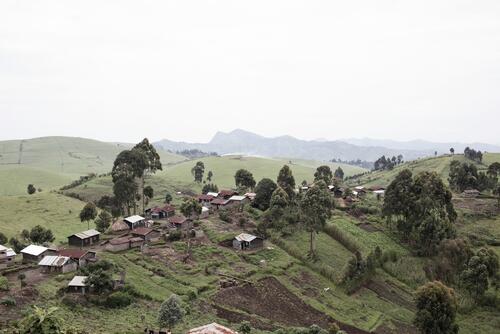
Village on the road to Mweso, sept 2013
Democratic Republic of Congo

Six years on, still no news of our colleagues held hostage by armed group ADF

On 11 July 2013, three of our MSF colleagues - Richard, Romy and Philippe - were abducted by armed group ADF from a field assessment in North Kivu province, Democratic Republic of Congo. Six years on, they remain missing - and we remain committed to the search for them. Statement - 11 Jul 2019
 
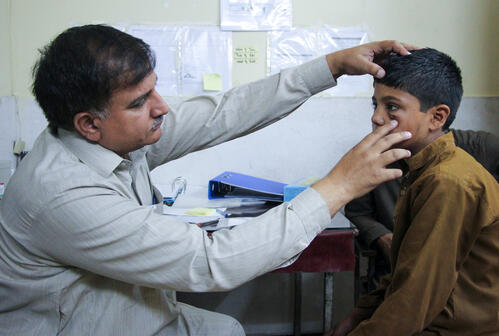
A supervisor for MSF cutaneous leishmaniasis treatment centre in Peshawar, Faqeer Hussain, examines 11-year-old patient Mohammad Asif’s lesion under the eye. Mohammad travels with his father for more than two hours every day to get treatment for cutaneous leishmaniasis at Naseerullah Khan Babar memorial hospital in Peshawar.
Pakistan

The only option for cutaneous leishmaniasis treatment in Khyber Pakhtunkhwa

Cutaneous leishamaniasis - a skin infection caused by a parasite - is endemic in northwestern Pakistan. With the number of cases rising, and treatment expensive or difficult to access, MSF has opened one specialist clinic and plans to open another. Project Update - 9 Jul 2019
 
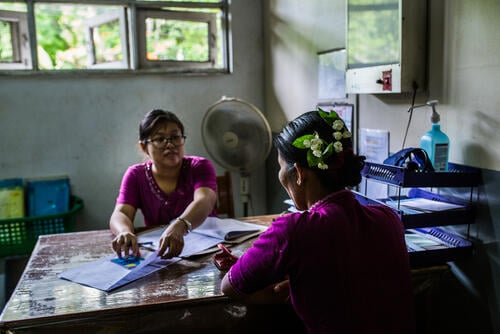
YANGON, MYANMAR – A patient attends a counselling session at MSF's Insein clinic in Yangon.
Myanmar

Clinic closure marks milestone for HIV treatment in Myanmar

MSF teams have been treating people living with HIV in the Insein clinic, in Yangon, Myanmar, since 2014. With the national HIV programme able to continue treatment programmes, we've now closed Insein; MSF counsellor Ko Myo Kyaw explains life at our clinic. Project Update - 8 Jul 2019
 
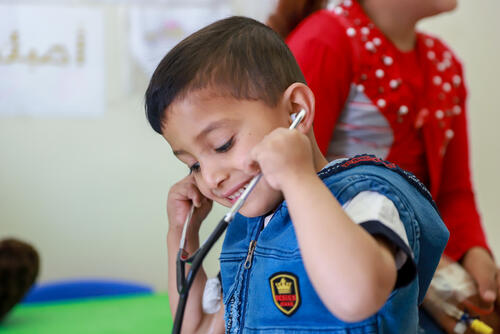
Abbas, 4 years old, playing inside MSF’s Kids Zone.
Abbas & his brother Youssef are both Thalassemia patients receiving treatment at MSF’s paediatric ward at the Elias Hraoui Government Hospital in Zahle. MSF’s Thalasemia services include, medical consultation and follow up, medical treatment and blood transfusion in addition to social and educational follow up for the children and their families.
A children’s visit to the hospital to receive treatment for Thalassemia could last for a full day. To make it an enjoyable experience, MSF prepared a Kids’ Zone, a safe space for thalassemia children to play, draw and have fun with their friends, as the mental well-being of the kids are an important factor in their physical health.
Lebanon

Treating Syrian children suffering from thalassemia

Thalassemia is a hereditary blood disorder which affects primarily people from the Mediterranean basin, including Syria. In Lebanon, MSF is treating Syrian refugee children with the disease, who usually lack access to treatment. Project Update - 5 Jul 2019
 
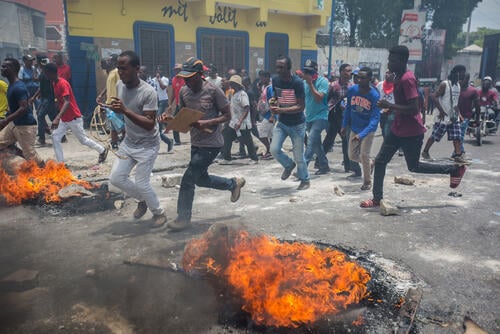
Haitian protesters run near burning tires during a demonstration in Port-au-Prince calling for the departure of President Jovenel Moïse on 9 June, 2019.

For months, Haitians have seen a steady decline in their purchasing power as the national currency devalued and fuel prices increased, against a backdrop of seemingly endless political stalemates and scandals. 

Since 9 June, tensions have escalated and there have been almost daily demonstrations and outbursts of violence in cities including Port-au-Prince, Les Cayes and Gonaïves.
Haiti

People’s healthcare in danger amidst worsening anger and despair

The streets of Haiti have spiralled even deeper into violence in recent weeks, jeopardising the ability of both MSF teams and the Haitian healthcare system to provide emergency medical care. Project Update - 5 Jul 2019
 
NUEVO LAREDO, NOT A SAFE PLACE
Central American migration

Northern Mexican city too dangerous to send back people seeking asylum

MSF has denounced the extension of a US and Mexican policy that sees refugees and asylum seekers from Central America, hoping to find a new life in the US, sent back to Nuevo Laredo, a dangerous border city in Mexico. Press Release - 3 Jul 2019
 
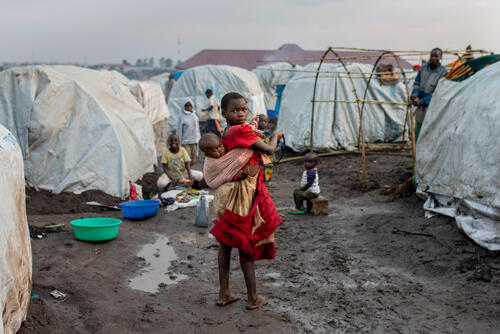
Daily life scene at the ISP camp for internally displaced people in Bunia. Thousands have fled their homes due to intercommunal violence in Ituri.
Democratic Republic of Congo

Urgent humanitarian response needed on unprecedented crises in northeast DRC

We are urging international organisations to come the aid of people in Ituri province, Democratic Republic of Congo, as hundreds of thousands are people are in need of assistance following four concurrent humanitarian crises. Press Release - 27 Jun 2019
Four mothers posing in a corridor of the Hospital in Bili. All four of them are staying in the hospital with their child, that's suffering from a severe case of malaria. Since the beginning of the project in 2016, the pediatric ward already treated more than 4.000 cases of complicated/severe form of malaria.
Médecins Sans Frontières (MSF)

Independent medical humanitarian assistance

We provide medical assistance to people affected by conflict, epidemics, disasters, or exclusion from healthcare. Our teams are made up of tens of thousands of health professionals, logistic and administrative staff - most of them hired locally. Our actions are guided by medical ethics and the principles of independence and impartiality. We are a non-profit, self-governed, member-based organisation.

Learn more