222 Results
 
Tatiana Ivanovna, 65 years old, during a consultation with Elena Pylaeva, psychologist. This MSF mobile clinic is located in the village of Pavlopil, about five kilometers from the contact line.
Ukraine

“Your entire universe falls apart”

Interview with Elena Pylaeva, a psychologist working with Médecins Sans Frontières (MSF). Voices from the Field - 13 Jan 2017
 
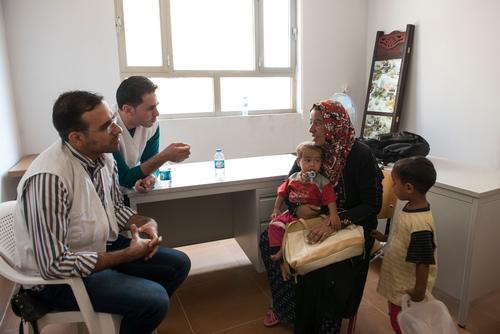
MAKHMOUR, IRAQ - OCTOBER 30:

Dr Mahmoud Habeb, a psychologist speaks with his patient at a healthcare facility in Debaga 1 with Mental Health Activity Manager Bilal Budair. 

Scenes at MSF facilities at Debaga camp in Debaga outside of Erbil, Iraq. IDP's seek mental as well as primary healthcare from MŽdecins Sans Frontires (MSF) International.

(Photo by Monique Jaques/ For MSF)
Iraq

MSF assists traumatised people from Mosul

Some 30,000 people are living in camps in Hassansham and Khazer, 35 kilometres east of Mosul. MSF’s mental health teams see around 45 patients a day. Project Update - 10 Jan 2017
 
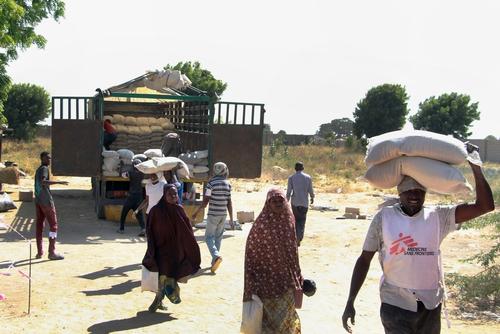
MSF distributed food to 500 families in Maiduguri on December 14, 2016. Each family receives enough food for two weeks; 25 kilograms of millet, five kilograms of beans and five litres of palm oil. The ration also includes eight bars of soap.
Nigeria

Food distribution in Maiduguri

Over the past three months, our teams have distributed 810 tonnes of food in Maiduguri, northeastern Nigeria, which is enough to feed 26,000 families for two weeks. Project Update - 5 Jan 2017
 
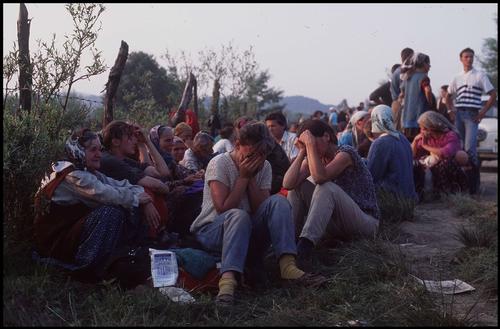
July 1995

Tuzla: Refugees from the Srebrenica enclave (women, children and elderly), just one day after it's fall.

Juillet 1995

Tuzla: Arriv e des r fugiers (femmes , enfants et vieillards) de l'enclave de Srebrenica le lendemain de sa chute.
MSF Speaking Out

MSF and Srebrenica 1993-2003

https://www.msf.org/sites/default/files/2026-04/VA_MSF_and_Srebrenica.pdf - 1 Jun 2015
 
July 1995

Tuzla: Refugees from the Srebrenica enclave (women, children and elderly), just one day after it's fall.

Juillet 1995

Tuzla: Arriv e des r fugiers (femmes , enfants et vieillards) de l'enclave de Srebrenica le lendemain de sa chute.
MSF Speaking Out

MSF and Srebrenica 1993-2003

The case study ‘MSF and Srebrenica 1993-2003’ explores the constraints, questions and dilemmas raised when MSF spoke out about the events that occurred in Srebrenica’s Muslim enclave. The enclave was besieged in 1993 and then seized by Bosnian Serb forces in July 1995. 8,000 men and young men over the age of 16 were massacred, despite the presence of the United Nations Peacekeeping forces supposedly providing protection in what had been declared a "security zone". Speaking Out Case Studies - 1 Jun 2015
 
enfants regardant dehors   travers un mur d truit par un obus.
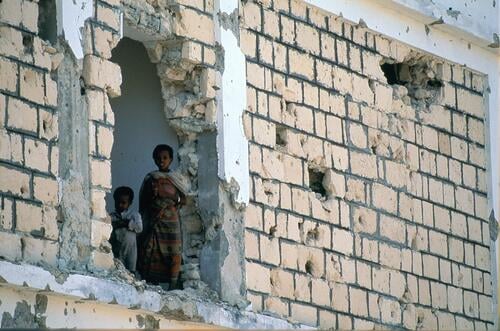
Children looking through a wall destructed by shrapnels
MSF Speaking Out

Somalia 1991-1993: Civil War, Famine Alert and a UN “Military-Humanitarian” Intervention

https://www.msf.org/sites/default/files/2026-04/VA_Somalia.pdf - 1 Sep 2013
 
enfants regardant dehors   travers un mur d truit par un obus.
Children looking through a wall destructed by shrapnels
MSF Speaking Out

Somalia 1991-1993: Civil War, Famine Alert and a UN “Military-Humanitarian” Intervention

The ‘Somalia 1991-1993: Civil War, Famine Alert and a UN “Military-Humanitarian” Intervention‘ case study describes the constraints, questions and dilemmas faced by MSF during the first year of its intervention to assist the populations of Somalia, after the civil war started in 1991. Speaking Out Case Studies - 1 Sep 2013
 
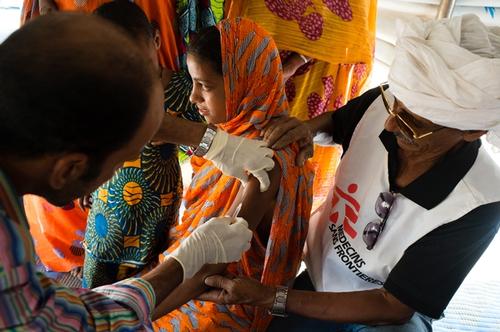
Ben-Dahi of Médecins Sans Frontières (MSF) assiting with the vaccination of recently arrived Malian refugee children at a transit camp in Fassala in southeastern Mauritania on 4 March 2013.

As of January 2012, the Malian crisis has resulted in population movements. Nearly 150,000 refugees now live in refugee camps in Burkina Faso, Mauritania and Niger, where MSF teams are providing maternal, primary and secondary health care. Since the beginning of 2013, MSF has recorded nearly 12,000 consultations and 5,000 vaccinations in these three countries. Mauritania is the country with the largest number of refugees.  Mbera camp nearly 70,000 refugees who have fled for fear of reprisals or lack of access to food since the beginning of the conflict. In February 2013, the border post of Fassala (Mauritania) recorded an average of 300 arrivals per day. They are mostly women and children from Timbuktu, Lere, Goundam Larnab and Nianfuke. These Malian refugees continue to live in precarious conditions with no future prospects.
Project Update

Global vaccines community must cut costs of new vaccines

MSF calls on GAVI and pharmaceutical companies to extend discounts so more children can be reached Press Release - 23 Apr 2013
 
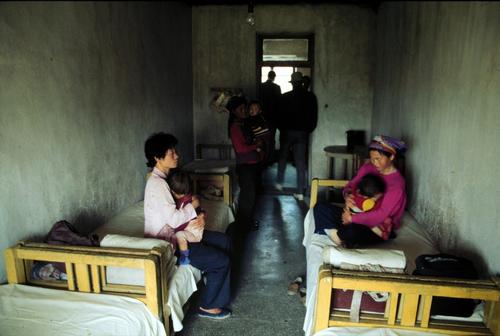
PYONGYANG, NORTH KOREA, ASIA, 25.11.97. Hospital health center.  Conditions in these hospitals are very poor. The government of North Korea has difficulties in supplying its people with food. The crop was ruined this year. Many young children are suffering and dying of malnutrition.    
Photo by  Peter van Quaille /MSF-H

From the Illustrious database.
MSF Speaking Out

MSF And North Korea 1995-1998 (PDF, 5 MB)

https://www.msf.org/sites/default/files/2026-04/VA_Coree_du_Nord.pdf - 1 Jan 2008
 
PYONGYANG, NORTH KOREA, ASIA, 25.11.97. Hospital health center.  Conditions in these hospitals are very poor. The government of North Korea has difficulties in supplying its people with food. The crop was ruined this year. Many young children are suffering and dying of malnutrition.    
Photo by  Peter van Quaille /MSF-H

From the Illustrious database.
MSF Speaking Out

MSF and North Korea 1995-1998

The MSF in North Korea 1995-1998’ case study is describing the constraints and dilemmas that led Médecins Sans Frontières to speak out publicly while its teams were trying to bring assistance to the North Korean population on its territory between 1995 and 1998 and to the North Korean refugees in Asia in the following years. Speaking Out Case Studies - 1 Jan 2008
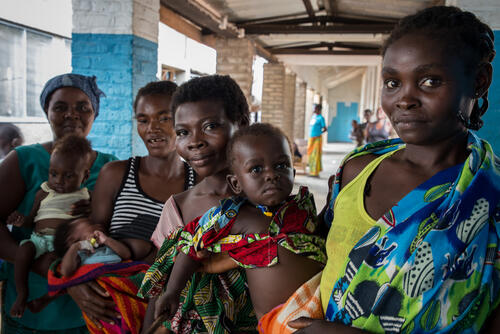
Four mothers posing in a corridor of the Hospital in Bili. All four of them are staying in the hospital with their child, that's suffering from a severe case of malaria. Since the beginning of the project in 2016, the pediatric ward already treated more than 4.000 cases of complicated/severe form of malaria.

Médecins Sans Frontières (MSF)

Independent medical humanitarian assistance

We provide medical assistance to people affected by conflict, epidemics, disasters, or exclusion from healthcare. Our teams are made up of tens of thousands of health professionals, logistic and administrative staff - most of them hired locally. Our actions are guided by medical ethics and the principles of independence and impartiality. We are a non-profit, self-governed, member-based organisation.

Learn more