


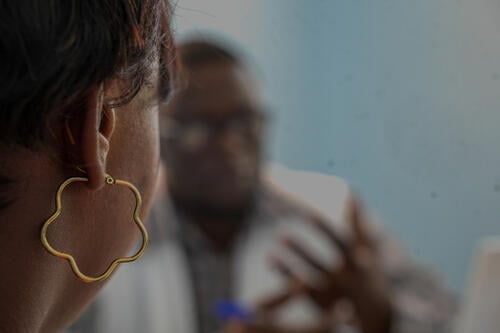
- In Port-au-Prince, Haiti, MSF has been treating victims and survivors of sexual and gender-based violence at our Pran Men'm clinic since 2015.
- At the clinic, the number of monthly admissions for sexual and gender-based violence nearly tripled since 2021, from 95 to 250.
- There must be a concerted response to provide victims and survivors with essential recovery services, such as safe houses and livelihood support.
Port-au-Prince – Sexual and gender-based violence (SGBV) has surged in Haiti's capital, Port-au-Prince, since 2021 and is being used systematically to terrorise communities, with a disproportionate impact on women and girls, according to a report released today by Médecins Sans Frontières (MSF). This crisis is occurring as infrastructure, public services, and living conditions have deteriorated dramatically amid widespread violence and insecurity.
MSF's report, Sexual and gender-based violence in Port-au-Prince, Haiti, is based on 10 years of medical data and testimonies collected at MSF's Pran Men'm clinic. Since MSF opened the clinic in 2015, we have provided comprehensive medical and psychosocial care to nearly 17,000 people, 98 per cent of whom are women and girls.
“The number of survivors of sexual and gender-based violence who receive care at the clinic has almost tripled from an average of 95 admissions per month in 2021 to more than 250 in 2025,” says Diana Manilla Arroyo, MSF head of mission in Haiti. “This shows how the explosion of violence in Haiti in recent years has had a direct impact on the bodies of women and girls in Port-au-Prince.”
The report shows that women and girls of all ages are being targeted, and that a growing number of victims and survivors are displaced from their homes, which exposes them to further violence. Nearly one-fifth of the victims and survivors treated at Pran Men'm have suffered multiple incidents of SGBV.
There has also been a shocking increase in the brutality of the violence. Among the victims and survivors who have received care at Pran Men'm since 2022, 57 per cent reported being assaulted by members of armed groups, often in the context of group assaults committed by multiple perpetrators. More than 100 patients reported being assaulted by 10 or more perpetrators at a time.
The number of survivors of sexual and gender-based violence who receive care at the clinic has almost tripled from an average of 95 admissions per month in 2021 to more than 250 in 2025.Diana Manilla Arroyo, MSF head of mission in Haiti
“They beat me and broke my teeth,” says one survivor quoted in the report. “Three young men who could have been my children.... When I refused to sleep with them, they hit me and I fell. While I was struggling, they kicked me in the back, which still hurts months later. After raping me, they raped my daughter... and beat my husband.”
The report highlights the persistent shortcomings in the availability of services for victims and survivors. MSF is often unable to refer our patients to essential non-medical assistance—such as safe shelters or livelihood support—which are indispensable for many victims and survivors. This situation underscores the urgent need to strengthen and sustain funding for protection services.
Victims and survivors also face numerous barriers—such as fear of stigma, financial difficulties, insecurity, and/or lack of information—that prevent them from accessing care in a timely manner. This unfortunately has medical consequences.
Since 2022, only one-third of victims and survivors who consulted the Pran Men’m clinic arrived within three days of their assault. Beyond this timeframe, it is no longer possible to prevent HIV transmission. Similarly, 59 per cent of our patients during this period were unable to access care within five days in order to protect themselves from unwanted pregnancy.
Our report calls for urgent and coordinated action by Haitian authorities, service providers, donors, United Nations agencies, and security actors in favour of a survivor-centred response that is focused on long-term recovery.
“We call for expanded access to comprehensive medical and psychosocial care, free of charge, which can only be achieved through a sustainable increase in funding for support services,” says Manilla Arroyo. “Equally important, we call for unequivocal recognition of the widespread nature of sexual violence and its deliberate use by armed groups as a tool to control and subjugate women and girls.”
“These are the challenges that must be addressed to empower survivors to regain control of their bodies and their lives,” concludes Manilla Arroyo.
Haiti
MSF suspends operations at the Isaïe Jeanty Maternity hospital in Haiti amid violence
Press Release
19 Jun 2026
Haiti
Haiti: MSF forced to evacuate hospital and temporarily suspend activities in Cité Soleil
Press Release
11 May 2026