



Ebola disease in DRC: find out how we're responding
Learn more
8005 Results
 
“I’d already experienced torture before leaving my country and crossing the sea. I’m using my past experience to help me deal with the pandemic”

Frederic*, who lives in a shared container in a Greek refugee camp, spoke to MSF about how he is coping with lockdown and the threat of COVID-19.


“At the start of this coronavirus saga, I thought it’d be all over within a week or two. But after finding out more about the disease and how it was spreading, I realised it was much more serious than I’d thought.

The death toll soared overnight. I hadn’t seen it coming and it caused me a lot of stress. When the number of deaths reached 600-700 in Italy and Spain each day, it took a psychological toll on me. I remember having to talk with my psychologist because I was really scared. 

I heard stories of people who were in good health one day and by the next day they were dead. Doctors and health workers, too, were falling victim to the disease, which seemed to destroy everything in its path.
 
Then the Greek government announced the lockdown. I had to stay in and stop work – my boss asked all of us to stop working. I realised then that the disease would have a real impact on me. I spent a lot of time just thinking about the disease – when it would end, whether I and people close to me would die in the pandemic.

I was thinking about it more and more. A lot of bad thoughts started popping up in my head and I had a lot of flashbacks. I’d suffered enough already and now it seemed the suffering would start again. I wondered how I’d escape it this time. 

I’d already experienced torture before leaving my country and crossing the sea. I’d already experienced a time when I was really sick and worried about my future. I went through this and then, thanks to God, after a long period of medical treatment, I recovered.  

When I recovered, I said to myself that I would use my past experience to help me deal with the pandemic. I realised that the difficulties I had been through in the past were bigger than this pandemic. This is how I convinced myself that the lockdown was no reason to stop me getting through this.

The only time that fear fills me is when I’m confined in my container. In the camp we live five or six to a container. I know that I can’t stop people coming in to see my room-mate and I have no choice but to gesture to people to keep away. But that's all I do.  


We have no alternative – this is the only space we have to live. At the same time, we’re aware that there are other people in even greater need – people who have even less space – so we have to make the most of the limited space we have. 

I feel lucky that at least I’m in a camp, with a place to live. We also have a stadium where we can exercise. So I’m in a better position than people confined in apartments with no space to exercise. 

I’m in a recovery process as my knee was injured back in my country. My medical consultation is currently interrupted due to this situation, but my doctor calls me often to check how I’m doing. 

I know that the whole planet is experiencing the same thing, but what’s different for us, as refugees, is that our living conditions, combined with the lockdown and the threat of the virus, impose a double stress. 


It's difficult not having people you can talk to. When you don't have people around you that you trust, it's not easy to relax. My psychologist, Zoe, is one of the few people I can really talk to. Since the lockdown started, I’ve talked with her most weeks. 

I’d like to thank all the MSF staff for the help they give us because it’s not easy, really. You can't imagine the difference it makes to have this support.”

*Names have been changed
Greece

Using torture survival skills to cope during a pandemic

Voices from the Field - 5 May 2020
 
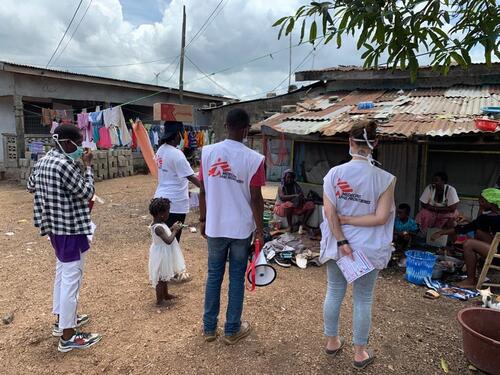
 MSF staff and volunteers carry out a COVID-19 hygiene awareness campaign and soap distribution to households in Logan Town, near the capital city, Monrovia. In an effort to prevent the spread of the coronavirus in the community, MSF staff are using megaphones and handing out pamphlets, advising people to wash their hands regularly, respect social distancing and avoid touching their faces.

Location: Logan Town, Monrovia, Liberia
Liberia

MSF supports efforts to treat COVID-19 in Liberia

Iline Celeen is the MSF Emergency Project Coordinator in Liberia, working on the COVID-19 response in the country and outlines what we’re doing in this interview. Interview - 4 May 2020
 
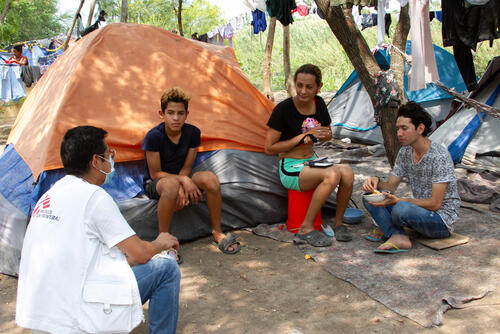
Health promotion activities at asylum seekers camp in Matamoros
United States of America

MSF demands US end deportations to stop COVID-19 spread to fragile health systems

MSF has demanded the US cease all deportations, a process that is moving people from the epicentre of the COVID-19 pandemic to lower transmission countries and which will exacerbate a public health crisis in the region. Press Release - 4 May 2020
 
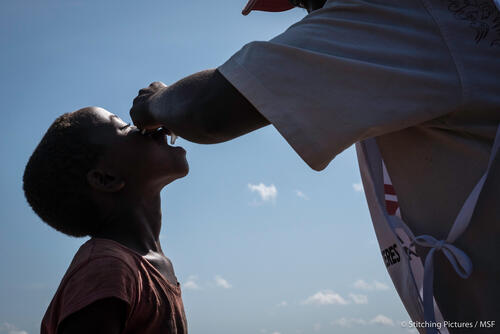
MSF staff member squeezes out the last drop of vaccine for a young child.
Vaccination

Overcoming barriers so vaccines can save lives

Vaccines can save lives but we need to overcome barriers - such as logistics and high prices - to get them to people first. Project Update - 29 Apr 2020
 
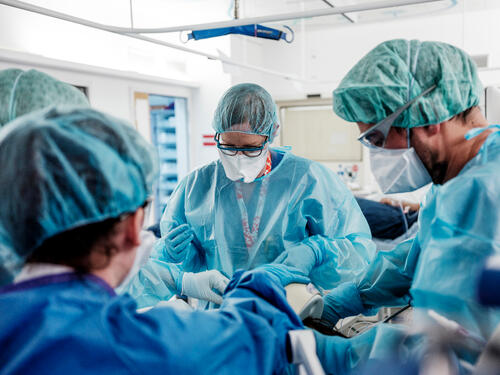
Switzerland, COVID-19 patients in Intensive care unit of HUG. MSF nurse Kathrine Zimmermann supports the intensive care unit of the Geneva University Hospitals for people with COVID-19. April 14, 2020. ©Nora Teylouni / MSF.
Coronavirus COVID-19 pandemic

Overwhelming, lonely, stressful – life in a COVID-19 unit in Geneva

Nurse Kathrine Zimmerman, whose day job is at MSF's Geneva headquarters, recently spent six weeks in the COVID-19 intensive care unit at Geneva's main hospital and shares her experience. Voices from the Field - 27 Apr 2020
 
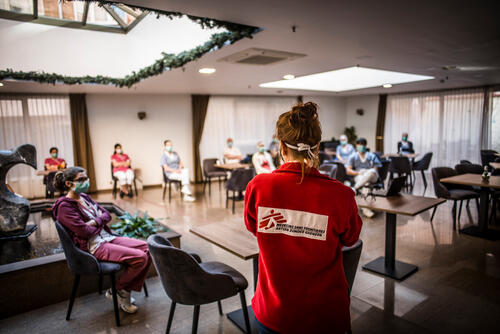
A mobile team from MSF is giving a briefing to the staff of the retirement home "Résidence Christalain", in Jette, Brussels.
Coronavirus COVID-19 pandemic

Why protecting and supporting staff in care homes during COVID-19 is so vital

Stephanie Goublomme is coordinating MSF’s COVID-19 response in care homes in Brussels, Belgium. She explains what her teams have seen and why it's so important to support care home staff. Voices from the Field - 24 Apr 2020
 
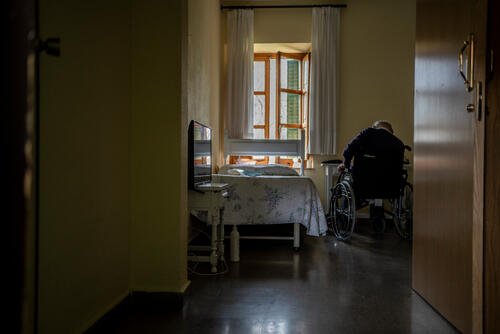
El equipo de MSF visita la Residencia Nuestra Señora de las Mercedes de El Royo (Soria).  //  MSF in the elderly care home (Residencia Nuestra Señora de las Mercedes) in El Royo, Soria province.
Coronavirus COVID-19 pandemic

Out of view, but not out of mind: MSF's response to COVID-19 in care homes

COVID-19 has taken a heavy toll in care homes for elderly people, who need a special level of care. MSF are training care home staff to help cope with the increased needs. Project Update - 24 Apr 2020
 
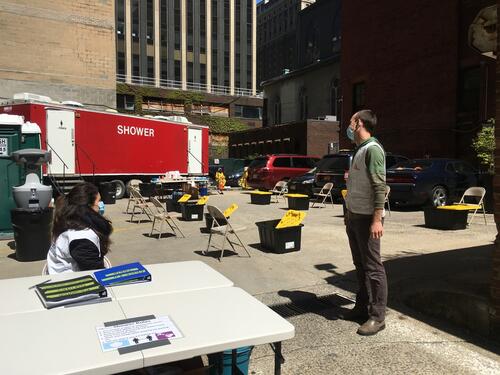
Staff members wait for the first visitors on opening day of MSF's shower trailer in Manhattan. MSF is offering free warm showers to the homeless and other people who currently lack access to hygiene facilities during the pandemic.
Coronavirus COVID-19 pandemic

Vulnerable communities in the US in urgent need of protection from COVID-19

MSF has started responding to the COVID-19 pandemic in the United States, addressing the needs of vulnerable people and communities in hard-hit New York. Project Update - 24 Apr 2020
 
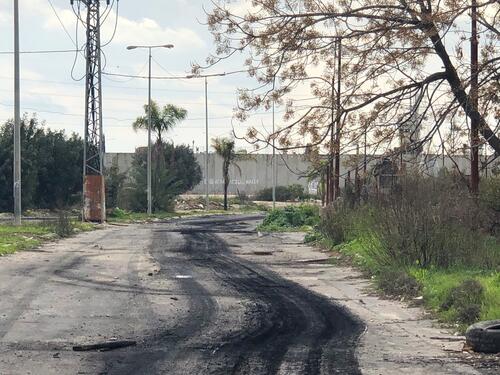
MSF works in Nablus since 2004, providing psychotherapeutic and psychiatric assistance, group therapy, group mental health awareness sessions and psychosocial support activities in two clinics in Nablus and Qalqylia and in a new consultation room opened in Tubas in December 2019. 
In 2002, the Israeli Government launched the construction of a barrier in and around the West Bank with the stated purpose of preventing violent attacks by Palestinians in Israel. Land for construction of Barrier sections inside the West Bank has been requisitioned from Palestinian landowners. Approximately 65.3 per cent (465km) of the projected 712-kilometre-long structure has been completed, of which 85 per cent runs inside the West Bank.
Palestine

Like a virus, violence spreads in the West Bank amid COVID-19

While lockdowns are new for many parts of the world, for Palestinians, it's been their daily reality for years. But amid the COVID-19 pandemic, violence and mental health issues are on the rise. Project Update - 23 Apr 2020
 
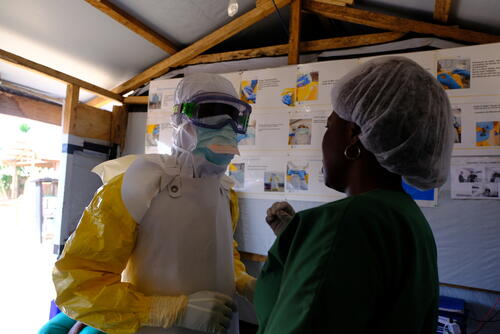
A staff member prepares to enter the high-risk zone at the Ebola Treatment Center in Beni. MSF took over the well-equipped structure from ALIMA to ensure continuous capacity.
DRC Ebola outbreaks

New Ebola cases confirmed in DRC days before expected end of outbreak

Just two days before the Ebola outbreak in DRC was expected to be declared over, new cases of the disease have emerged in Beni, in a setback for the region. Project Update - 23 Apr 2020
Four mothers posing in a corridor of the Hospital in Bili. All four of them are staying in the hospital with their child, that's suffering from a severe case of malaria. Since the beginning of the project in 2016, the pediatric ward already treated more than 4.000 cases of complicated/severe form of malaria.
Médecins Sans Frontières (MSF)

Independent medical humanitarian assistance

We provide medical assistance to people affected by conflict, epidemics, disasters, or exclusion from healthcare. Our teams are made up of tens of thousands of health professionals, logistic and administrative staff - most of them hired locally. Our actions are guided by medical ethics and the principles of independence and impartiality. We are a non-profit, self-governed, member-based organisation.

Learn more